

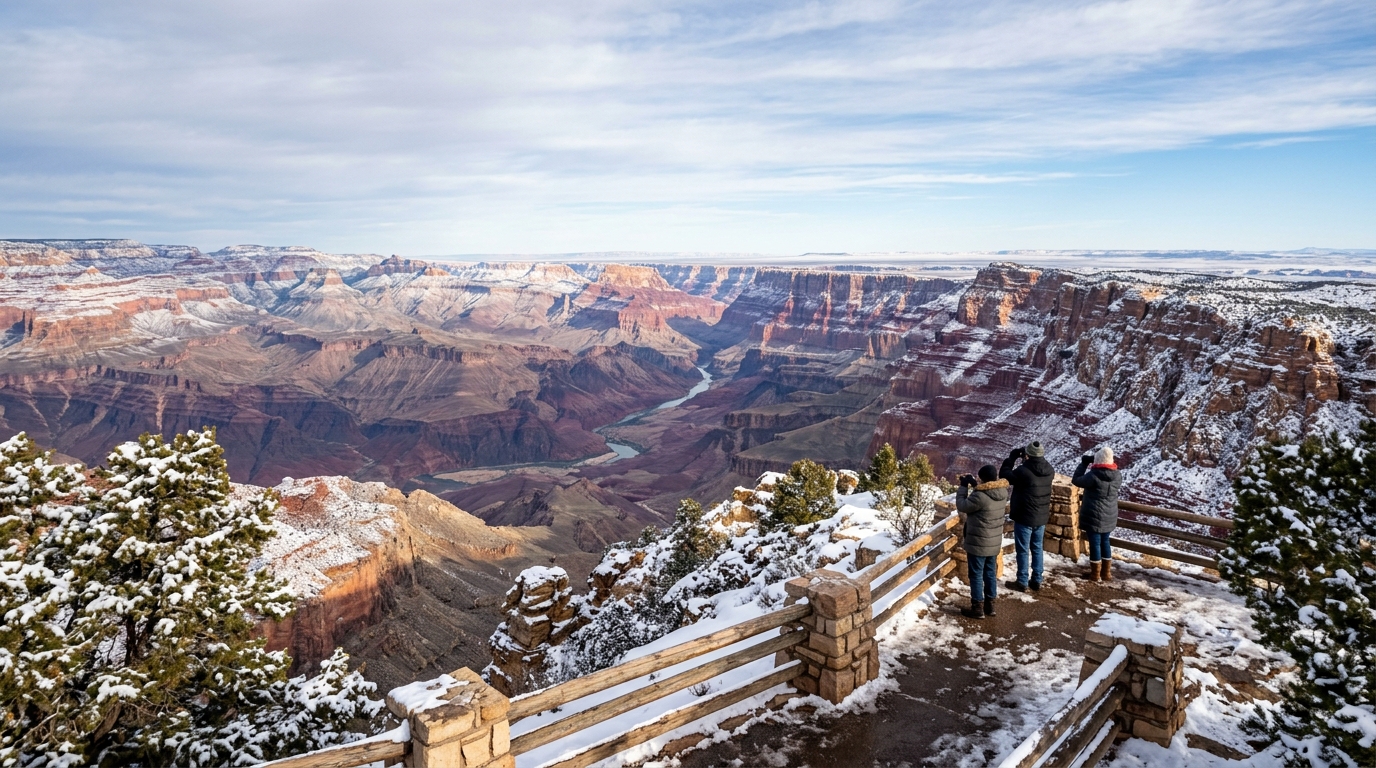
Visiting Grand Canyon National Park in December offers a peaceful escape from the heavy crowds that fill the overlooks during the warmer months of the year. Crisp mountain air, snow-dusted ponderosa pine forests, and dramatic winter light transform the landscape into a quiet wonderland. Travelers willing to brave the chilly desert temperatures will find a unique experience, though careful planning is required due to shorter daylight hours and potential weather delays.
Decoding December Climate and Plateau Freezing Points
Freezing morning temperatures and occasional snow squalls define the daily weather pattern at Grand Canyon National Park in December.
Elevation plays a major role in how cold it feels along the rim, as the South Rim sits at roughly 7,000 feet above sea level. Daytime highs often hover near the mid-40s Fahrenheit, but temperatures drop rapidly below freezing the moment the sun dips behind the canyon walls. Snowstorms can move in quickly from the west, creating temporary whiteout conditions and turning walking paths into icy sheets of frost. Visitors must check local weather forecasts before heading out, as sudden winter storms can temporarily close approaching highways and scenic drives.
Packing the right clothing makes all the difference when touring the overlooks during this chilly month. Heavy coats, thermal base layers, insulated gloves, and sturdy boots with reliable rubber traction are essential gear items. Walking paths near Mather Point and Yavapai Point frequently hold packed snow or black ice in the shaded sections, requiring slow and mindful steps.
Navigating South Rim Openings and North Rim Closures
The South Rim remains fully accessible throughout the winter months, while the North Rim closes completely until spring.
First-time visitors often assume every entrance stays open year-round, but the high-elevation North Rim shuts its gates to all vehicle traffic due to impassable snowdrifts on Arizona State Route 67. The South Rim, however, stays open twenty-four hours a day, providing uninterrupted access to visitor centers, select lodges, and major canyon viewpoints. Drivers mapping out extended regional trips often incorporate a scenic southwest highway journey to connect winter sightseeing across neighboring state lines.
Because northern services are entirely unavailable, all overnight stays, dining options, and emergency services must take place on the South Rim or in the nearby gateway community of Tusayan. Making lodging reservations well in advance ensures a comfortable indoor place to stay after a long day in the freezing air.
Permits, Entrance Fees, and Park Regulations
Standard vehicle entrance fees apply year-round at Grand Canyon National Park in December, according to the National Park Service.
Visitors arriving by car pay the standard entrance fee unless they carry a valid interagency annual pass or a specialized military or senior pass. Park rangers continue to patrol the rim and canyon trails, enforcing standard regulations regarding wildlife protection, drone bans, and proper waste disposal. Campgrounds that remain open operate under strict winter booking guidelines, and visitors should verify current operational statuses directly through the official National Park Service portal.
Complying with park rules protects the fragile desert ecosystem and keeps wildlife safe as animals search for limited food sources during the coldest weeks of the year.
Practical Realities and Limitations of Winter Sightseeing
Limited daylight hours and potential road restrictions are important practical limitations to keep in mind.
December brings some of the shortest days of the year, with the sun setting around five o’clock in the evening and leaving very little time for extended backcountry treks. Deep inner-canyon hikes, such as journeys down Bright Angel Trail, require extreme caution because ice coats the upper switchbacks while lower elevations remain relatively mild. Shuttle bus routes on the South Rim also scale back their schedules compared to the busy summer season, meaning visitors rely more heavily on personal vehicles to reach remote viewpoints.
These operational realities mean itineraries must remain flexible to accommodate unexpected snow delays or temporary road maintenance. Having a backup plan for indoor museum visits or cozy lodge time helps prevent disappointment if winter weather temporarily obscures the canyon views.
Frequently Asked Questions About Grand Canyon National Park in Winter
Is Grand Canyon National Park open on Christmas Day?
Yes, the South Rim of Grand Canyon National Park remains open every single day of the year, including Christmas Day and New Year’s Day.
Can I drive my own car to the viewpoints in December?
Yes, personal vehicles are allowed on most open South Rim roads during December because the park shuttle system reduces its routes during the winter months.
Does it snow often at Grand Canyon National Park in December?
Snow is quite common at the South Rim during December, though winter storms vary greatly from year to year and clear, sunny days also occur.
Are inner canyon trails open for hiking in winter?
Trails like Bright Angel and South Kaibab stay open, but hikers must navigate packed snow and ice in the upper elevation sections.
What should I do if a snowstorm hits during my visit?
Check official park alerts for real-time road updates, reduce your driving speed significantly, and give active snowplows plenty of working room.
Are restaurants and hotels open inside the park in December?
Selected lodges, gift shops, and restaurants stay open on the South Rim, but visitors should secure lodging reservations far in advance.
Disclaimer: Winter weather conditions, road closures, and park hours can change quickly. Always verify the latest updates directly from the official National Park Service website before starting your trip.

I’m Muhammad Ubaid, founder of YBR Magazine. I research and write detailed guides on America’s National Parks — covering entry fees, permits, best times to visit, and planning tips — using official NPS sources and up-to-date information.