

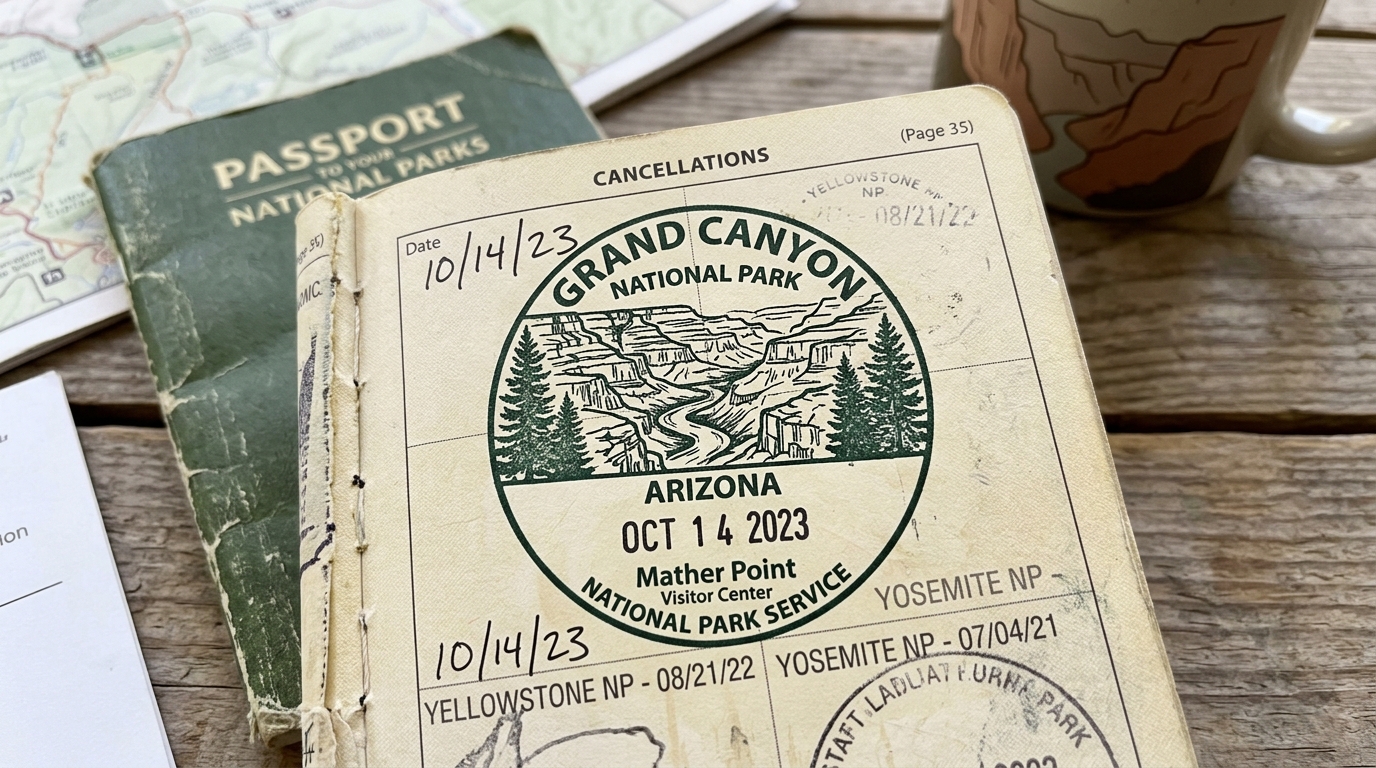
Planning a sightseeing journey across the American Southwest often leads travelers to look into special keepsake items. Many people search for details regarding the Grand Canyon National Park Passport, hoping to understand how it functions during a vacation. The Grand Canyon National Park Passport is not a legal travel document, a state identification card, or an official park entry fee pass. Instead, the term refers to the popular America’s National Parks Official Passport cancellation stamp program run by eParks in cooperation with the National Park Service.
Travelers buy a softcover or hardcover booklet and collect purple and black ink date stamps at visitor centers across protected public lands. This program lets visitors record every historic site, monument, and national park they explore by pressing a custom rubber date stamp onto designated pages. When preparing for a trip, some visitors mistakenly confuse this souvenir booklet with the America the Beautiful interagency pass or required backcountry permits. Knowing the difference between an entry pass and a memory book helps visitors avoid confusion at toll booths and gift shops.
Decoding the Purpose of the Souvenir Cancellation Stamp Book
The Grand Canyon National Park Passport serves as an educational memory journal rather than an official government identification or entry ticket. The cancellation stamp program was created to encourage public interest and support for national parks, historic sites, and recreation areas. The book contains regional pages featuring maps, descriptions of different park networks, and blank spaces specifically sized for date stamps. Each participating park maintains rubber stamps featuring the park name and the current calendar date. Travelers update their booklets by rolling or pressing the ink pad onto the page themselves or asking a park ranger for assistance.
It is important to remember that the Grand Canyon National Park Passport holds no official power for park entry or vehicle fees. Rangers at the toll booths will not accept a passport booklet as proof of paid admission, and visitors must still purchase a standard park entrance pass or hold an annual interagency pass to drive past the gates. The booklet remains purely sentimental, functioning like a travel journal for public lands enthusiasts.
Purchasing Your Blank Booklet Before Exploring the Rims
Visitors can purchase the blank Grand Canyon National Park Passport book at multiple official retail locations operated by partner associations inside the park. The primary bookstores and gift shops located on the South Rim and North Rim keep regular supplies of the passport books and various regional edition inserts in stock. According to the National Park Service, official park stores are managed by nonprofit partner groups like the Grand Canyon Conservancy, and all proceeds go right back into park preservation, education, and visitor programs.
Buyers can find the books at the main Grand Canyon Visitor Center plaza, the Verkamp’s Visitor Center in the historic district, and the Kolb Studio on the South Rim. On the North Rim, the main North Rim Visitor Center bookstore carries the books during the seasonal operating window. Travelers can also buy them online through official park partner websites before starting a road trip, such as planning a scenic southwest highway journey through neighboring regions.
Finding Physical Stamping Stations Across Both Rims
Locating the physical stamping stations for the Grand Canyon National Park Passport requires knowing which visitor centers keep the rubber stamps out on public counters. On the South Rim, the primary stamping station sits inside the main Grand Canyon Visitor Center near parking lot four, where visitors find multiple ink pads and rubber stamps. Another reliable stamping station is located inside Verkamp’s Visitor Center, positioned near the entrance desk for easy access. The Kolb Studio bookstore on the rim edge also maintains a dedicated stamping area for visitors who want to log their rim-side explorations.
On the North Rim, the main visitor center desk holds the official stamps during the summer and fall operating months. If a specific visitor center is closed for the evening, rangers sometimes place the rubber stamps outside on a porch or near a bulletin board, though this depends entirely on daily park staffing and weather conditions. Visitors should always check operating hours before searching for the ink pads.
Navigating Practical Challenges and Handling Wet Ink
Using the Grand Canyon National Park Passport comes with a few practical challenges that travelers should keep in mind before visiting. Long lines often form at popular visitor center stamping stations during peak morning and afternoon hours, requiring patience while waiting to use the ink pads. The ink used in these stamps can also take several minutes to dry completely on glossy passport pages, which frequently leads to smudging if the book is closed too quickly. To prevent smudged pages, experienced collectors carry a small sheet of blotting paper or let the book dry open on a ledge before packing it away.
Another major limitation involves seasonal closures on the North Rim. Because the North Rim closes for winter weather and heavy snow, travelers visiting during colder months cannot access those specific station stamps. Visitors traveling during winter weather should read up on park conditions, such as checking a Grand Canyon National Park in December guide for details on seasonal facility closures and plateau freezing points.
Following Official Etiquette at Visitor Center Desks
The National Park Service encourages visitors to enjoy the cancellation stamp program responsibly while respecting park facilities and staff. According to the National Park Service, visitors should keep the stamping areas clean, replace ink pad covers tightly after use, and avoid pressing the stamps too hard to prevent ink bleeding through thin paper. Park rangers ask that visitors do not take the rubber stamps away from the visitor center desks, as these items must remain available for everyone.
If a stamping station is missing or locked after hours, park staff generally discourage demanding access, as visitor centers must close on strict schedules. Travelers who miss a stamp due to closures can often find alternative ways to record their trip or ask a ranger if a loose date slip is available. Following these basic guidelines ensures that the Grand Canyon National Park Passport program remains fun and accessible for all future park explorers.
Frequently Asked Questions
Is the Grand Canyon National Park Passport required to enter the park?
No, the Grand Canyon National Park Passport is not a legal travel document or an entry pass. Visitors must still pay the standard park entrance fee or show a valid interagency pass to enter the gates.
Where can I buy the passport cancellation book at the Grand Canyon?
Blank passport books are sold at official park visitor centers and bookstores operated by the Grand Canyon Conservancy on both the South Rim and North Rim.
Can I get a stamp if the visitor center is closed?
When visitor centers are closed, stamping stations are usually unavailable inside, though some locations occasionally place stamps outside on porches depending on park rules.
Why did my cancellation ink smudge inside the book?
The ink used at national park stamping stations can take a little while to dry on smooth paper. Leaving your passport open for a minute after stamping prevents accidental smudging.
Are there different stamps for the South Rim and North Rim?
Yes, different visitor centers across the Grand Canyon often feature unique location names or dates on their individual rubber stamps.
Can I collect stamps from past trips if I forgot my book?
Park visitor centers sometimes provide small paper slips where you can stamp the date and glue it into your Grand Canyon National Park Passport later.
Disclaimer: Park operating hours, visitor center services, and stamp availability can change without notice. Always verify current details and facility schedules directly from official sources like the National Park Service before planning your visit.

I’m Muhammad Ubaid, founder of YBR Magazine. I research and write detailed guides on America’s National Parks — covering entry fees, permits, best times to visit, and planning tips — using official NPS sources and up-to-date information.