

Walking Across Active Geological Ground
Walking across active geological ground means knowing what to expect when exploring the best hikes in Volcano National Park on foot.
Hawaii Volcanoes National Park offers unique walking trails across live volcanic terrain. Visitors can walk across hardened lava craters, explore dense tropical rain forests, and view steam vents up close. Because the landscape is shaped by active volcanoes, conditions change often due to weather and seismic activity. Knowing the physical demands of each trail helps travelers stay safe and enjoy the journey.
Descending Into the Kilauea Iki Crater Floor
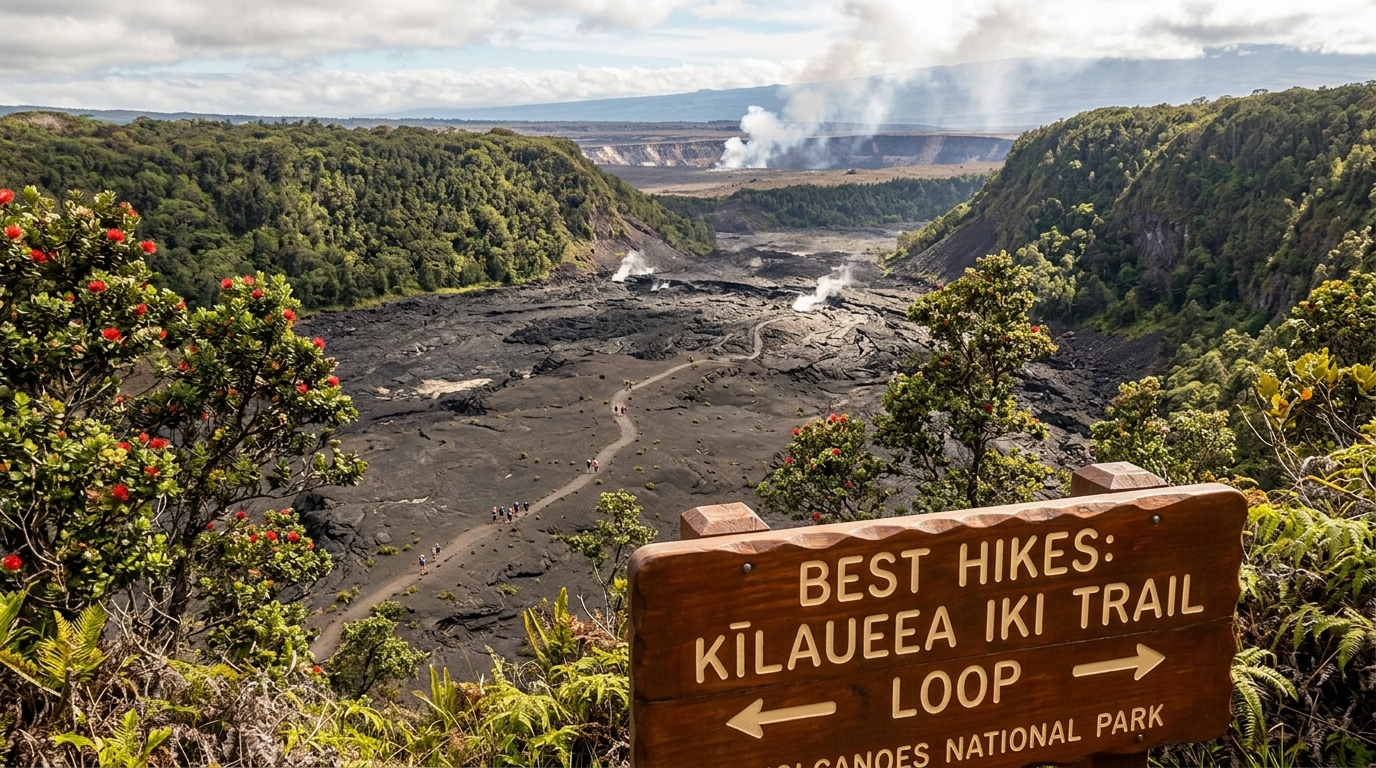
The Kilauea Iki Trail takes hikers across a wide crater floor and up through a lush tropical rain forest.
This popular route drops several hundred feet from the rim down to the hardened lava lake floor. Walking across the black crater floor gives visitors a direct look at steam rising from cracks in the ground. After crossing the crater, hikers climb back up a steep switchback trail surrounded by tall ferns and native trees. According to the National Park Service, this loop is moderately challenging and requires good footwear for uneven lava rocks and wet dirt.
Witnessing Volcanic Scars Along Devastation Trail
The Devastation Trail provides an easy, paved walk that shows the striking scars left by past volcanic eruptions.
This short path sits near the crater rim and is fully paved, making it accessible for many visitors. The surrounding area was heavily damaged by cinder falls from the 1959 Kilauea Iki eruption, leaving standing dead ohia trees alongside newly growing plants. While the walk is short and flat, the open landscape offers very little shade. Travelers should bring sun protection and water before starting this scenic walk.
Viewing Overlooks Along the Crater Rim Trail
Crater Rim Trail sections highlight scenic overlooks and partial loops that give wide views of the main caldera.
Portions of the historic Crater Rim Trail remain open to hikers, offering panoramic views of Kilauea Caldera. These paths wind along the upper cliffs, passing through native shrublands and areas touched by volcanic steam. Visitors should check trail conditions with park rangers before heading out, as ground cracks or high gas levels sometimes cause temporary closures. For travelers interested in other rugged mountain landscapes, exploring top hiking routes around Crater Lake offers a helpful comparison for high-elevation park planning.
Stopping at Scenic Vistas Along Chain of Craters Road
Chain of Craters Road stops and short walks cover coastal hikes and roadside craters for travelers with less time.
Driving down Chain of Craters Road leads visitors from the summit down to the ocean, passing numerous old lava flows and pit craters along the way. Short walks near the road allow visitors to step out and view geological formations without committing to long hikes. The end of the road features views of the vast sea arch and the edge of past lava flows meeting the ocean. Weather near the coast can be hot, windy, and dry, so carrying extra drinking water is essential.

Preparing for Volcanic Hazards and Summit Weather
According to the National Park Service, essential safety tips and volcanic hazards outline important risks like toxic volcanic gases, changing weather, and rough terrain.
Hawaii Volcanoes National Park presents unique dangers that require careful preparation by every visitor. Volcanic gases such as sulfur dioxide can affect breathing, especially for individuals with respiratory conditions. The National Park Service advises checking air quality alerts before starting any hike. Additionally, weather at higher elevations can turn cool, wet, and windy very quickly, so packing a rain jacket and sturdy boots is necessary for a safe trip.
Frequently Asked Questions About Volcano Trails
Frequently asked questions about volcano hiking answer common reader inquiries regarding trail conditions, permits, and preparation.
Do I need a permit to hike in Hawaii Volcanoes National Park?
Most day hikes do not require a special permit, but standard park entrance fees apply according to the National Park Service.
Are dogs allowed on the hiking trails?
Dogs are restricted on most park trails to protect native wildlife and ensure visitor safety, so pets should be left at home.
What should I pack for a day hike here?
Hikers should bring plenty of water, sunscreen, sturdy hiking boots, a rain jacket, and snacks for the journey.
Are the trails open year-round?
Trails remain open most of the year, but sudden volcanic activity, high gas emissions, or heavy storms can cause temporary closures.
Is walking on hardened lava safe?
Walking on hardened lava is safe on marked trails, but visitors must stay on the path to avoid unstable ground and sharp edges.
Where can I check current trail conditions?
Visitors can check current weather, gas advisories, and trail closures directly at the Kilauea Visitor Center or on the official National Park Service website.
Disclaimer: Trail conditions, weather patterns, and park rules can change over time. Always verify current details and safety guidelines from official sources before starting your hike.

I’m Muhammad Ubaid, founder of YBR Magazine. I research and write detailed guides on America’s National Parks — covering entry fees, permits, best times to visit, and planning tips — using official NPS sources and up-to-date information.