

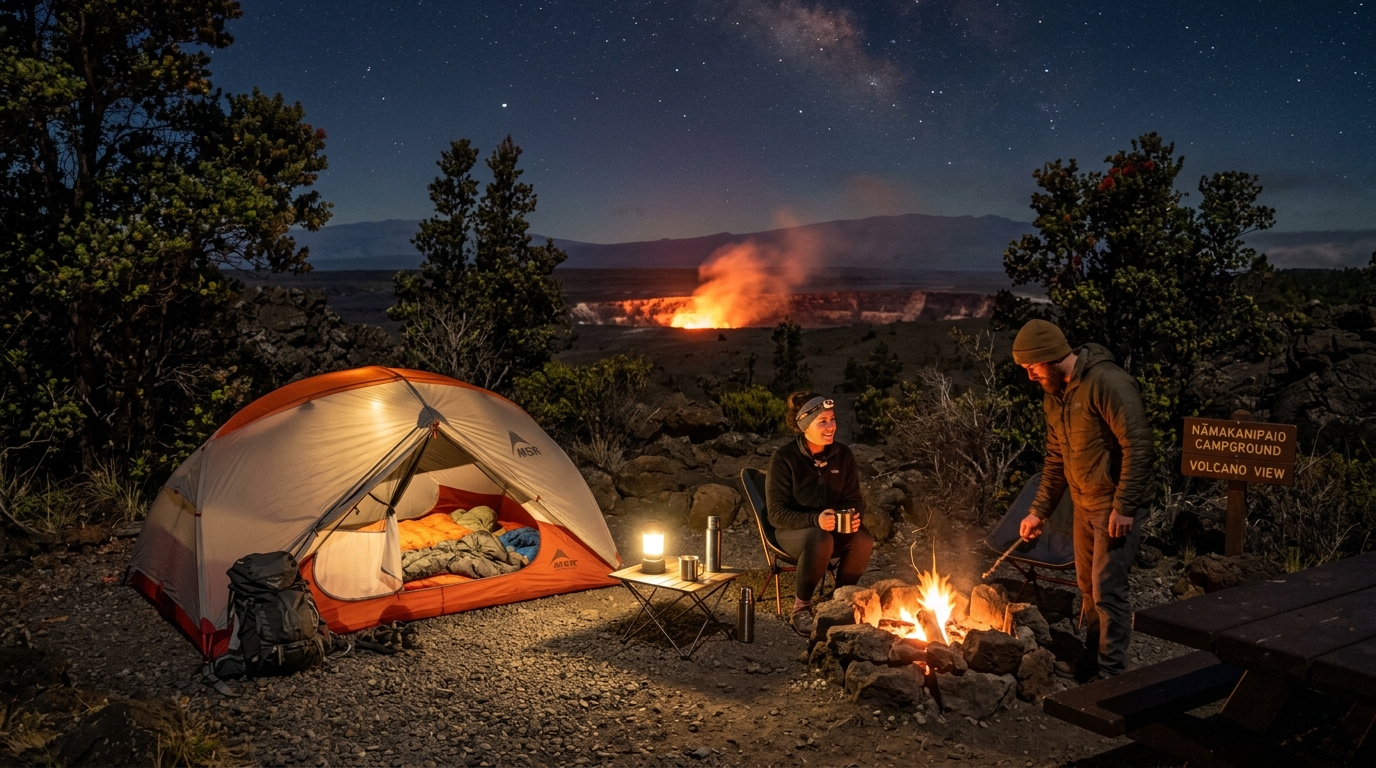
Planning an overnight stay on active volcanic ground gives travelers a rare chance to witness raw geology right outside their tent flap. Managing Hawaii Volcanoes National Park camping requires an understanding of rugged terrain, shifting weather patterns, and strict park regulations. Unlike standard forest campgrounds in mainland parks, this environment exposes visitors to sulfur dioxide gas, rapid temperature drops, and remote wilderness conditions. Preparing thoroughly ensures that every camper stays safe while experiencing one of the most dynamic landscapes on earth, turning what could be an overwhelming trip into an unforgettable adventure.
Sleeping on Active Calderas at Namakan Pauio and Kulanaokuaiki Campgrounds
Namakan Pauio and Kulanaokuaiki are the two official drive-in options managed inside the park boundaries.
Namakan Pauio sits at an elevation of about 4,000 feet amid tall eucalyptus trees, offering grassy tent sites, restrooms, water spigots, and concession-operated cabins. This higher elevation brings cool mountain air and occasional morning mists that contrast sharply with coastal tropical heat. Meanwhile, Kulanaokuaiki sits a few miles down the Chain of Craters Road, providing a much more rustic setup with primitive tent pads, picnic tables, and vault toilets, but zero running water. According to the National Park Service, advance reservations through recreation.gov are mandatory for both locations, and drive-up camping is never permitted under any circumstances.
Navigating Remote Wilderness Zones and Backcountry Shelters
Venture beyond the paved roads into the park’s rugged backcountry for a genuinely isolated volcanic wilderness experience.
Backcountry routes wind across coastal shelves and high-elevation desert zones where hikers must carry every drop of drinking water and pack out all waste. According to the National Park Service, spending a night in these remote areas requires securing an advance wilderness permit before starting the trek. Weather shifts quickly across these exposed volcanic expanses, meaning reliable navigation tools and sturdy gear are essential for survival. Campers must also remain vigilant about changing volcanic activity and obey all trail closures enforced by park rangers to protect public safety.
Mandatory Reservation Policies and Park Service Regulations
Securing a legal site demands strict adherence to booking windows and park rules established to protect visitors and fragile habitats.
Campers must possess a printed or digital reservation confirmation before occupying any drive-in site or backcountry zone. According to the National Park Service, standard entrance fees apply upon arrival in addition to nightly campground reservation costs. Open campfires and charcoal grills are strictly banned throughout the park due to extremely high fire risks and dry brush. Visitors must also practice Leave No Trace principles by packing out all trash, securing food against local wildlife, and respecting fragile archaeological or cultural sites.

Coping with Volcanic Hazards, Elevation Cold, and Missing Amenities
Volcanic gases, chilly mountain air, and a total lack of modern luxuries shape the everyday reality of sleeping in this park.
One major practical downside is potential exposure to sulfur dioxide emissions drifting from nearby vents, which can trigger breathing trouble for sensitive individuals. High-elevation nights turn surprisingly cold and wet, catching unprepared travelers off guard who expect standard tropical warmth after dark. Furthermore, neither drive-in campground features hot showers or electrical hookups, meaning visitors must embrace a self-reliant lifestyle without modern conveniences. For travelers mapping out broader outdoor itineraries after touring the islands, reading a map Mesa Verde National Park layout guide provides helpful context for comparing rugged park infrastructures and remote boundaries.
Frequently Asked Questions
Can I pitch a tent anywhere inside Hawaii Volcanoes National Park?
No, camping is strictly restricted to designated drive-in campgrounds and permitted backcountry wilderness sites.
Do I need to make campground reservations ahead of time?
Yes, all drive-in campsites and backcountry permits must be reserved in advance through recreation.gov according to the National Park Service.
Are campfires allowed at the campgrounds?
No, campfires and open flames are strictly banned throughout the entire park due to severe fire danger.
Is there drinking water available at all campgrounds?
Namakan Pauio provides water spigots, but Kulanaokuaiki Campground lacks drinking water entirely, requiring campers to pack their own.
Are there hot showers at Hawaii Volcanoes National Park campgrounds?
No, standard shower facilities and electric hookups are not available at any of the park campgrounds.
What gear should I pack for nighttime temperatures?
Pack warm thermal layers, a waterproof tent, and sturdy windbreakers, as high-elevation zones get cold and wet after sunset.
Disclaimer: Rules, fees, and campground availability change over time. Always verify current conditions and booking requirements directly from official sources like the National Park Service before your trip.

I’m Muhammad Ubaid, founder of YBR Magazine. I research and write detailed guides on America’s National Parks — covering entry fees, permits, best times to visit, and planning tips — using official NPS sources and up-to-date information.