

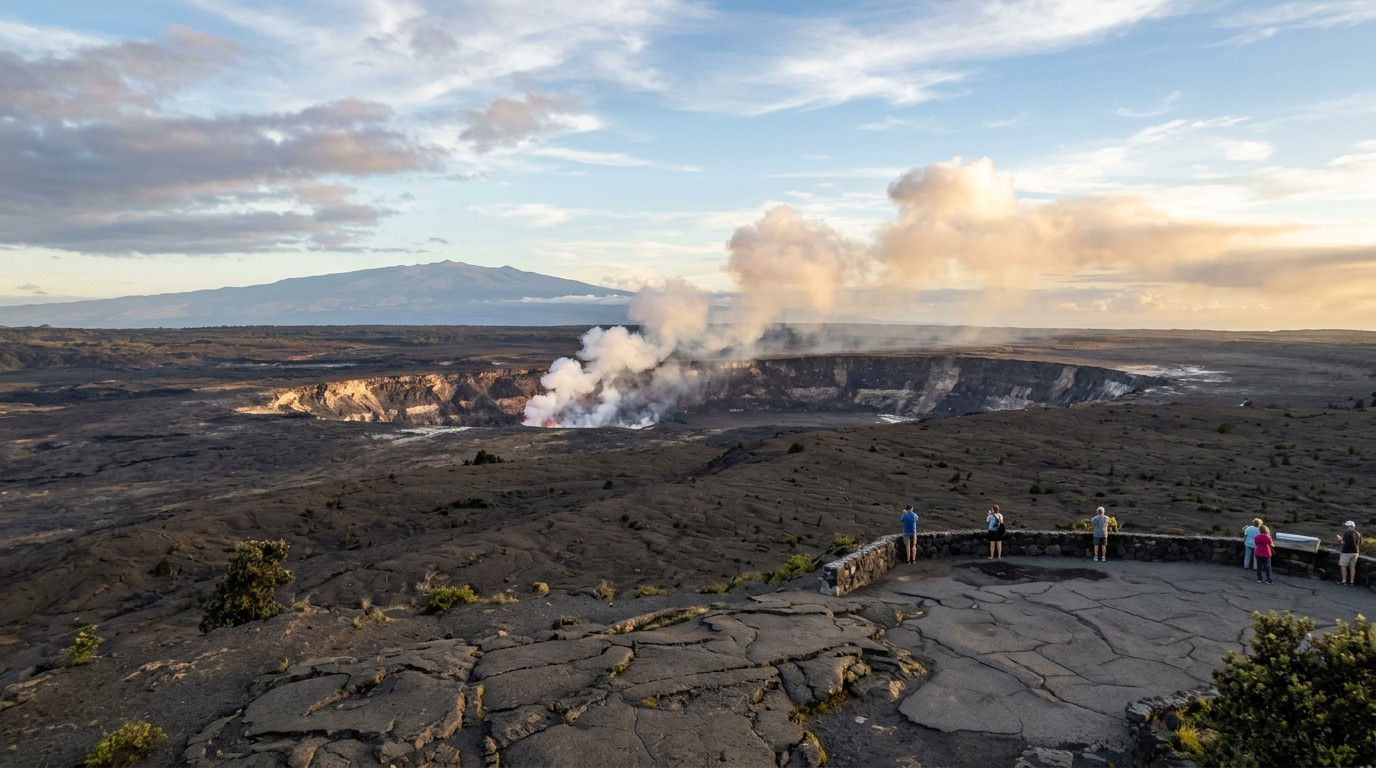
Planning a trip to an active volcanic landscape requires a different kind of preparation than visiting a standard forest or canyon park. Volcanoes National Park activities focus heavily on shifting geological features, steaming vents, and expansive fields of hardened lava rock. Because weather, volcanic smog, and seismic activity can change park conditions quickly, understanding the layout and daily updates from the National Park Service is essential for a smooth visit. Whether you want to drive scenic routes or explore underground caves, knowing what to expect helps you make the most of your time.
First-Timer Must-See Caldera Overlooks and Summit Vistas
First-time visitors can best experience the park by focusing on the accessible summit overlooks and scenic caldera vantage points that reveal the massive scale of Kilauea.
When you first arrive at Hawaii Volcanoes National Park, heading straight to the visitor center helps you check current trail openings and weather warnings. From there, Crater Rim Drive offers magnificent views of the summit caldera, sulfur banks, and steam vents where groundwater meets hot volcanic rock deep below the surface. These spots let you experience active geothermal features safely from established viewing areas. Visitors should remember that parking lots near popular overlooks can fill up quickly during peak morning hours. Checking real-time alerts from the National Park Service before setting out ensures you know which overlooks are open on any given day.
Trekking Across Rugged Volcanic Rock and Basalt Trails
Trekking across rugged volcanic rock allows visitors to experience the stark terrain and walk directly upon cooled remnants of past eruptions.
One of the most popular hikes descends right into the Kilauea Iki Crater, taking you across a solidified lava lake that still steams in places. Another famous route is the Devastation Trail, an easy paved path that highlights the stark scars left by a 1959 cinder cone eruption. Walking across these rugged landscapes means dealing with uneven surfaces, high altitude sun exposure, and unpredictable mountain weather. Sturdy walking shoes, plenty of drinking water, and layers of clothing are necessary because temperatures at the summit can drop sharply and rain showers arrive without warning.
Descending Into the Subterranean Depths of Nahuku
Descending into the subterranean depths of Nahuku gives travelers a rare opportunity to walk through a massive underground cavern carved by ancient flowing magma.
This lushly surrounded geological feature lets you step beneath a canopy of giant tree ferns into a hollow conduit where lava once rushed toward the ocean. Walkways and soft overhead lighting make the cavern easy to navigate, though the paved floor can remain damp and slick from dripping water. Because this attraction draws heavy crowds throughout the day, visiting early in the morning or later in the afternoon helps you avoid the busiest rushes. Visitors seeking inspiration for home decor often look for an authentic Hawaii Volcanoes National Park Poster to capture the beauty of these unique subterranean and surface landscapes after their trip.
Navigating the Long Coastal Descent Along Chain of Craters Road
Navigating the long coastal descent along Chain of Craters Road takes travelers on a winding road trip from misty highlands down to crashing ocean waves.
This paved roadway drops thousands of feet through historic lava flows, offering numerous pullouts where you can examine different layers of dark basalt rock from various eruption years. As you drive further down toward the sea, the landscape transforms from misty highland forests into stark, windswept coastal shelves. The road ultimately ends where a past lava flow covered the asphalt, creating a dramatic turnaround point near the ocean cliffs. Travelers should note that this round-trip drive takes several hours, and there are no gas stations or food vendors along the route, making it important to fuel up beforehand.

Navigating Entry Requirements, Air Quality, and Safety Mandates
Navigating entry requirements and safety mandates requires checking official park guidelines regarding entrance fees, volcanic smog, and restricted zones.
According to the National Park Service, standard entrance fees apply to all private vehicles and individual visitors entering the park, with passes available for purchase at the entrance station or online. Visitors must also pay close attention to vog, which is volcanic smog containing sulfur dioxide gas that can irritate the lungs and eyes. Anyone with respiratory sensitivities should check daily air quality reports before planning long hikes in exposed areas. Staying on marked trails is strictly required because hidden cracks, unstable ground, and scorching steam vents present serious hazards throughout the park.
Frequently Asked Questions About Hawaii Volcanoes National Park
Answers to common questions help travelers prepare effectively for their journey to the summit.
What are the best Volcanoes National Park activities for a short visit?
If you only have a few hours, driving Crater Rim Drive, stopping at the steam vents, and walking through the Nahuku lava tube offer the most iconic experiences.
Is glowing lava always visible in the park?
Visible red lava depends entirely on current volcanic activity, meaning glowing eruptions are never guaranteed and viewing areas change frequently based on safety conditions.
What entrance fees does the National Park Service charge?
Entrance fees vary depending on whether you enter in a private vehicle, on a motorcycle, or on foot, according to official guidelines provided by the National Park Service.
Are pets allowed on park trails?
Pets are restricted to paved areas, roadways, and parking lots, and they are not permitted on hiking trails or inside lava tubes to protect both wildlife and pets.
How is the weather at the summit?
The park summit sits at a higher elevation, meaning conditions are often cool, misty, and windy, requiring visitors to pack warm jackets and rain gear.
Where can visitors check current trail closures?
Current trail closures, weather alerts, and safety advisories are updated regularly on the official National Park Service website.
Disclaimer: Park rules, fees, weather conditions, and trail access can change without notice. Always verify current details and safety alerts directly from official sources before visiting.

I’m Muhammad Ubaid, founder of YBR Magazine. I research and write detailed guides on America’s National Parks — covering entry fees, permits, best times to visit, and planning tips — using official NPS sources and up-to-date information.