

Volcanoes National Park Rwanda Weather: What to Expect on Your Trek
Volcanoes National Park Rwanda weather directly determines the physical challenge, safety, and overall success of your mountain gorilla trek.
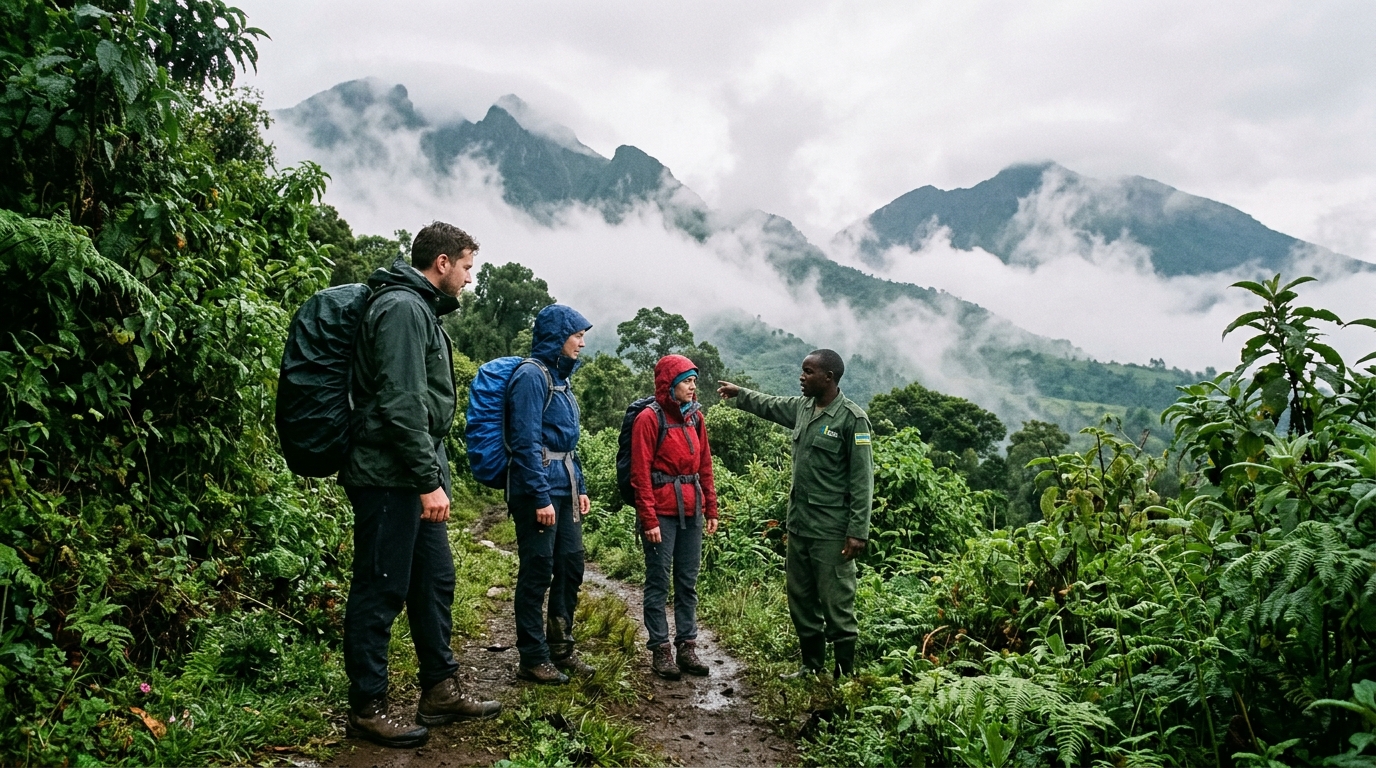
High-altitude mountain terrain shapes the environment of Volcanoes National Park in Rwanda, creating an unpredictable and fast-shifting microclimate rather than a predictable tropical forecast. Travelers cannot rely on general country-wide forecasts for Rwanda because the towering volcanic peaks trap moisture and drop temperatures rapidly. Throughout a single morning of hiking, visitors frequently experience intense sunshine followed by heavy mountain downpours and thick mist. Understanding these rapid atmospheric shifts helps hikers prepare for the muddy slopes and slippery forest trails that define every excursion.
Understanding the Climate of Volcanoes National Park Rwanda
Understanding the climate of Volcanoes National Park Rwanda requires looking past standard regional forecasts to see how high altitude creates rapid, unpredictable daily weather shifts.
As hikers ascend the volcanic chain, the air thins and grows noticeably colder, turning warm valley starts into chilly forest climbs. Local topography forces moisture-laden winds against the mountainside, producing localized rain showers that might miss neighboring towns entirely. Visitors must anticipate cool mornings during the pre-trek briefing at park headquarters, where fleece jackets and warm layers are essential before physical exertion begins.
Dry Seasons Versus Wet Seasons in the Mountains
Dry seasons versus wet seasons in the mountains present two distinct annual cycles that allow travelers to realistically choose which months match their physical comfort level.
The primary dry season runs from June to September, followed by a shorter dry window from December to February, offering firmer ground and fewer rain interruptions. Conversely, the wet seasons spanning from March to May and from October to November bring heavy daily rainfall, swollen streams, and deep volcanic mud. While gorilla trekking operates throughout the year, choosing between these seasons changes how strenuous the steep climbs feel.
To help balance your seasonal expectations with other winter or shoulder-season travel strategies, you can also review our guide on Sonoran winter weather strategies for tips on handling variable outdoor conditions.
Practical Challenges of Mountain Rain and Mud
Practical challenges of mountain rain and mud provide an essential balanced downside view, warning readers about slippery slopes, difficult physical conditions, and sudden trail obstacles.
When torrential downpours hit the rich volcanic soil, footpaths transform into slick slides through the bamboo forests and Hagenia woodlands. Porters play an essential role during these muddy conditions by offering physical assistance and steady support on treacherous inclines. While park rangers do everything possible to maintain safe routes, hikers should expect slower movement and heavier exertion when the terrain gets waterlogged.
What to Wear and Pack for Changing Mountain Weather
What to wear and pack for changing mountain weather translates factual atmospheric conditions into actionable gear choices, such as sturdy gaiters, waterproof layers, and proper boots.
Visitors need a reliable waterproof outer shell, moisture-wicking base layers, and thick wool socks to stay comfortable through changing conditions. Sturdy hiking boots with aggressive treads are mandatory for gripping loose soil, while durable gaiters prevent mud from filling your footwear. Packing waterproof covers for backpacks and cameras ensures that sensitive gear remains protected when heavy mountain mist turns into pouring rain.
Official Park Guidelines for All Weather Conditions
Official park guidelines for all weather conditions reference the Rwanda Development Board rules, explaining that gorilla treks proceed rain or shine unless conditions pose an absolute safety hazard.
Gorilla treks and guided excursions proceed under the authority of the Rwanda Development Board, which monitors active trail conditions continuously to ensure participant safety. Park rangers make real-time safety calls if severe thunderstorms threaten the upper elevations, ensuring that guides and visitors navigate heavy downpours securely. Visitors must follow all instructions given by park authorities during adverse weather events to maintain a safe and controlled environment for everyone in the group.
Common Questions About Volcanoes National Park Rwanda Weather
Common questions about Volcanoes National Park Rwanda weather answer quick logistical questions in simple, plain language to resolve last-minute travel doubts.
What is the best time of year to visit Volcanoes National Park?
The dry seasons from June to September and December to February are generally considered the best times to visit because trails are less muddy and easier to navigate.
Does it rain every day in Volcanoes National Park?
Rain can occur at any time of the year due to the high-altitude microclimate, even during the official dry seasons.
Are gorilla treks cancelled when it rains?
According to the Rwanda Development Board, treks proceed rain or shine unless severe weather creates an immediate safety hazard on the mountain.
How cold does it get at high elevations in the park?
Temperatures drop significantly as you climb higher up the volcanoes, often requiring warm fleece jackets or sweaters during early morning briefings.
What kind of footwear is required for the muddy trails?
Sturdy, waterproof hiking boots with deep ankle support and aggressive treads are mandatory for gripping slippery volcanic mud.
Is travel insurance recommended for weather-related disruptions?
Comprehensive travel insurance is strongly recommended to cover unexpected flight delays, medical needs, or trip interruptions caused by severe weather.
Disclaimer: Weather patterns, park rules, and operational guidelines can change over time. Always verify current conditions and official details directly from the Rwanda Development Board before finalizing your travel plans.
I’m Muhammad Ubaid, founder of YBR Magazine. I research and write detailed guides on America’s National Parks — covering entry fees, permits, best times to visit, and planning tips — using official NPS sources and up-to-date information.