

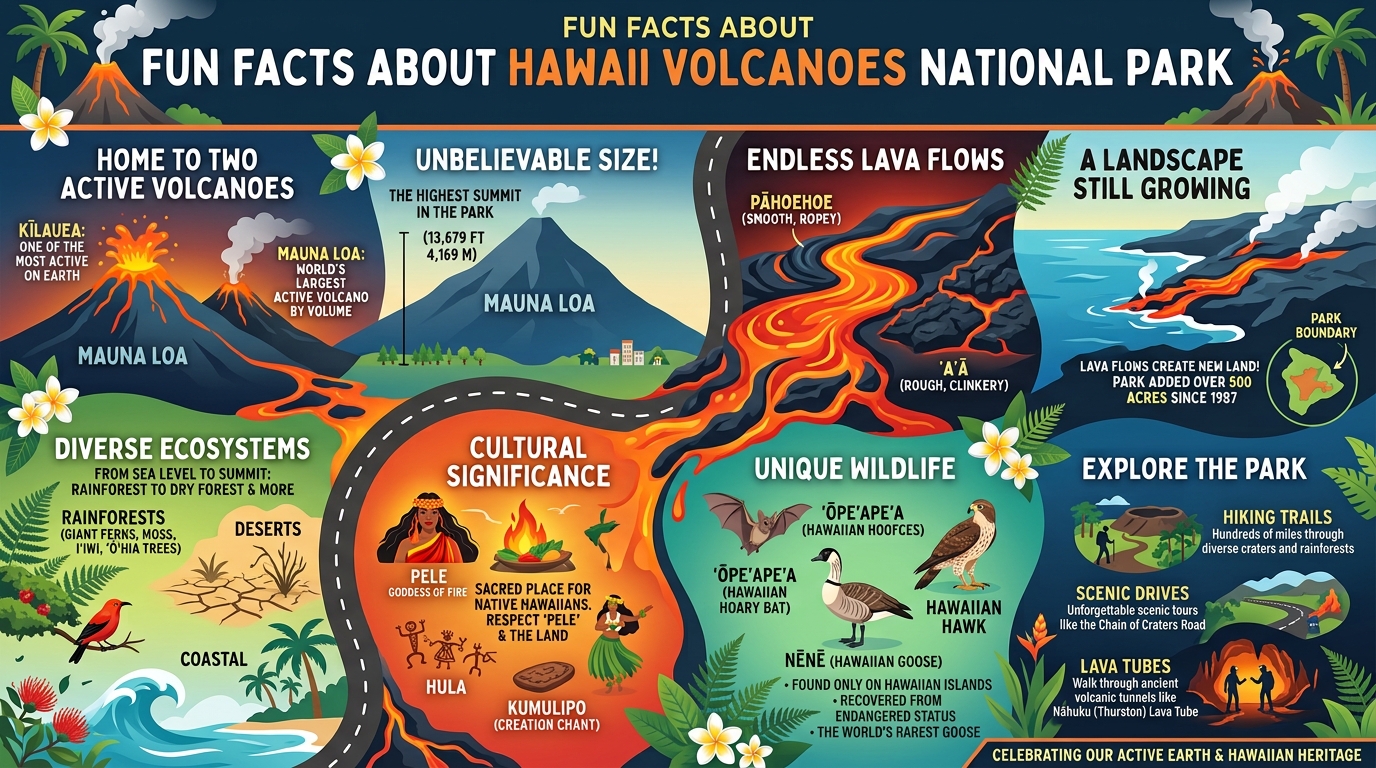
When travelers think about island paradises, they usually picture white sandy beaches and gentle turquoise waves. Hawaii Volcanoes National Park shatters that gentle image with a dramatic landscape of active fire, scorching steam vents, and jagged black basalt. Learning about this protected wilderness gives visitors a fresh look at the powerful geological forces that built the Hawaiian islands from the ocean floor. People searching for fun facts about Hawaii Volcanoes National Park will discover a unique blend of raw science, deep-rooted cultural beliefs, and ecosystems that change right before your eyes.
Pele and Sacred Hawaiian Culture at Halemaʻumaʻu Crater
Halemaʻumaʻu Crater serves as the spiritual heart of Hawaii Volcanoes National Park, where Native Hawaiians honor the volcano deity Pele through enduring cultural traditions.
Traditional chants and modern cultural practices remain deeply connected to the smoking calderas and active fissure zones. Practitioners still leave respectful offerings at the rim of Halemaʻumaʻu Crater to acknowledge the immense natural power housed within the earth. According to the National Park Service, cultural sites across the park are protected under federal law, reminding visitors that these steaming vents are sacred places of worship rather than mere tourist attractions. This spiritual history gives the physical geology a profound cultural weight that shapes every step of the journey.
Kīlauea and Mauna Loa Volcanoes Sharing One Boundary
Hawaii Volcanoes National Park contains Kīlauea and Mauna Loa, which rank among the most active and massive shield volcanoes on the entire planet.
Kīlauea is world-famous for frequent eruptions that draw scientists and curious onlookers from every corner of the globe. Meanwhile, Mauna Loa towers over the island as the largest subaerial volcano in the world by volume, holding an immense amount of mass beneath its slopes. Together, these two geological titans make Hawaii Volcanoes National Park a living laboratory where researchers study how basaltic rock forms and shifts. Standing near their sprawling summit calderas makes visitors realize just how restless the crust of our planet truly is.
Coastal Lava Flows Adding New Land Mass Daily
Flowing rivers of molten rock constantly alter the coastal geography, meaning Hawaii Volcanoes National Park actually expands in size over the decades.
When glowing lava pours into the cold Pacific Ocean along the Chain of Craters Road area, it cools instantly and hardens into brand-new shoreline. This continuous geological process has added hundreds of acres of new land to the Big Island since the park was established. Asphalt roads, hiking pathways, and green forests are sometimes swallowed by slow-moving streams of fire before new routes can be forged. This constant cycle of destruction and creation makes Hawaii Volcanoes National Park one of the most dynamic environments managed by federal authorities.
Summit Freezing Zones and Underground Steam Vents
Hawaii Volcanoes National Park spans multiple extreme climate zones, shifting from snowy high-elevation peaks down to hot, cracking coastal deserts.
Visitors can experience freezing temperatures near the summit of Mauna Loa and sweat in humid tropical air near the ocean hours later. Groundwater plunging deep into the fractured rock meets underground magma chambers, creating dramatic sulfur banks and roaring steam vents. These wild shifts in temperature and moisture allow entirely different ecological zones to thrive within a single afternoon drive. For travelers looking to appreciate unique wilderness protected areas from home, reading about the classic park memorabilia and vintage artwork guides offers another way to connect with these rugged landscapes.
Nēne Geese and Native Honeycreepers of the Park
Hawaii Volcanoes National Park serves as a crucial sanctuary for endangered animals and plants that evolved in complete isolation from the rest of the world.
One of the most famous residents is the nēne, a rare goose species that clawed its way back from the brink of extinction through careful conservation work. Drivers inside Hawaii Volcanoes National Park must keep a sharp eye out for these ground-nesting birds crossing park roads. The native forests are also home to honeycreepers, featuring specialized curved bills designed to sip nectar from vibrant ʻōhiʻa lehua blossoms.

Volcanic Gas Hazards and National Park Safety Rules
Visiting Hawaii Volcanoes National Park requires careful preparation to handle toxic volcanic gases, unpredictable weather, and sudden trail closures.
Volcanic vents continually release invisible sulfur dioxide gas that can cause severe breathing trouble for visitors with asthma or other respiratory conditions. According to the National Park Service, guests must check daily air quality reports and obey all posted safety barriers around unstable caldera edges. Furthermore, the remote geography of Hawaii Volcanoes National Park means food, fuel, and medical supplies are extremely limited once you leave the main visitor center areas behind.
Frequently Asked Questions
What are the two major volcanoes located inside the park?
The park is home to Kīlauea and Mauna Loa, which are two of the most active shield volcanoes on Earth.
Does Hawaii Volcanoes National Park stay open all year round?
Yes, Hawaii Volcanoes National Park is generally open twenty-four hours a day, though specific roads or hiking trails may close due to hazardous volcanic activity.
Is it safe to breathe the air near the main crater overlooks?
Volcanic vents emit sulfur dioxide gas that can irritate your lungs, so visitors must monitor air quality alerts issued by the National Park Service.
Can visitors see molten lava flowing during a typical visit?
Lava eruptions change constantly, meaning visible surface flows depend entirely on active geological conditions at the exact time of your trip.
What entrance fees does the park charge for visitors?
According to the National Park Service, standard vehicle and individual entrance fees apply, though valid federal recreation passes are accepted at the gates.
Are pets allowed on the hiking trails within the park?
Pets are strictly restricted to paved areas and parking lots to protect fragile native wildlife and keep animals safe from hidden ground cracks.
Disclaimer: Volcanic activity, weather conditions, and park regulations can change without warning. Always verify current alerts and guidelines from official sources before planning your trip.

I’m Muhammad Ubaid, founder of YBR Magazine. I research and write detailed guides on America’s National Parks — covering entry fees, permits, best times to visit, and planning tips — using official NPS sources and up-to-date information.