

Understanding How to Get to Hawaii Volcanoes National Park From the Start
Planning how to get to Hawaii Volcanoes National Park begins long before you reach the actual entrance gates, because the park sits on the large and varied Big Island of Hawaii. Because the island spans multiple climate zones and covers a massive geographic area, visitors often find that transportation takes much more planning than expected.
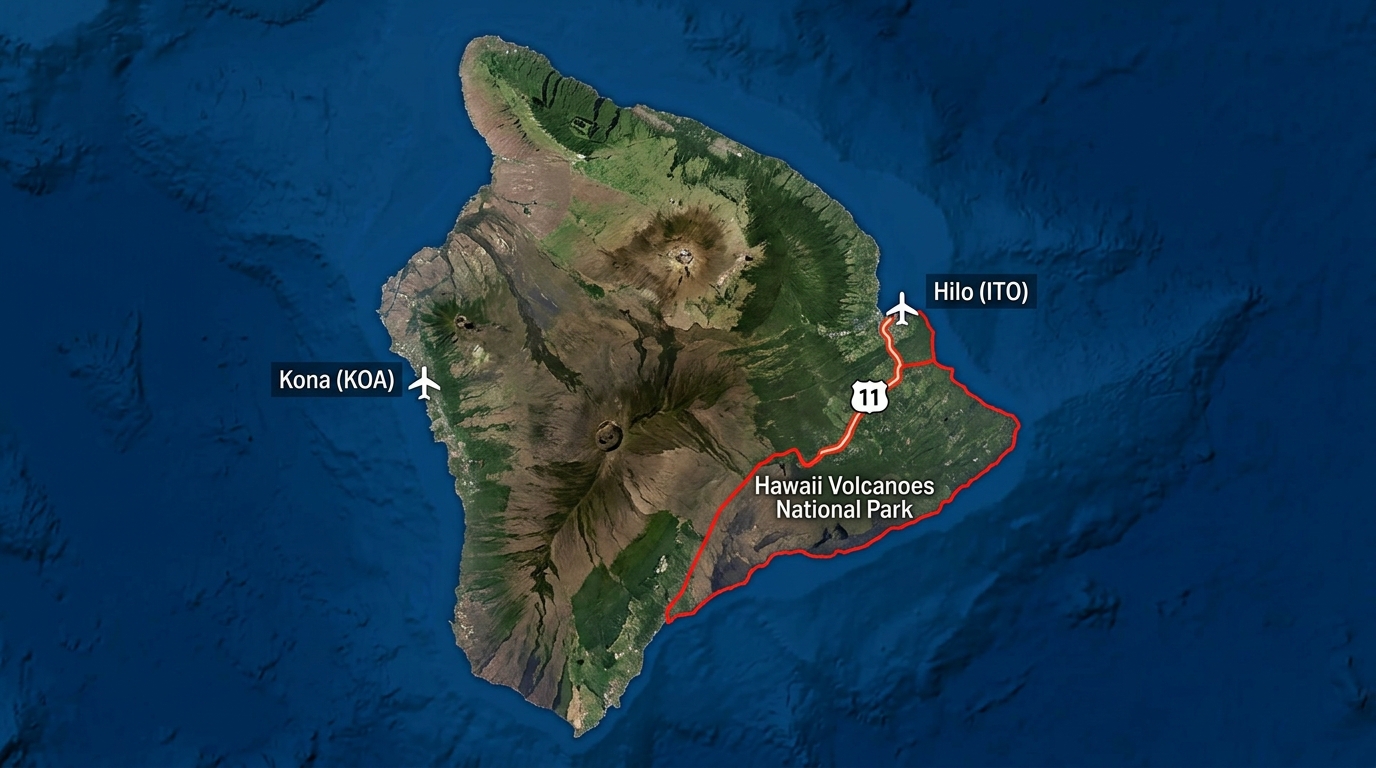
Visitors arrive by flying into one of two primary airports on the island, which are located far apart on opposite coasts. Choosing the correct airport plays a major role in how long your driving journey will take once you land.
The two main air travel hubs are Ellison Onizuka Kona International Airport at Keāhole on the western side and Hilo International Airport on the eastern side. Travelers should check flight schedules and rental car availability for both airports before finalizing travel plans, as each option offers a completely different travel experience and distance to cover.
Navigating the Long Drive From Kona Versus Hilo
Navigating the long drive from Kona versus Hilo involves two drastically different routes and time commitments across the Big Island.
Driving from Kona International Airport takes roughly two and a half to three hours under normal traffic and weather conditions. This scenic route usually takes drivers south along the Mamalahoa Highway or across the higher saddle roads, passing through changing ecosystems, open ranches, and historic rural towns.
In contrast, driving from Hilo International Airport is much shorter and usually takes only about 45 minutes to one hour. Hilo sits on the windward side of the island, meaning the drive to the park climbs steadily through lush rainforests and winding rural roads.
Vehicle Passes and National Park Service Entry Regulations
Vehicle passes and National Park Service entry regulations dictate how visitors clear the gate stations and enter the volcanic terrain.
According to the National Park Service, standard entrance fees apply to private vehicles, motorcycles, and individual pedestrians visiting Hawaii Volcanoes National Park. Visitors can also use valid America the Beautiful interagency annual passes or specific local park passes for entry.
Official park rules require all visitors to stay on designated trails and respect closed areas for safety reasons related to volcanic activity and unstable ground. Checking the official National Park Service website before your trip ensures you have up-to-date information on daily hours, weather advisories, and permit requirements.

Remote Roadways and Other Challenges on the Big Island
Remote roadways and other challenges on the Big Island require drivers to stay alert during the journey to the summit.
Driving across the Big Island often involves navigating dark, narrow, and winding roads that lack streetlights, which can feel stressful after a long flight. Weather conditions can also shift rapidly at higher elevations, turning clear skies into heavy fog, rain, or chilly winds with little warning.
Another major downside is the complete lack of fuel stations inside the remote wilderness areas within the park boundaries. Drivers must fill up their gas tanks in nearby towns like Volcano village or Hilo before entering, or else they risk running low on fuel in isolated locations.
To make the most of your time exploring the summit craters and coastal roads, you can check out our guide on exciting things to do in Volcanoes National Park for more ideas.
Common Inquiries About Reaching the Big Island Summit
Common inquiries about reaching the Big Island summit help travelers clarify logistics before packing their bags.
Which airport is closer to Hawaii Volcanoes National Park?
Hilo International Airport is much closer, taking only about 45 minutes to one hour of driving time to reach the park entrance.
How long is the drive from Kona to the park?
The drive from Kona International Airport typically takes between two and a half and three hours depending on traffic and the chosen highway route.
Are there public buses that go to Hawaii Volcanoes National Park?
Public transit options are extremely limited, so renting a car or booking a guided tour is the primary way to reach the park.
Do I need to buy a park pass in advance?
Visitors can pay entrance fees at the fee station upon arrival or use standard national park annual passes without needing advance reservations.
Are there gas stations inside Hawaii Volcanoes National Park?
There are no gas stations inside the park, so drivers must fuel up in nearby communities before arriving.
What should I pack for the drive and park visit?
Pack warm layers for higher elevations, rain gear for sudden showers, drinking water, and snacks since services inside the park are limited.
Disclaimer: Travel conditions, weather patterns, and park fees can change over time. Always verify current details directly from official park sources before starting your journey.

I’m Muhammad Ubaid, founder of YBR Magazine. I research and write detailed guides on America’s National Parks — covering entry fees, permits, best times to visit, and planning tips — using official NPS sources and up-to-date information.