

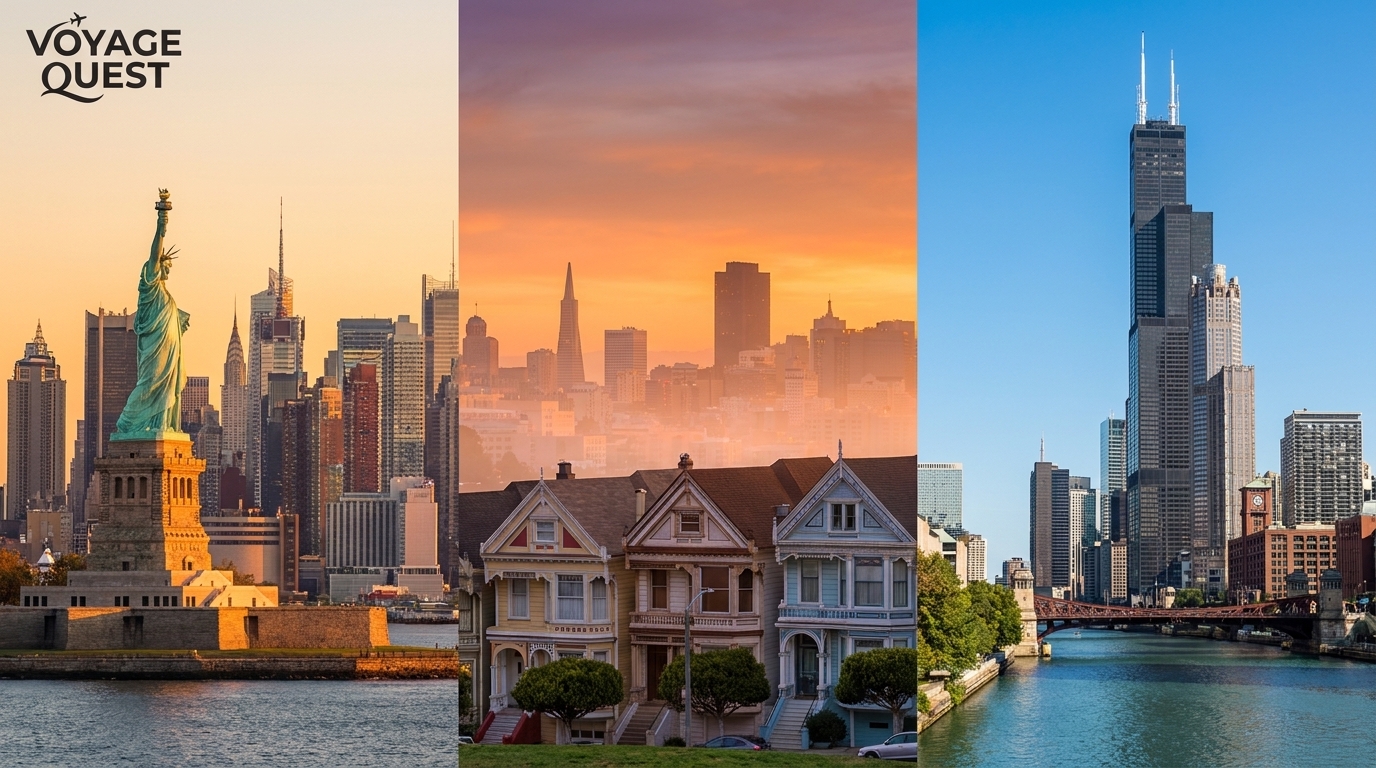
These budget travel tips expensive cities USA travelers actually use can turn a trip that looks impossible on paper into one you can actually afford. Cities like New York, San Francisco, Boston, Honolulu, and Washington, D.C. carry some of the highest hotel and dining prices in the country. But high average prices do not mean every traveler pays them. With the right timing, neighborhood choices, and daily habits, you can visit these cities on a fraction of what most guides suggest — and that is exactly what this article covers.
This matters more in 2026 than in past years. Hotel rates in top-tier cities have kept climbing, and attraction prices have followed. A single-day adult ticket at Walt Disney World now tops out at $209 during peak periods, and San Francisco hotel rooms average around $250 a night. At the same time, budget travelers are proving that a daily spend well under $150 is still realistic in even the priciest U.S. cities, once you know where the savings actually come from.
What Makes a U.S. City “Expensive” for Travelers?
A U.S. city becomes expensive for travelers mainly because of three costs stacking together: hotel rates, food prices, and paid attractions, not because everything in that city costs more. San Francisco, New York, Boston, Washington, D.C., and Honolulu regularly top these rankings because they combine high real estate costs with heavy tourist demand. Seasonal destinations like Anchorage and Key West also spike during their peak months, when a one-week family trip can run well past $6,800 for lodging, activities, and dining alone.
It helps to separate the three cost categories, because each one has its own workaround:
- Accommodation — driven by limited hotel supply and high land costs in city centers.
- Attractions — theme parks, museums, and guided tours with fixed, often rising ticket prices.
- Food and drink — restaurant markups in tourist-heavy neighborhoods.
Once you see these as separate problems, you can attack each one differently instead of assuming the whole trip has to be expensive.
When Is the Cheapest Time to Visit Expensive U.S. Cities?
The cheapest time to visit most expensive U.S. cities is during their shoulder seasons — typically late winter (January–March) and early fall (September–October) — when hotel demand drops but weather is still manageable. Summer remains the priciest stretch nationwide, especially in coastal and destination cities, where airfare and dining costs climb alongside hotel rates. Anchorage, for example, sees such a sharp summer spike that costs there can rival New York City during the same weeks.
Booking strategy matters as much as the calendar:
- Set price alerts on flight-tracking tools like Google Flights so you catch fare drops the moment they happen.
- Avoid major conventions, holidays, and local festivals, which push hotel rates up even in shoulder season.
- Book Tuesday–Thursday stays when possible; weekend rates in business-travel cities like D.C. and Boston often run lower, while the opposite is true in leisure-driven cities.
- Watch for one-off fare sales rather than assuming prices only drop months in advance.
How Can You Save on Hotels in Expensive Cities?
You can save the most on hotels in expensive cities by staying just outside the tourist core and relying on public transit to bridge the gap, since a short subway or bus ride often costs far less than the price difference between a downtown room and one a few stops away. In cities like San Francisco, where hotel averages sit around $250 a night, moving even ten to fifteen minutes outside the center can cut that rate substantially.
Other proven approaches:
| Strategy | Best For | Typical Savings |
|---|---|---|
| Outer-neighborhood hotels or Airbnb | NYC, SF, Boston, D.C. | Often 30–50% off downtown rates |
| Hostels with private rooms | Solo or budget-conscious travelers | Lower nightly cost than any hotel |
| University-area lodging (off-semester) | College towns near expensive cities | Discounted summer rates |
| Loyalty program free nights | Frequent travelers | Full night at no cash cost |
A budget traveler in New York, for instance, can realistically allocate around $45–$50 a night to a shared hostel or an Airbnb outside Manhattan, which is a small fraction of a standard Manhattan hotel rate.
If your San Francisco leg has an extra day built in, it’s worth knowing how far Yosemite National Park is from San Francisco — a scenic day trip that stretches your city stay without adding another expensive hotel night.
What’s the Best Way to Get Around Without Overspending?
The best way to get around expensive U.S. cities without overspending is to walk or use public and bike-share transit instead of rideshares, since most of these cities have compact, walkable downtown cores. Manhattan, central San Francisco, downtown Boston, and central Washington, D.C. are all dense enough to cover largely on foot, with subway or bus rides filling in longer gaps.
Practical transit tips:
- Bike-share programs such as Bay Wheels (San Francisco), Divvy (Chicago), and Capital Bikeshare (D.C.) often price a full day pass close to a single rideshare fare, but allow unlimited rides.
- In Los Angeles, you generally do not need a car if you’re based in a walkable, transit-served neighborhood — save the rental car for a single day trip to the beach or outlying areas.
- New York’s Staten Island Ferry is completely free and delivers close-up views of the Manhattan skyline and the Statue of Liberty, making it one of the best zero-cost activities in the city.
- Buy multi-day transit passes instead of single fares if you’re taking more than two or three rides a day.
How Do You Eat Well in Expensive Cities Without Overspending?
You eat well in expensive cities without overspending by mixing grocery-store breakfasts, food-truck or counter-service lunches, and one planned sit-down dinner, rather than eating every meal at a restaurant. This single habit shift is often the biggest daily savings lever available, larger than any hotel or transit trick.
A few city-specific examples show how far this stretches:
- In Los Angeles, food trucks like Kogi serve Korean-Mexican fusion plates for roughly $10–12, while taco stands in neighborhoods like Little Tokyo charge just a few dollars per taco.
- Grocery chains in most major cities sell breakfast items — fruit, yogurt, bread, coffee — for a fraction of café prices.
- Farmers markets, common in cities like San Francisco and Boston, often have prepared-food stalls that undercut nearby restaurants.
- Lunch specials (prix fixe menus offered only at midday) let you try higher-end restaurants at a much lower price than their dinner menu.
A realistic daily food budget in a city like New York can run around $20–25 total: roughly $5–8 for breakfast, $7–10 for lunch, and $8–10 for dinner, once you build meals around this mix.
Which Free or Low-Cost Attractions Are Worth Prioritizing?
The free or low-cost attractions worth prioritizing are the ones every city already funds for its own residents — public parks, free museum days, and outdoor public art — because they deliver a genuine local experience at no admission cost. Chicago’s Millennium Park, home to Cloud Gate (“The Bean”) and the interactive Crown Fountain, costs nothing to visit and anchors a full afternoon. In summer, the Jay Pritzker Pavilion in the same park hosts free outdoor concerts.
Look for these patterns in any expensive city:
- Museum free days or free evening hours — many major museums offer one free day per week or month.
- Architecture and neighborhood walking tours — several cities run free, donation-based guided tours.
- Public parks and waterfronts — often the most photogenic spots in a city and always free to enter.
- Rotating exhibits at cultural centers — frequently free or pay-what-you-wish.
Chicago is worth calling out specifically here: among the top-tier expensive U.S. cities, it consistently ranks as the most affordable, offering world-class museums, architecture, and food at noticeably lower prices than New York or San Francisco.
How Do You Build a Realistic Daily Budget?
You build a realistic daily budget by adding up a modest hotel share, a grocery-and-street-food-heavy food plan, transit passes, and one or two paid attractions, then testing that number against real traveler data before you commit to it. Broad U.S. travel-cost data for 2026 puts the average traveler spend around $325 a day, while disciplined budget travelers can manage closer to $121 a day — a wide enough gap to show how much control you actually have over your own costs.
A sample budget-traveler daily breakdown in a high-cost city might look like this:
| Category | Approximate Daily Cost |
|---|---|
| Accommodation (shared/outer-neighborhood) | $45–50 |
| Food (grocery breakfast, casual lunch/dinner) | $20–25 |
| Local transit | $10–15 |
| One attraction or activity | $10–20 |
Mid-range travelers who want slightly nicer hotels and two to three paid attractions a day will naturally land above this, but the structure — fixed lodging, controlled food, transit pass, limited paid extras — holds at almost any budget level.
FAQ: Budget Travel Tips for Expensive Cities in the USA
Which U.S. cities are considered the most expensive to visit in 2026?
San Francisco, New York, Boston, Washington, D.C., and Honolulu are consistently ranked among the most expensive U.S. cities for travelers, driven mainly by high hotel and dining costs. Seasonal spikes also make Anchorage and Key West very costly during their peak summer travel months each year.
Is it actually possible to visit New York City on a tight budget?
Yes, it is possible to visit New York City on a tight budget by staying outside Manhattan, relying on the subway, and building meals around grocery items and casual food spots. Budget travelers commonly manage full daily costs — lodging, food, and transit — well under $100 with this approach.
What is the single biggest way to save money in an expensive city?
The single biggest way to save money is cutting restaurant spending, since food adds up faster than almost any other daily cost. Replacing restaurant breakfasts and some lunches with grocery-store meals typically saves more per day than any hotel or transit trick alone.
Do city tourist passes actually save money?
City tourist passes save money only if you visit enough paid attractions to offset the pass price, so they work best for travelers planning three or more paid sights in a short trip. If your plan leans on free parks, museums’ free days, and walking tours, a pass may not pay for itself.
Is public transit safe and practical for tourists in expensive U.S. cities?
Public transit is generally practical and widely used by tourists in cities like New York, Boston, and Washington, D.C., where subway and bus networks cover most major attractions. As with any city, it helps to check current local transit advisories and stick to well-traveled routes, especially late at night.
Which expensive city is the easiest on a budget?
Chicago is often considered the easiest expensive-tier U.S. city to visit on a budget, since it delivers major museums, architecture, and food at noticeably lower prices than New York or San Francisco. It combines walkability, strong public transit, and abundant free attractions.
How far in advance should I book to get the best prices?
There’s no single fixed window that guarantees the lowest fare, so the more reliable strategy is setting fare alerts and booking when a genuine price drop appears, rather than waiting for a specific number of months. Shoulder-season travel (typically January–March or September–October) also tends to offer better hotel rates than summer.
Final Thoughts
Visiting an expensive U.S. city does not require an expensive trip. The travelers who manage it well are not lucky — they are simply intentional about where their money goes, choosing outer neighborhoods over downtown hotels, groceries and food trucks over restaurant chains, and free parks and museum days over paid attractions when it makes sense. Start with one or two of the strategies above, build them into your next trip, and you’ll likely find that the “expensive city” reputation says more about how most people travel than about what a trip there actually has to cost.
This article is for general informational purposes only. Prices, hotel rates, and attraction costs change frequently and can vary by season, demand, and provider — please verify current rates directly with airlines, hotels, and attractions before booking. This article reflects information available at the time of writing and may be updated as new information emerges.

I’m Muhammad Ubaid, founder of YBR Magazine. I research and write detailed guides on America’s National Parks — covering entry fees, permits, best times to visit, and planning tips — using official NPS sources and up-to-date information.