

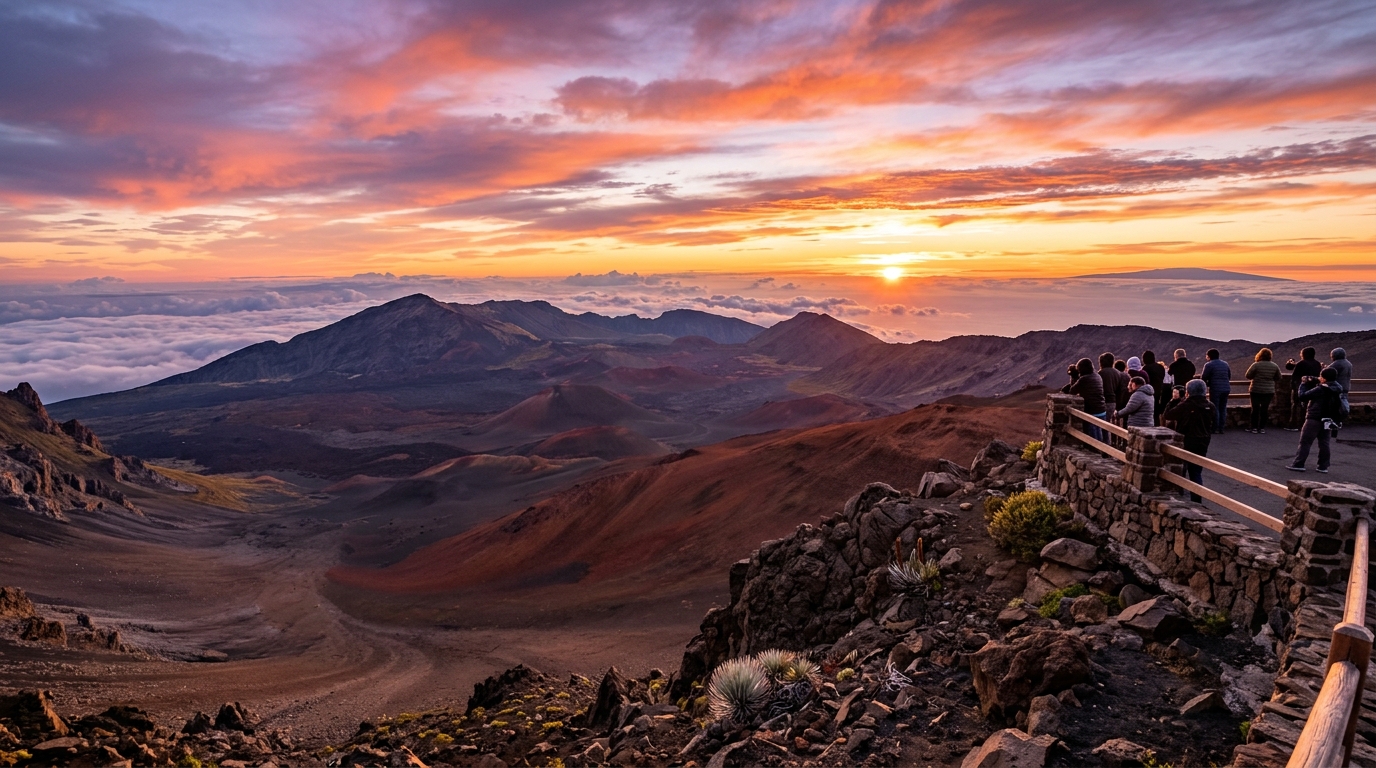
Why Choose a Sunset at Haleakala National Park
Choosing a sunset at Haleakala National Park offers a much more relaxed alternative to the famous morning visits.
While sunrise viewing at Haleakalā National Park requires a very early wake-up call, cold temperatures, and a hard-to-get advance parking reservation, seeing a sunset at Haleakala National Park is much more relaxed. Visitors do not need a special sunrise permit for evening visits. This makes planning a trip much simpler for travelers who prefer to sleep in or maintain a flexible schedule while exploring Maui. Instead of rushing up the mountain in pitch darkness before dawn, evening visitors can enjoy a leisurely day at lower elevations before beginning the scenic drive up the volcano slopes.
What to Expect at the Summit in the Evening
Visitors at the summit in the evening will experience extreme high altitude, freezing temperatures, and sweeping cloud inversions.
Standing at 10,000 feet above sea level changes how your human body feels. The atmosphere contains less oxygen at this elevation, so walking around the viewing areas can make you breathe faster than normal. As the sun dips lower toward the horizon, the sky fills with vibrant colors, and thick cloud inversions frequently form below the summit. Once daylight fades completely, the high elevation provides incredible stargazing opportunities for anyone willing to brave the cold night air.
Essential Rules, Fees, and Official Sources
Park entry fees apply for all vehicles entering Haleakalā National Park, according to the National Park Service.
Visitors should check official park websites for current pricing and vehicle pass requirements before heading up the mountain. There are no gas stations, restaurants, or convenience stores once you pass the park entrance gates on the upper slopes. Travelers must bring everything they need for their journey, including enough drinking water, warm clothing, and emergency supplies to stay safe. To explore similar high-elevation travel planning insights and scenic mountain vistas, you can read our guide to evening vistas across the ridge.
Packing the Right Gear for High Altitudes
Packing heavy jackets, warm layers, and extra water is essential for surviving the freezing summit temperatures.
Many people make the common mistake of assuming Hawaii is always warm, but temperatures at 10,000 feet frequently drop below freezing after sunset. Strong mountain winds can make the air feel even colder than the thermometer indicates. Wearing thermal layers, beanies, gloves, and sturdy pants will keep you comfortable while you watch the light fade over the crater. Dehydration happens much faster at high altitudes, so keeping bottled water handy is always a smart idea for every member of your group.
Driving Safety and Navigating the Mountain Road in the Dark
Navigating steep, unlit switchbacks safely after dark is the biggest challenge of an evening visit.
Driving down the volcano road requires intense concentration because the route features tight turns with steep drop-offs and no streetlights to guide your path. Heavy fog and rolling cloud cover can reduce visibility to just a few feet at times, making the descent slow and tiring. Drivers must take their time, use low beam headlights, and watch out for native wildlife or cyclists coming down the mountain. Resting your eyes before the drive and letting faster cars pass safely will help keep everyone protected.

Finding Restaurants Near Haleakala National Park After Dark
Finding restaurants near Haleakala National Park requires planning because dining options on the mountain itself do not exist.
After leaving the summit, hungry visitors usually stop in upcountry towns like Kula, Pukalani, or Makawao on the way back down to sea level. These small towns offer local eateries, cafes, and casual spots, but many kitchens close early in the evening. Checking closing times in advance ensures you will not be left searching for food late at night after a long drive down the winding mountain highway.
Frequently Asked Questions About Sunset at Haleakala
Answering common questions helps travelers plan their evening mountain adventure with confidence.
Do I need a reservation for sunset at Haleakala National Park?
No reservations or special permits are required for entering the park specifically to watch the sunset.
How cold does it get at the summit after sunset?
Temperatures at 10,000 feet often drop into the 30s or even lower, especially when factoring in the harsh wind chill.
How long does the drive take from sea level?
Driving from the coast up to the summit takes about two hours each way, depending on your exact starting point on Maui.
Are there restrooms at the summit?
Vault toilets are available near the visitor centers and main parking lots at the summit area.
Can I see the stars after the sun goes down?
The high altitude and clear skies above the clouds make the summit an exceptional spot for stargazing once night arrives.
Is there any food sold inside Haleakalā National Park?
No food or drinks are sold anywhere inside the park, so you must pack all necessary snacks and water before heading up.

I’m Muhammad Ubaid, founder of YBR Magazine. I research and write detailed guides on America’s National Parks — covering entry fees, permits, best times to visit, and planning tips — using official NPS sources and up-to-date information.