

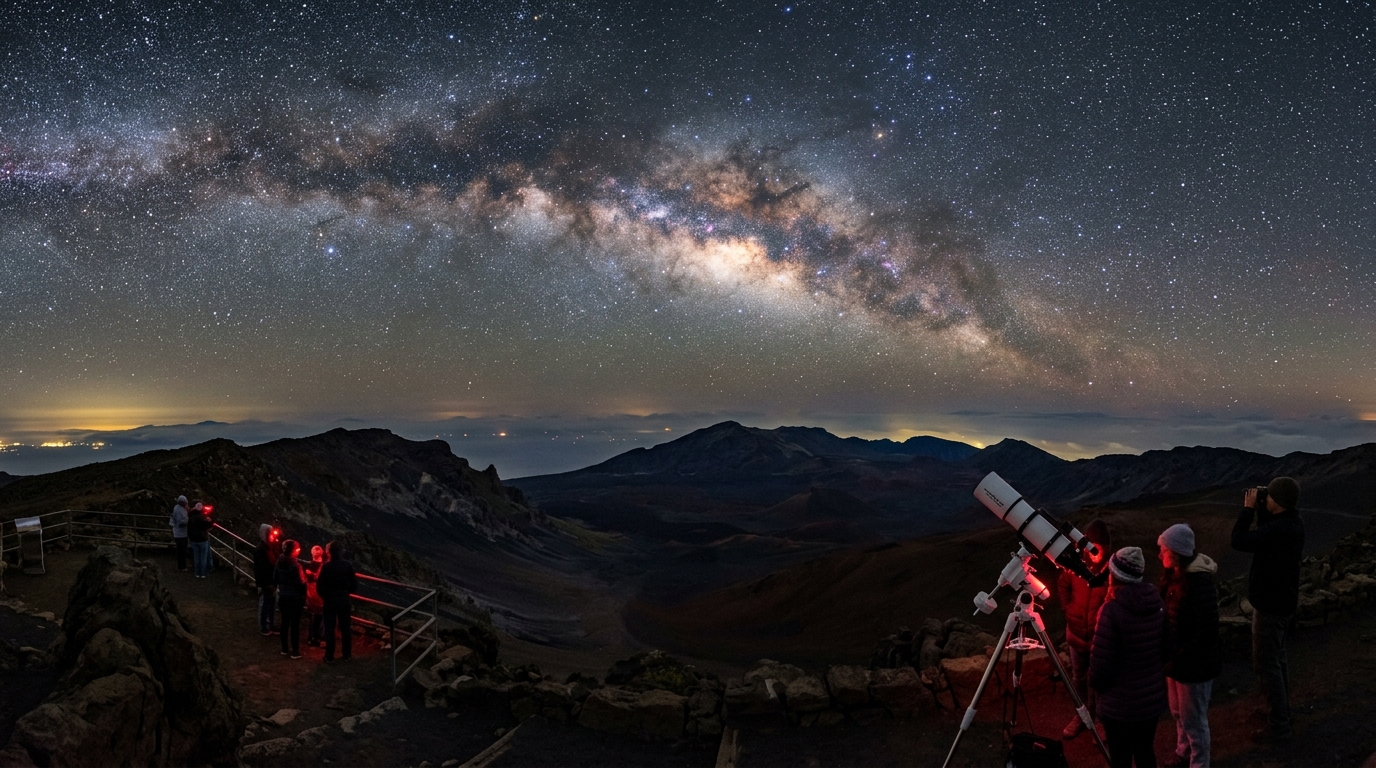
Why Haleakala National Park Stargazing is Special
Haleakala National Park stargazing offers one of the clearest and most breathtaking night sky viewing experiences on the planet because the summit sits far above the clouds and atmospheric pollution. Haleakala National Park stargazing takes place at an extreme elevation of over 10,000 feet, where the thin air provides an unobstructed window into the cosmos for astronomers and casual visitors alike. Many beach-going Maui tourists arrive at the volcano entirely unprepared for the sudden, drastic change in environment. Haleakala National Park stargazing requires careful planning for bitter cold weather and high elevation rather than just treating the trip as a casual evening drive up the mountain.
At this elevation, the atmosphere contains much less moisture and dust than at sea level. This thin blanket of air means that starlight reaches your eyes with minimal distortion, revealing the Milky Way in striking detail on clear nights. Visitors can often spot constellations, planets, and shooting stars with the naked eye long before setting up any specialized photography gear or telescopes. However, this high vantage point also exposes stargazers to rapid weather shifts, strong high-altitude winds, and plunging temperatures that demand absolute respect and thorough preparation.
Understanding the Strict Vehicle Reservation Rules
According to the National Park Service, visitors entering the summit area for sunrise must secure an advance vehicle reservation, though evening stargazing and sunset viewing generally do not require this specific permit. Haleakala National Park enforces these rules strictly to manage limited parking spaces at the summit and protect the fragile volcanic ecosystem from overcrowding. Travelers frequently confuse sunrise permit rules with night viewing guidelines, which can lead to unexpected confusion and disappointment at the entrance gates. Visitors should always check the official Recreation.gov website or consult the National Park Service directly for the latest fee schedules, reservation windows, and current park policies before making the long drive.
Even though sunset and night viewing do not currently demand the sunrise ticket, park rangers still collect standard entrance fees at the park gates unless you hold a valid interagency pass. Planning your arrival window is crucial because parking spaces near the summit visitor centers are limited and fill up quickly during peak travel seasons. Arriving well before dark allows you to secure a safe parking spot, get your bearings in daylight, and acclimate to the lower oxygen levels before the sun dips below the horizon.
Beating the Extreme Cold and Altitude Sickness
The temperature at the Haleakala summit routinely drops below freezing after dark, making heavy winter clothing an absolute necessity rather than an optional suggestion. Haleakala National Park stargazing also exposes visitors to rapid elevation changes that can trigger altitude sickness, severe headaches, and dizziness. Travelers with underlying health conditions or respiratory sensitivities should consult a doctor before visiting high-altitude areas. Bringing plenty of warm layers, insulated gloves, and hot drinks helps prevent hypothermia while waiting in the freezing dark for constellations to appear.
Altitude sickness can catch even healthy travelers off guard because the ascent from Maui’s tropical beaches to over 10,000 feet happens in less than two hours. Symptoms include fatigue, nausea, shortness of breath, and throbbing headaches that can ruin an otherwise magical evening. Drinking plenty of water throughout the day, avoiding alcohol before your ascent, and moving slowly around the summit paths can help your body adjust to the thinner air.
Driving Safely in the Dark
Navigating the steep and winding Haleakala Highway in pitch-black darkness demands extreme caution, patient driving techniques, and proper vehicle preparation. Haleakala National Park features a road with numerous sharp switchbacks and no streetlights, meaning drivers must rely entirely on their headlights and low gears. Descending the mountain too quickly can cause severe brake overheating and dangerous failure, so using engine braking is essential for a safe trip down. Drivers should also watch out for native nene geese crossing the dark roadway during twilight hours and take frequent breaks if eye strain or exhaustion sets in.
The journey up the mountain requires steady acceleration and careful attention to other motorists who may be driving too fast or struggling with fatigue. On the return trip after stargazing, your eyes will be tired from staring at the dark sky, making the winding descent even more challenging. Shifting your car into a lower gear allows the engine to help control your speed without overworking your brake pads. Taking regular breaks at designated pullouts lets your brakes cool down and gives your mind a chance to rest before tackling the next series of sharp turns.
What to Bring for Your Night at the Summit
Having the right gear completely transforms the Haleakala National Park stargazing experience from a freezing ordeal into a comfortable and memorable adventure. Pack a red-light headlamp to preserve your night vision while walking around the rocky summit parking lots and viewing areas. Bring high-calorie snacks, plenty of drinking water, and extra blankets to stay warm and energized during long hours of astronomical observation. For travelers interested in expanding their outdoor adventures beyond the summit, tracking your visits with a handy checklist for national parks helps you plan future trips across America.
White light flashlights and smartphone screens can ruin your night vision and disturb fellow stargazers who have spent thirty minutes letting their eyes adapt to the dark. Using a red filter or a dedicated red LED headlamp keeps your vision intact while illuminating the rocky ground safely. Packing a thermos filled with hot tea, coffee, or soup provides an instant internal heat source that makes sub-freezing summit temperatures much easier to tolerate.
Frequently Asked Questions
Do I need a reservation for evening stargazing at Haleakala?
According to the National Park Service, vehicle reservations are required for sunrise hours, but they are typically not needed for evening stargazing or sunset visits.
How cold does it get at the Haleakala summit at night?
Temperatures at the 10,000-foot summit regularly drop below freezing after the sun goes down, regardless of how warm it was at the Maui beaches.
Can I experience altitude sickness during Haleakala National Park stargazing?
Yes, the rapid ascent to over 10,000 feet can cause dizziness, headaches, and shortness of breath for visitors who are sensitive to high altitudes.
Are there restrooms available at the summit at night?
Vault toilets are available at the summit visitor areas, but visitors should note that they lack running water and modern amenities.
How long is the drive up Haleakala Highway?
The drive from sea level up to the summit takes roughly two hours each way, depending on your starting point on Maui and winding road conditions.
What should I wear for nighttime viewing?
You should wear heavy winter gear, including insulated coats, beanies, gloves, and sturdy closed-toe shoes to stay warm in sub-freezing winds.
Disclaimer: Park rules, reservation fees, and weather conditions can change unexpectedly. Always verify current details and operating hours directly from official park sources before you travel.

I’m Muhammad Ubaid, founder of YBR Magazine. I research and write detailed guides on America’s National Parks — covering entry fees, permits, best times to visit, and planning tips — using official NPS sources and up-to-date information.