

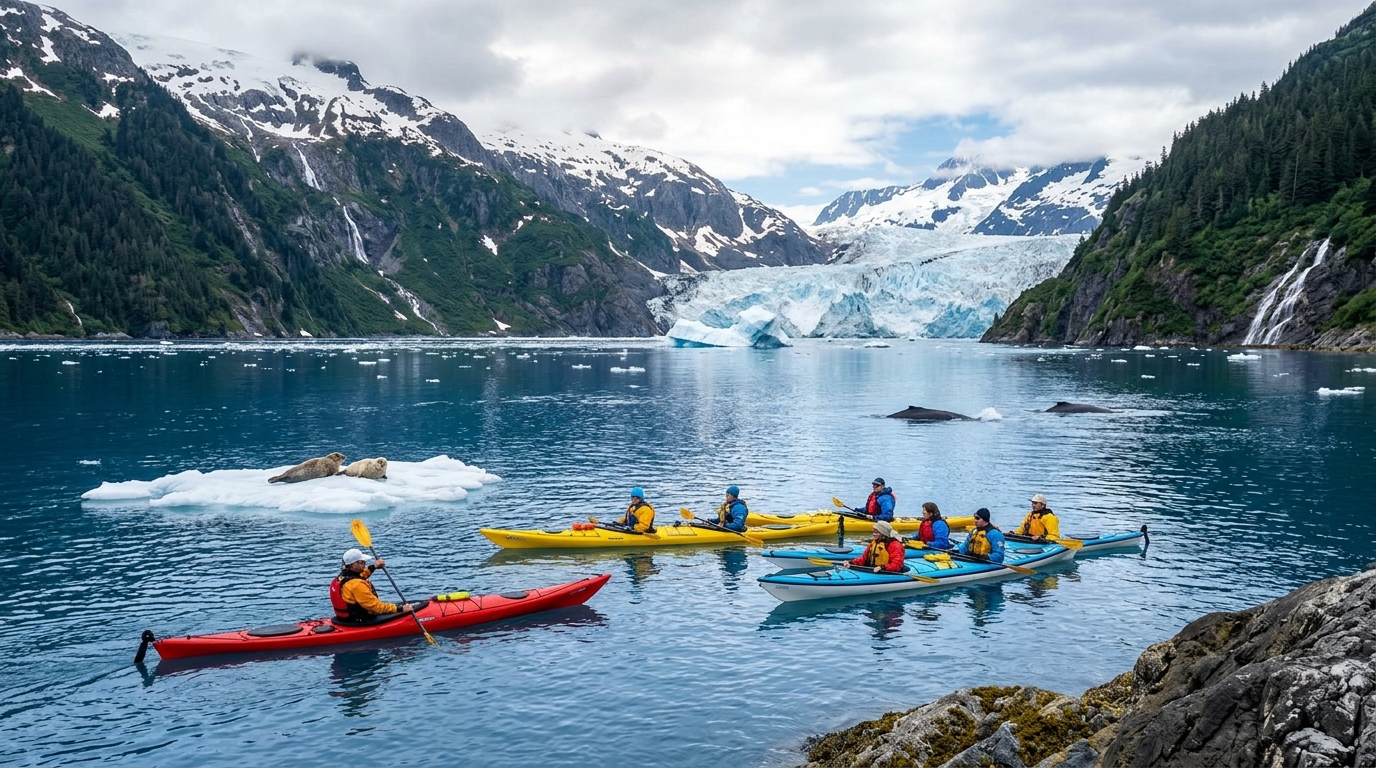
Planning a trip to see massive tidewater glaciers from the water requires careful preparation, especially when organizing Kenai Fjords National Park kayak tours. Unlike standard lake paddling or coastal trips where you can simply pull your boat up to a roadside parking lot, exploring this Alaskan wilderness demands specialized motorized transport, strict safety awareness, and cold-water gear. Most visitors do not realize that the main glacier fjords are completely cut off from the highway system, meaning every paddling adventure starts with a boat ride out of the harbor in Seward.
Understanding Kenai Fjords National Park Kayak Tours
Kenai Fjords National Park kayak tours offer an up-close look at active tidewater glaciers and marine wildlife that you cannot see from the highway. These trips take place in remote coastal fjords like Aialik Bay and Northwestern Fjord, where towering ice faces drop massive chunks of ice directly into the ocean. Because no roads lead to these icy inlets, participating in Kenai Fjords National Park kayak tours means traveling over open water by boat before your kayak ever touches the sea.
How to Reach the Paddling Locations
Getting to the paddling spots requires booking a motorized water taxi or a guided tour boat out of the small boat harbor in Seward. Kenai Fjords National Park kayak tours depend entirely on these marine transfers because the rugged coastal mountains and dense icefields block all land-based routes. Visitors should expect a boat ride lasting anywhere from one to two hours each way, and changing weather in the Gulf of Alaska can sometimes delay or alter these scheduled marine departures.
Physical Demands and Experience Levels
Paddling in glacial waters involves heavy physical effort, changing wind patterns, and long hours on the water that test your endurance. Kenai Fjords National Park kayak tours are generally not suitable for absolute beginners who have never handled a sea kayak in rough or cold conditions. Outfitters usually require participants to have solid paddling skills and the stamina to handle choppy water, unpredictable currents, and long stretches without landing spots.
Safety Rules and Glacier Hazards
Active tidewater glaciers present constant safety risks, including sudden calving events that create massive underwater shockwaves and rogue displacement waves. According to the National Park Service, kayakers must maintain a mandatory minimum distance of at least half a mile from active glacier faces to avoid getting swamped by sudden ice collapses. Kenai Fjords National Park kayak tours enforce these strict federal regulations precisely because floating ice and falling debris can turn a peaceful paddle into an emergency in seconds.
What to Wear and Bring on the Water
Staying warm and dry in freezing Alaskan water requires specialized gear that goes far beyond standard outdoor clothing. Kenai Fjords National Park kayak tours require full dry suits, neoprene booties, and insulating layers to prevent rapid hypothermia in the event of an accidental capsize. Commercial outfitters usually supply these essential safety garments, but paddlers must still bring moisture-wicking base layers, hats, and waterproof storage bags for their personal items.

Choosing Between Guided Trips and Independent Planning
Planning an independent kayaking trip in this remote wilderness demands advanced navigation skills, self-rescue training, and heavy bear-proof food storage containers. Kenai Fjords National Park kayak tours run by professional outfitters remove these massive logistical hurdles by providing experienced local guides, satellite communication devices, and complete safety equipment. For most travelers, joining a guided group is the safest and most practical way to experience the fjords without taking on extreme wilderness risks.
For more inspiration on planning outdoor park adventures and exploring diverse national park landscapes, you can also read our guide on Things to Do in Wind Cave National Park for surface-level travel ideas.
Frequently Asked Questions
Can beginners join Kenai Fjords National Park kayak tours?
Absolute beginners can sometimes join guided day trips if they are in good physical shape, but multi-day overnight trips require prior cold-water and open-marine paddling experience.
How do you get to the kayaking spots in Kenai Fjords National Park?
Visitors must take a motorized water taxi or a commercial tour boat from the Seward harbor, as there are no roads leading directly to the park’s coastal glaciers.
What is the biggest safety hazard when kayaking near glaciers?
The greatest dangers are sudden glacier calving events that create massive waves, floating icebergs that can trap boats, and freezing water temperatures that cause rapid hypothermia.
Do I need to bring my own dry suit for the trip?
Most commercial kayak outfitters include dry suits and heavy safety gear in the price of a guided tour, whereas independent paddlers must rent or provide their own cold-water gear.
When is the best time of year for kayaking in Kenai Fjords National Park?
The paddling season typically runs from late spring through early autumn when weather conditions are most stable and boat operators run regular water taxi schedules.
Are permits required for kayaking and camping in the park?
According to the National Park Service, day kayaking does not require a special permit, but overnight backcountry camping in coastal areas requires visitors to follow Leave No Trace principles and secure food properly.
Disclaimer: Weather, water conditions, and park regulations can change rapidly in Alaska. Always verify the latest safety guidelines, water taxi availability, and weather forecasts directly from official sources like the National Park Service before starting your trip.

I’m Muhammad Ubaid, founder of YBR Magazine. I research and write detailed guides on America’s National Parks — covering entry fees, permits, best times to visit, and planning tips — using official NPS sources and up-to-date information.