

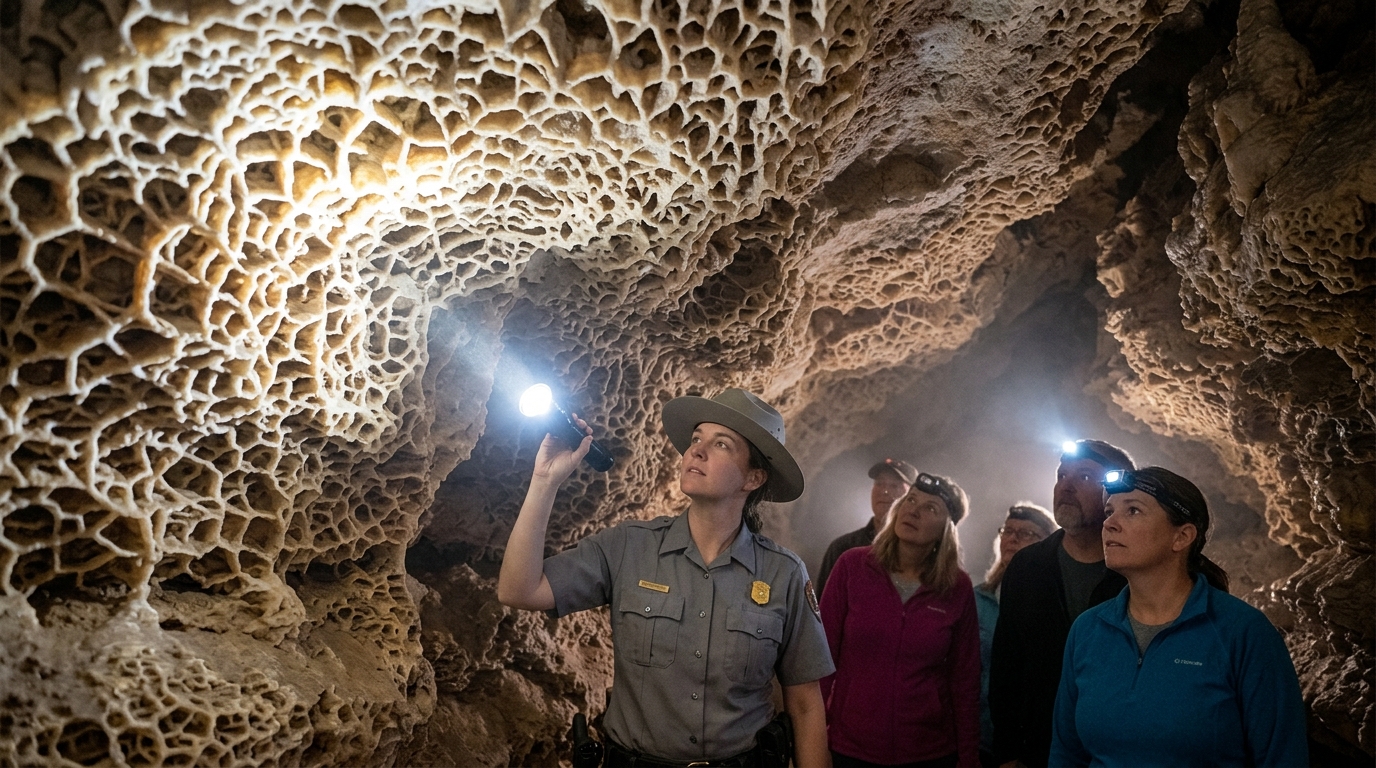
Planning a trip to Wind Cave National Park requires balancing two entirely different environments that sit right on top of each other. The main attraction is hidden beneath the South Dakota prairie in one of the longest and most complex cave systems in the world. At the same time, the above-ground acreage protects an expansive wildlife sanctuary where American bison, pronghorn, and prairie dogs roam freely. Visitors who arrive without understanding the strict operational rules often find themselves missing out on underground tours because daily capacities are capped. Managing your time effectively means separating your underground reservation schedule from your surface hiking and wildlife viewing plans.
Securing Underground Cave Tickets and Managing Daily Schedules
Securing cave tour tickets in advance is the single most important step for anyone planning things to do in Wind Cave National Park. The National Park Service regulates daily underground visitor numbers strictly to protect delicate geological formations and maintain safe airflow. Walking up to the visitor center without a pre-booked reservation during the peak summer months almost always results in sold-out tours. Travelers should check the official recreation website weeks ahead of their visit to secure specific time slots. Building your entire daily itinerary around your confirmed underground tour time prevents rushing and ensures you do not miss your entry window.
Navigating Ranger-Led Underground Tours and Physical Demands
Choosing the right underground tour depends heavily on your personal physical fitness, stamina, and comfort with tight spaces. The National Park Service offers several distinct tour options, ranging from the short Garden of Eden walk to the strenuous Classic Natural Entrance Tour. The Classic Natural Entrance Tour requires walking down and climbing back up hundreds of stairs over steep, uneven terrain. Visitors with heart conditions, severe claustrophobia, or limited mobility should review physical warnings carefully before booking a ticket. Sturdy walking shoes with reliable traction and a light jacket are mandatory because underground temperatures remain consistently cool throughout the year.
Exploring Surface Wildlife Sanctuaries and Open Prairie Trails
Exploring surface wildlife sanctuaries and open prairie trails provides a peaceful counterpoint to the enclosed cave environment. Wind Cave National Park features miles of scenic hiking paths, such as the Rankin Ridge Trail, which offers wide views of the surrounding Black Hills. Visitors driving along the park roads frequently spot herds of American bison, elk, and pronghorn grazing across the rolling grasslands. According to National Park Service safety guidelines, humans must maintain a distance of at least 100 yards from bison and 25 yards from smaller wildlife like pronghorn and coyotes. Pets are prohibited on all park hiking trails and cave routes to protect native species and prevent dangerous animal interactions.

Overcoming Practical Limitations and Unexpected Park Closures
Overcoming practical limitations and unexpected park closures requires flexibility when scheduling your South Dakota vacation. Mechanical issues with the primary elevators can occasionally suspend deep cave access with very little advance notice. Wind Cave National Park updates facility status directly on official park channels, making it essential to check current conditions before driving to the site. Visitors must also prepare for volatile weather conditions, including severe summer thunderstorms, strong prairie winds, and intense heat. Packing plenty of drinking water, sunscreen, and rain gear keeps outdoor excursions safe and comfortable.
For travelers interested in discovering more unique park landscapes nearby, you can view our guide to badlands sights and trails for additional regional road trip ideas.
Frequently Asked Questions
How do I get tickets for the Wind Cave tours?
Visitors can book advance reservations for most cave tours through the official recreation website managed by federal ticketing systems. A small number of same-day tickets may be available at the visitor center, but they usually sell out within minutes.
Are the cave tours suitable for young children?
Shorter routes like the Garden of Eden tour work well for families, but longer paths with hundreds of stairs can exhaust young children quickly. Strollers are never allowed inside the cave, so parents must carry infants or use secure front-facing baby carriers.
Can I visit Wind Cave National Park without going underground?
Visitors can spend an entire day enjoying surface hiking trails, scenic drives, and wildlife watching without ever stepping inside the cave. The above-ground prairie offers quiet walking paths and exceptional wildlife photography opportunities.
How long does a typical cave tour last?
Most standard ranger-guided cave tours last between one hour and an hour and a half, depending on the specific route selected. Visitors should arrive at the visitor center at least thirty minutes before their designated tour start time.
What wildlife can I see above ground?
Visitors frequently spot American bison, pronghorn, mule deer, prairie dogs, and various native birds across the park’s open grasslands. Early morning and late evening provide the best conditions for quiet wildlife observation.
When is the best time of year to visit the park?
Summer offers full access to all ranger programs and cave tours, but the park experiences heavy crowds and hot weather. Spring and fall provide cooler temperatures and fewer visitors, though some tour schedules may be reduced.
Are there entrance fees for Wind Cave National Park?
There is no entrance fee just to drive through or hike on the surface of Wind Cave National Park, according to the National Park Service. However, individual cave tours require paid tickets for each participant.

I’m Muhammad Ubaid, founder of YBR Magazine. I research and write detailed guides on America’s National Parks — covering entry fees, permits, best times to visit, and planning tips — using official NPS sources and up-to-date information.