

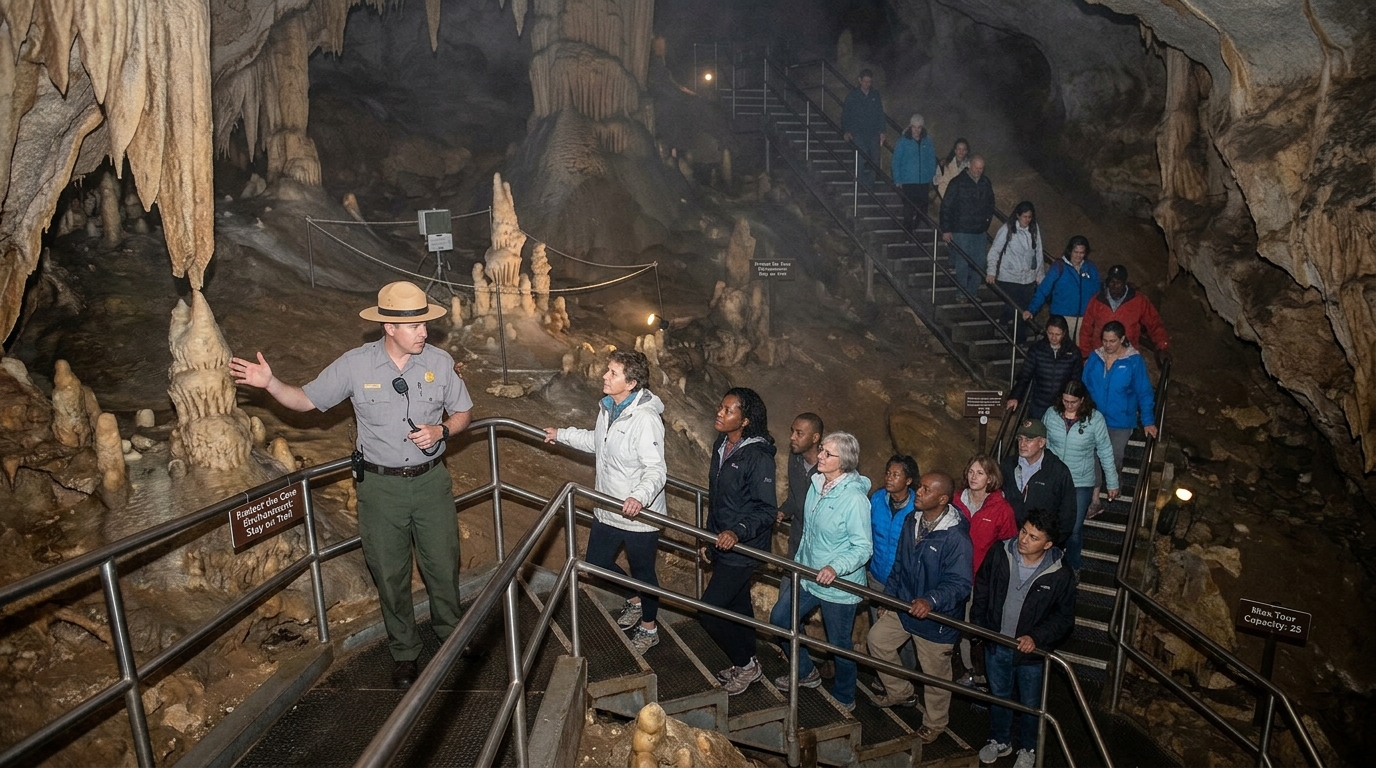
Wind Cave National Park stands apart from other protected public lands because its most precious wonders are entirely hidden from daylight. While tourists often seek out dramatic mountain peaks or deep surface canyons, Wind Cave National Park holds a massive underground labyrinth defined by rare mineral formations and sensitive air pressures. Beneath the rolling grass hills of South Dakota, a vast maze of damp passages stretches for hundreds of explored miles. Understanding why it is important to protect Wind Cave National Park requires looking closely at how the fragile mineral world below relies entirely on the health of the open grassland above.
The Hidden Subterranean Geology Beneath South Dakota
Protecting the underground maze at Wind Cave National Park matters because the complex cave network is a non-renewable geological treasure that is vulnerable to human disruption.
The passages formed over millions of years as acidic water dissolved the thick limestone layers hidden deep underground. Unlike many wet caves filled with active dripping water and growing stalactites, Wind Cave National Park is largely dry, which allowed fragile mineral structures to form without being washed away. These delicate features require stable humidity and absolute protection from accidental human contact to survive intact.
Safeguarding Rare Calcite Boxwork Formations
Safeguarding rare calcite boxwork formations is a primary conservation priority because these intricate mineral walls exist in very few places across the entire planet.
Boxwork resembles a delicate honeycomb network made of thin blades of calcite projecting outward from limestone walls and ceilings. When early explorers first mapped the underground passages, they documented how easily skin oils, lint, and careless touches can permanently stain or break these ancient rock formations. National Park Service rangers strictly regulate visitor access to ensure that modern tourism does not destroy what took millions of years of slow mineral growth to create.
Guarding the Surface Watershed That Feeds the Depths
Guarding the surface watershed that feeds the depths is essential because rainwater falling on the prairie directly shapes the underground environment below.
Rain and melting snow seep slowly down through the soil and porous limestone, carrying moisture that sustains the damp chambers deep beneath the surface. If the surface environment suffers from heavy soil erosion, chemical runoff, or industrial pollution, the underground cave world absorbs those contaminants directly. Maintaining clean groundwater requires ongoing habitat restoration and careful land management across the entire park boundary.
Preserving Native Grasslands and Endangered Wildlife
Preserving native grasses and endangered wildlife ensures that the rolling surface acreage of Wind Cave National Park remains a functioning prairie ecosystem rather than an empty landscape.
The park provides a protected home for a free-roaming bison herd that naturally grazes and shapes the grassland vegetation over generations. In addition to bison, Wind Cave National Park serves as a critical reintroduction site for the black-footed ferret, which ranks among the rarest mammals in North America. These endangered species require large, uninterrupted spaces of native prairie to hunt, burrow, and raise their young safely.
Navigating Ranger-Led Tours and Visitor Restrictions
Navigating ranger-led tours and visitor restrictions managed by the National Park Service helps balance public access with strict underground conservation needs.
Visitors must purchase tickets in advance during peak summer months because daily tour capacities are tightly controlled to protect the cave climate. A practical downside for travelers is that summer tours frequently sell out early in the morning, leaving late arrivals without entry options. Furthermore, walking underground requires navigating hundreds of stairs in cool, humid air, which can present a physical challenge for visitors with mobility concerns or respiratory sensitivities.

Connecting Wind Cave With Regional Black Hills Landmarks
Connecting Wind Cave with regional Black Hills landmarks is a popular strategy for vacationers looking to experience multiple South Dakota attractions in a single trip.
The drive between Wind Cave National Park and Mount Rushmore takes roughly an hour, making it easy to pair an underground cave tour with a visit to the famous mountain monument. Travelers should plan for heavy traffic along regional highways during the peak summer tourism season. For travelers seeking deeper ideas on local sights, exploring activities outlined in guides for Things to Do in Wind Cave National Park can help round out a diverse regional itinerary.
Frequently Asked Questions
Why is Wind Cave National Park famous?
Wind Cave is famous for housing one of the longest cave systems in the world and containing rare boxwork mineral formations found almost nowhere else.
Can you explore Wind Cave without a guide?
No, visitors cannot enter the cave without a guided tour led by a National Park Service ranger to protect the delicate underground ecosystem.
How long is the drive from Wind Cave to Mount Rushmore?
The drive between Wind Cave National Park and Mount Rushmore takes about one hour under normal traffic conditions.
What animals live above ground at the park?
Visitors frequently spot free-roaming bison, pronghorn, prairie dogs, and elk across the open mixed-grass prairie.
Are the underground cave tours physically demanding?
Most cave tours involve walking on paved trails with many stairs and require navigating cool, humid underground conditions that may test physical endurance.
Where can visitors buy cave tour tickets?
Tickets for ranger-led cave tours are available through official park channels and online reservation systems managed by the National Park Service.
Disclaimer: Park hours, tour schedules, and ticket rules can change depending on weather and maintenance needs. Always verify current details directly with the National Park Service before planning your visit.

I’m Muhammad Ubaid, founder of YBR Magazine. I research and write detailed guides on America’s National Parks — covering entry fees, permits, best times to visit, and planning tips — using official NPS sources and up-to-date information.