

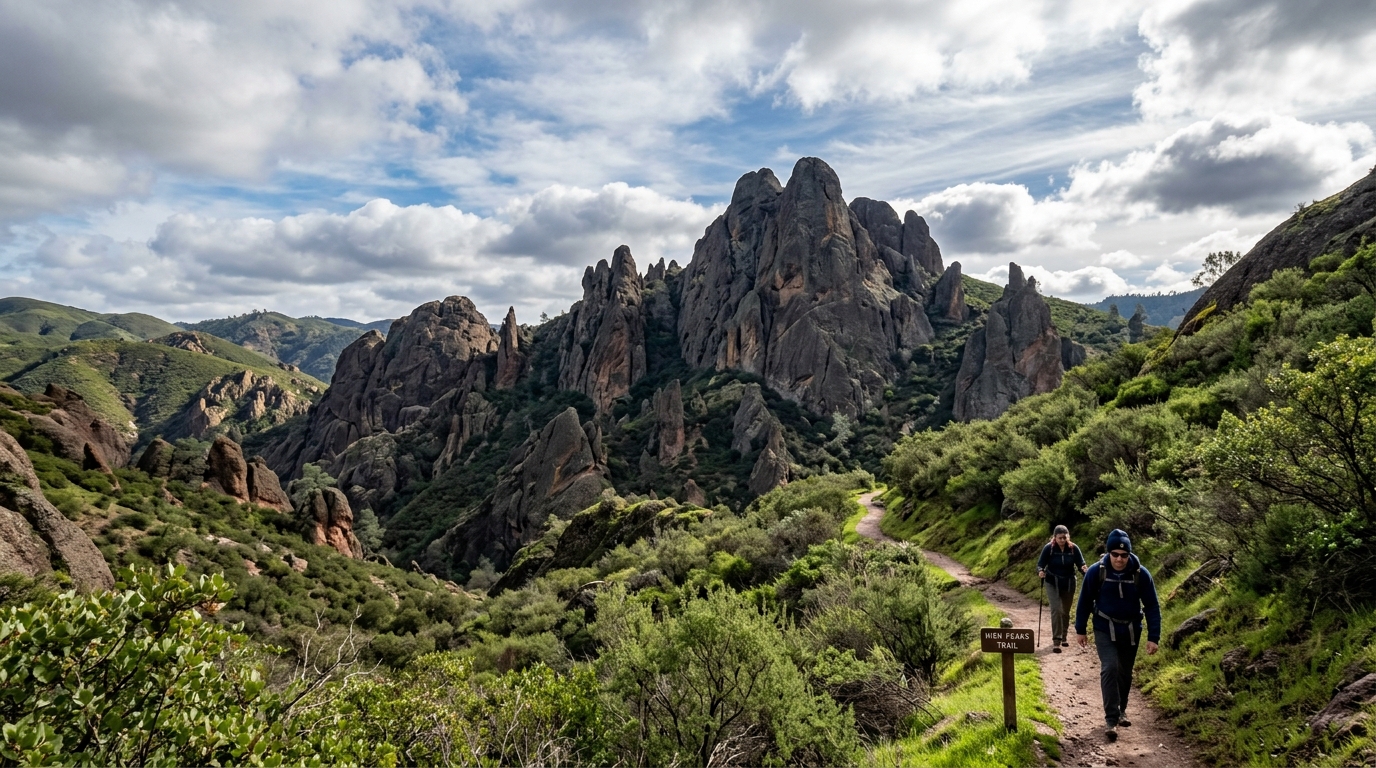
Navigating Volcanic Spires and Winter Crowds at Pinnacles National Park in February
Pinnacles National Park in February offers a unique window of mild weather, active wildlife, and fewer crowds compared to the scorching summer months. Visitors choosing this late-winter month will find pleasant daytime temperatures that make long hikes much more comfortable than baking under the California sun. However, the month also brings shorter daylight hours, potential winter rains, and occasional mud on the trails. Planning a successful trip requires understanding these seasonal shifts so visitors can adjust their expectations accordingly. Unlike the peak spring months when wildflower seekers crowd every path, February provides a quieter atmosphere for exploring the volcanic rock formations. Travelers should keep in mind that the park operates two distinct entrances—the East and West sides—that do not connect by vehicle inside the park boundaries. Deciding which side to visit beforehand prevents unnecessary driving time on narrow, winding roads. The rugged landscape requires solid preparation, especially when unexpected winter weather patterns roll in from the Pacific coast.
Dressing for Cool Canyons and Rain Risks
Weather at Pinnacles National Park in February typically features cool mornings, mild afternoons, and a moderate chance of winter rain showers. Daytime temperatures often hover in the upper fifties to low sixties Fahrenheit, while nights drop down into the chilly upper thirties or low forties. Dressing in layers is essential for staying comfortable as hikers move between sunny open slopes and shaded canyons. Visitors should always check the local forecast before heading out and pack a reliable waterproof jacket in case unexpected winter storms roll through the region. Because the park features steep climbs exposed to open air, chilly winds can make the air feel much colder than the thermometer indicates. Packing moisture-wicking base layers, an insulating fleece, and a wind-blocking outer shell ensures hikers remain comfortable during strenuous uphill stretches. Sturdy footwear with deep treads is non-negotiable, as damp soil and wet rock surfaces can turn ordinary walking paths into slippery hazards.
Protecting Nesting Condors and Viewing Winter Wildlife
Wintertime brings heightened activity from the park’s famous resident birds, making Pinnacles National Park in February an ideal time for birdwatchers and nature lovers. According to the National Park Service, this period marks the beginning of the nesting season for the endangered California condors, which means rangers often implement temporary closures on certain rock-climbing routes and cliffs to protect the breeding pairs. Visitors can frequently spot these massive birds soaring high above the rock spires or resting on distant ledges using binoculars. In addition to condors, the cooler winter months encourage other local wildlife species to become more active throughout the day. Mule deer, wild turkeys, and various raptors are frequently sighted along the valley floors and lower canyon trails. Observers must maintain a respectful distance from all wildlife and strictly adhere to any posted park boundary signs regarding nesting closures.
Understanding Winter Trail Mud and Talus Cave Status
Winter trail conditions at Pinnacles National Park in February can vary greatly depending on recent rainfall amounts and storm activity. Heavy winter rains can make dirt paths extremely muddy and slippery, especially along steeper climbs like the High Peaks Trail. Additionally, according to the National Park Service, the park’s unique talus caves—such as Bear Gulch Cave and Balch Cave—may experience temporary closures if high water levels or debris block the dark underground passages. Hikers must obey all posted warning signs and verify current trail statuses at the visitor center before setting out. Navigating the dark talus caves during winter requires a reliable flashlight or headlamp, as natural light is severely limited inside the rock crevices. If recent storms have flooded the caves, visitors can still enjoy alternative above-ground routes that offer sweeping panoramic views of the surrounding volcanic spires and rock formations. For more ideas on how to spend your time exploring the terrain, check out our guide on Things to Do in Pinnacles National Park.
Managing Daylight Windows and Early Parking Arrivals
Visiting the park successfully during this month requires a few practical steps to handle winter parking and shorter daylight windows. Parking lots on both the East and West sides can still fill up quickly on pleasant weekends, so arriving early in the morning remains the best strategy. Because days are shorter in February, hikers should start their longer journeys early to ensure they return to the trailhead before dark. Bringing plenty of drinking water, high-energy snacks, and sturdy footwear with good traction will help visitors navigate any damp or uneven terrain safely. Cell phone service within the park is notoriously unreliable or completely absent in most areas, so downloading offline maps and trail guides before arrival is essential. Visitors should also pack an extra flashlight or headlamp in case a hike takes longer than anticipated and twilight approaches while descending the trails.
Frequently Asked Questions
Is Pinnacles National Park crowded in February?
Visitor numbers in February are generally lower than in spring or autumn, though parking lots can still fill up quickly on sunny weekends.
Can I walk through the caves in February?
Cave access depends heavily on recent rainfall, as winter storms can flood the talus caves and cause temporary closures managed by the National Park Service.
What should I pack for a February hike?
Pack plenty of layers, a waterproof rain jacket, sturdy hiking boots with good traction, water, and snacks for your day on the trails.
Are dogs allowed on the trails in February?
Pets are strictly prohibited on all dirt trails within Pinnacles National Park year-round to protect local wildlife and plant life.
Will I see wildflowers in February?
Early spring wildflowers might begin to peek out by late February, but peak wildflower blooms usually occur in March and April.
How do I check current trail closures?
Visitors can check current weather updates, trail conditions, and raptor nesting closures directly on the official National Park Service website or at the visitor centers.
Disclaimer: Park conditions, weather, and trail regulations can change rapidly. Always verify current rules and safety updates from official sources before visiting.

I’m Muhammad Ubaid, founder of YBR Magazine. I research and write detailed guides on America’s National Parks — covering entry fees, permits, best times to visit, and planning tips — using official NPS sources and up-to-date information.