

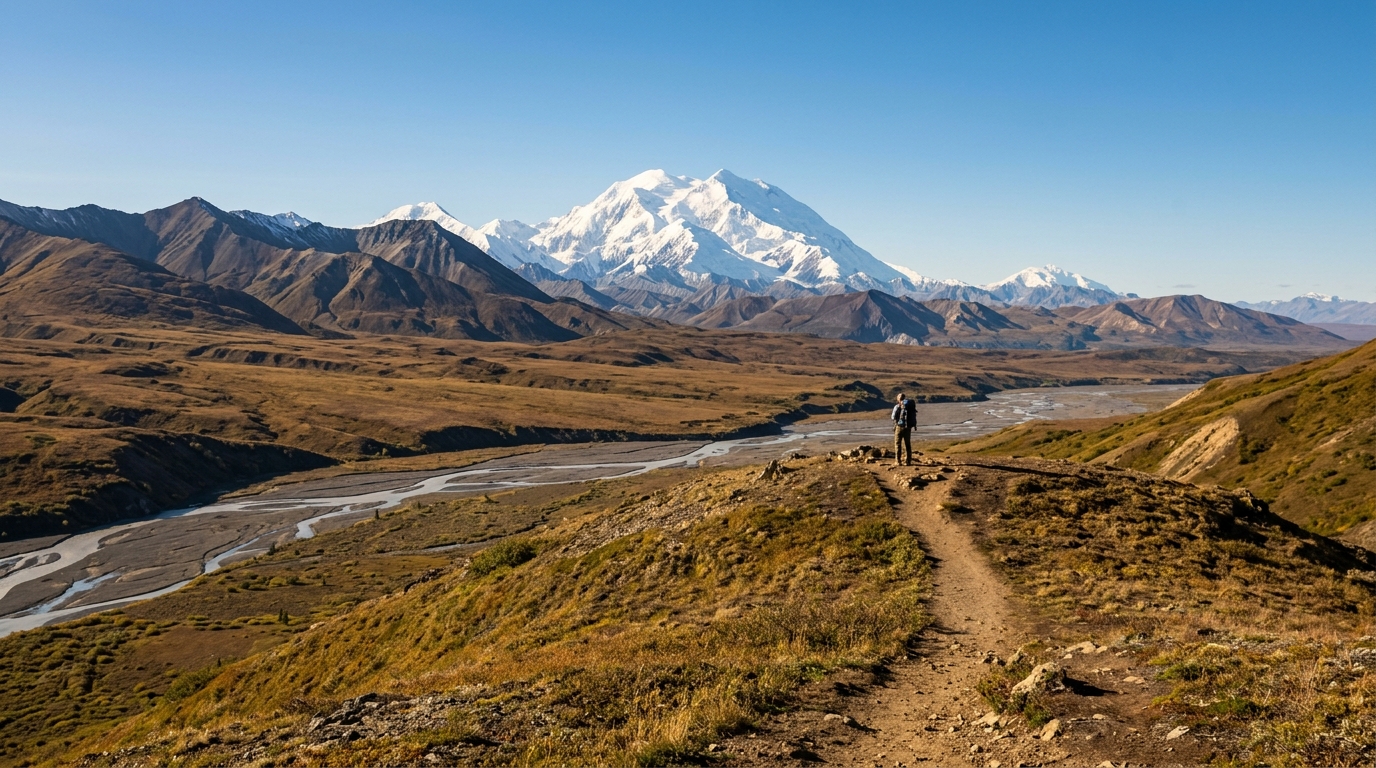
Finding the best hike in Denali National Park requires a completely different approach than visiting almost any other national park in the United States. Most national parks feature dozens of miles of paved paths, wooden boardwalks, and clearly marked signs that guide visitors from one scenic viewpoint to the next. Denali National Park operates under a distinct set of rules because the vast majority of its massive wilderness remains entirely roadless and trail-free. Visitors who want to explore on foot must look past traditional maintained pathways and understand how to navigate open tundra, read topographical maps, and respect powerful wildlife.
Many travelers arrive expecting a traditional park system with dozens of named walking trails near the main road corridors. Instead, Denali National Park provides only a handful of short, established paths near the park entrance, while the interior of the park leaves hikers to chart their own course across rolling hills and river valleys. Planning a successful trip means understanding park regulations, recognizing your own physical limits, and preparing for sudden weather changes that can turn a sunny afternoon into a cold, windy rainstorm in minutes.
Understanding Denali’s Unique Off-Trail Wilderness Rules
Understanding Denali’s unique off-trail wilderness rules ensures that adventurous travelers stay legal while exploring the vast, unpaved landscape.
Unlike national parks that strictly fine visitors for stepping off established paths to protect delicate plants, Denali National Park encourages open tundra walking across its designated backcountry units. According to the National Park Service, hikers must obtain a free backcountry permit in person at the Wilderness Access Center if they plan to stay overnight in the backcountry, though day hikers do not need a permit for frontcountry walks. The park is divided into distinct management units, and each unit has a strict limit on the number of people allowed inside at any given time to preserve solitude and protect wildlife habitats. Visitors must also follow specific rules regarding food storage, human waste disposal, and how to safely maintain distance from large animals like grizzly bears and moose.
Best Frontcountry Trails Near the Park Entrance
Best frontcountry trails near the park entrance provide accessible, short-distance routes for visitors who prefer established gravel paths.
Travelers pressed for time or traveling with children will find several well-maintained paths clustered near the park entrance area, all accessible without taking a long bus ride into the interior. The Horseshoe Lake Trail is a favorite choice, measuring about two miles round-trip and taking hikers down a steep wooded slope to a calm, beaver-populated lake below. Another popular option is the Mount Healy Overlook Trail, which climbs steadily up a steep mountain ridge and rewards hikers with sweeping views of conservation areas and the park entrance buildings. The Triple Lakes Trail is the longest maintained trail near the entrance, stretching nearly nine miles through dense forests and past remote mountain ponds. While these frontcountry paths are clearly marked, hikers should still carry bear spray and stay alert because wildlife can wander onto any trail at any time. For those planning a broader Alaskan adventure, you can find helpful travel tips in our guide covering scenic bus and rail excursions from Anchorage to Denali to simplify your overall itinerary.
Exploring the Backcountry and Off-Trail Tundra
Exploring the backcountry and off-trail tundra delivers a true wilderness adventure where hikers navigate entirely by natural landmarks.
Stepping away from the park entrance means leaving behind wooden signposts and gravel paths in favor of open, rolling hills covered in dwarf birch, moss, and deep tussocks. Walking across tussocks feels like stepping on lumpy bowling balls hidden beneath spongy moss, which makes hiking much slower and more physically demanding than walking on flat dirt. Furthermore, the landscape lacks bridges across rushing glacial streams, meaning hikers must know how to safely cross cold, swift water or turn back when conditions become too dangerous. Because there are no established water sources that are guaranteed safe from parasites, backpackers must boil, filter, or chemically treat all drinking water gathered from wilderness streams.
Denali National Park Guided Hikes for Safe Exploration
Denali National Park guided hikes provide a structured, educational way for visitors to experience the wilderness alongside trained professionals.
Visitors who feel intimidated by off-trail navigation, unpredictable weather, or the prospect of encountering grizzly bears on their own often prefer joining ranger-led walks or commercial guiding operations. Park rangers offer free interpretive walks near the visitor center and hotel areas during the peak summer season, teaching participants about local plant life, geology, and wildlife history. For deeper wilderness exploration, private outfitters offer guided day hikes and backpacking trips that handle the complex logistics of park transit buses and bear safety protocols. These guided experiences help visitors build confidence while minimizing the environmental impact on fragile tundra ecosystems.

Essential Safety Tips and Practical Downsides
Essential safety tips and practical downsides must be considered before lacing up your hiking boots to avoid unexpected troubles in the remote Alaskan landscape.
One major practical limitation is that the park road remains subject to closures due to active landslides, which can drastically alter your travel plans and shuttle bus options. Additionally, cell phone service disappears completely once you leave the immediate park entrance area, meaning you cannot rely on digital maps, weather apps, or emergency calls if something goes wrong. Weather conditions change rapidly, and heavy fog or snow can descend on high ridges even during the middle of summer, reducing visibility to just a few feet. Hikers must always carry rain gear, warm layers, navigation tools, and EPA-approved bear spray, and they must know how to use that deterrent effectively before stepping onto any trail.
Frequently Asked Questions
Do I need a permit for day hiking in Denali National Park?
No permit is required for day hiking on frontcountry trails or for day trips into the backcountry units, though overnight backcountry camping does require a permit from the National Park Service.
Are dogs allowed on hiking trails in Denali National Park?
Dogs are strictly restricted to the park road, paved walkways near the visitor center, and the sled dog kennels, and they are not permitted on any dirt hiking trails or backcountry tundra.
How difficult is hiking on the Denali tundra?
Tundra hiking is physically demanding because the ground is often boggy, uneven, and covered in deep tussocks that make walking slow and tiring.
Can I drink water straight from streams in the backcountry?
No, all backcountry water sources must be filtered, boiled, or chemically treated to remove harmful parasites like Giardia before drinking.
How do I get to trailheads along the park road?
Hikers use the authorized park shuttle buses or transit buses to travel along the park road and get dropped off at designated miles for backcountry exploration.
What wildlife should I watch out for while hiking?
Hikers must stay alert for grizzly bears, black bears, moose, and wolves, maintaining a safe distance and carrying bear spray at all times.
Disclaimer: Park rules, road conditions, and permit requirements can change. Always verify current guidelines and safety alerts directly with the National Park Service before starting your hike.

I’m Muhammad Ubaid, founder of YBR Magazine. I research and write detailed guides on America’s National Parks — covering entry fees, permits, best times to visit, and planning tips — using official NPS sources and up-to-date information.