

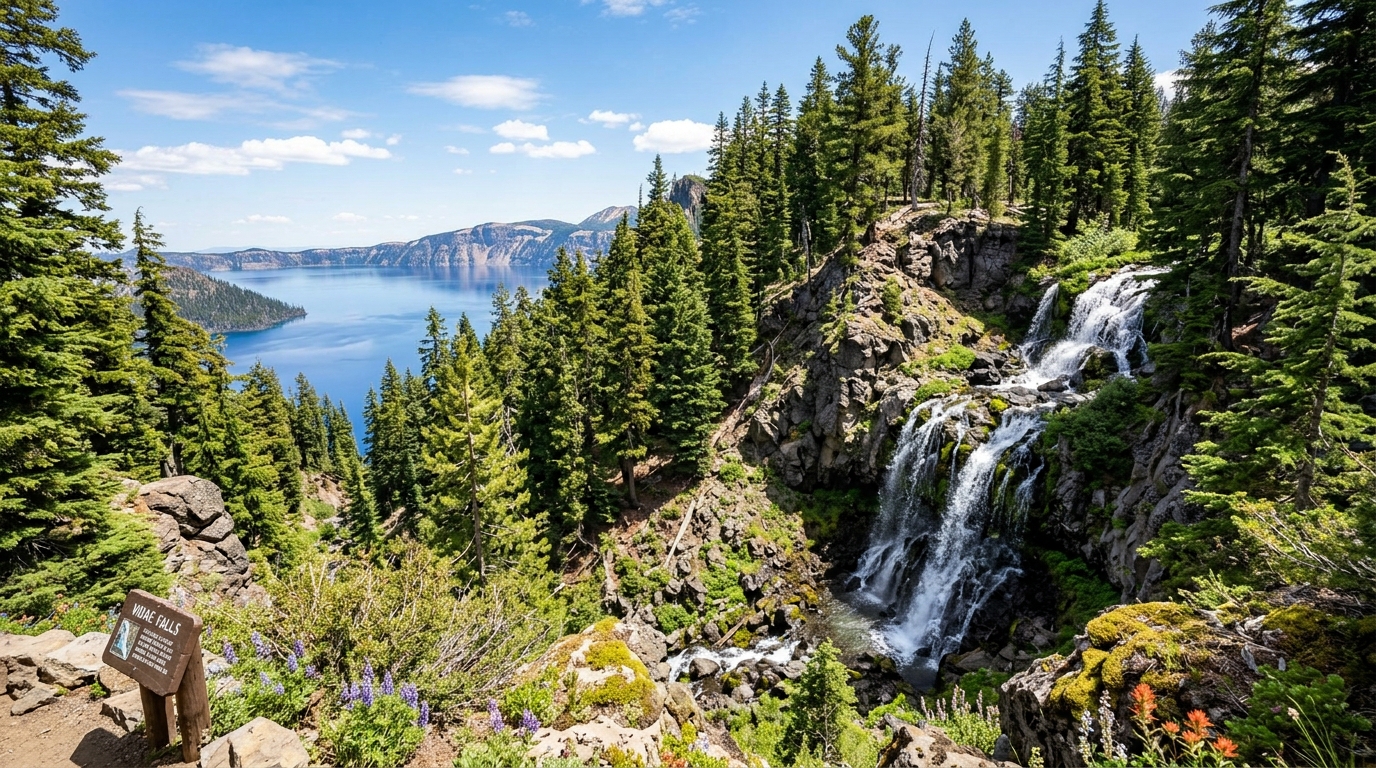
When planning a mountain getaway, many travelers look forward to discovering roaring rivers and plunging vertical drops. However, visitors searching for Crater Lake National Park waterfalls often discover a very different hydrological reality than expected. Unlike many other mountain parks in the Pacific Northwest, Crater Lake National Park is famous for having almost no surface water outlets. Crater Lake is fed entirely by winter snow and heavy rainfall, and the water inside the main caldera leaves the basin only through evaporation and underground seepage. This means traditional surface waterfalls inside the main caldera or near the rim are virtually nonexistent.
Understanding this volcanic geology helps set realistic expectations for anyone searching for Crater Lake National Park waterfalls. Instead of typical river plunges over cliff edges, the true water features in Crater Lake National Park consist of hidden underground springs that burst out of sheer volcanic cliffs far down the canyon walls. Additionally, some lovely roadside springs and cascades exist along secondary park drives and lower elevations. For those who want to expand their itinerary with other regional adventures beyond the rim, exploring things to do near Crater Lake National Park provides plenty of wonderful alternative outdoor activities.
Geological Origins of Mount Mazama and the Absence of Surface Outlets
The geological origins of Mount Mazama and the absence of surface outlets define the unique water systems found across the high elevations of the park.
Crater Lake sits inside the collapsed volcanic cone of Mount Mazama, a massive mountain that erupted and caved in centuries ago. Because the basin has no rivers flowing directly into or out of the lake surface, traditional waterfall formations cannot exist along the inner rim walls. Instead, water filters deep down through porous layers of volcanic rock and emerges miles away as powerful springs or gentle streams on the outer slopes of the mountain. Visitors hoping to view classic alpine cascades must look outside the immediate lakeshore toward the park’s outer scenic drives and surrounding forest trails.
Vidae Falls and Scenic Roadside Springs Along East Rim Drive
Vidae Falls and scenic roadside springs along East Rim Drive give visitors easy access to flowing water without requiring long, strenuous hikes.
One of the most popular roadside sights is Vidae Falls, located right along East Rim Drive. Vidae Falls cascades down a steep volcanic cliffside adjacent to the roadway, making it a convenient and beautiful stop for motorists touring the rim area. Water tumbles over multiple rock ledges amidst dense evergreen forests of mountain hemlock and fir. While visitors can pull over briefly to snap photographs, parking spaces are limited, and drivers must exercise caution when re-entering traffic. According to the National Park Service, visitors should always watch for changing weather and temporary road conditions before setting out on these scenic drives.
Hiking the Forested Trail to Plaikni Falls
Hiking the forested trail to Plaikni Falls offers visitors a closer look at a genuine water feature tucked away in a quiet canyon.
Plaikni Falls is situated on the southeast side of the park along a relatively gentle walking path that winds through old-growth mountain forests. Unlike roadside cascades, Plaikni Falls emerges from a damp volcanic rock wall where underground snowmelt finally breaks through the surface into a clear streambed. The trail itself is roughly two miles round trip, making it much more approachable than many of the steeper climbs in the region. For travelers interested in other rugged mountain routes, reviewing our guide on top hiking routes around Crater Lake can help identify additional adventures.

Severe Elevation Snowpacks and Seasonal Road Access Challenges
Severe elevation snowpacks and seasonal road access challenges create strict limitations for travelers hoping to view water features during specific months.
Crater Lake National Park receives massive amounts of snowfall annually, often keeping scenic roads and parking areas buried well into July or even August in high snow years. This means visitors seeking water features during spring or late autumn will frequently encounter locked gates and impassable routes across high mountain passes. According to the National Park Service, travelers should check current road status alerts online before making long-distance trips to the park. Visitors must also respect all safety barriers and trail closures designed to prevent dangerous slips on wet volcanic rock or unstable snowbanks.
Common Questions About Park Water Features
Common questions about park water features help clarify what visitors can actually expect to find onsite.
Can you swim in the waterfalls at Crater Lake National Park?
Swimming is not permitted in the roadside cascades or delicate spring-fed streams to protect the fragile natural ecosystem.
Are there any large waterfalls inside the Crater Lake caldera?
No large surface waterfalls exist inside the caldera because the lake has no surface outlets and is fed strictly by rain, snow, and underground seepage.
How do you get to Vidae Falls?
Vidae Falls is easily accessed by car along East Rim Drive, featuring a small roadside pullout for quick viewing.
Is Plaikni Falls a difficult hike?
Plaikni Falls is considered an easy to moderate walk of about two miles round trip through a shaded forest trail.
When is the best time of year to see flowing water in the park?
Late spring and early summer typically offer the strongest water flow from melting snow, though some roads may remain closed by snowpack.
Are dogs allowed on waterfall trails like Plaikni Falls?
Pets are restricted on most park trails to protect local wildlife and ensure visitor safety according to the National Park Service.
Disclaimer: Park rules, road conditions, and seasonal access can change rapidly due to weather and volcanic terrain. Always verify current details directly from official National Park Service sources before planning your trip.

I’m Muhammad Ubaid, founder of YBR Magazine. I research and write detailed guides on America’s National Parks — covering entry fees, permits, best times to visit, and planning tips — using official NPS sources and up-to-date information.