

Navigating the Vast Wilderness Along the Park Road
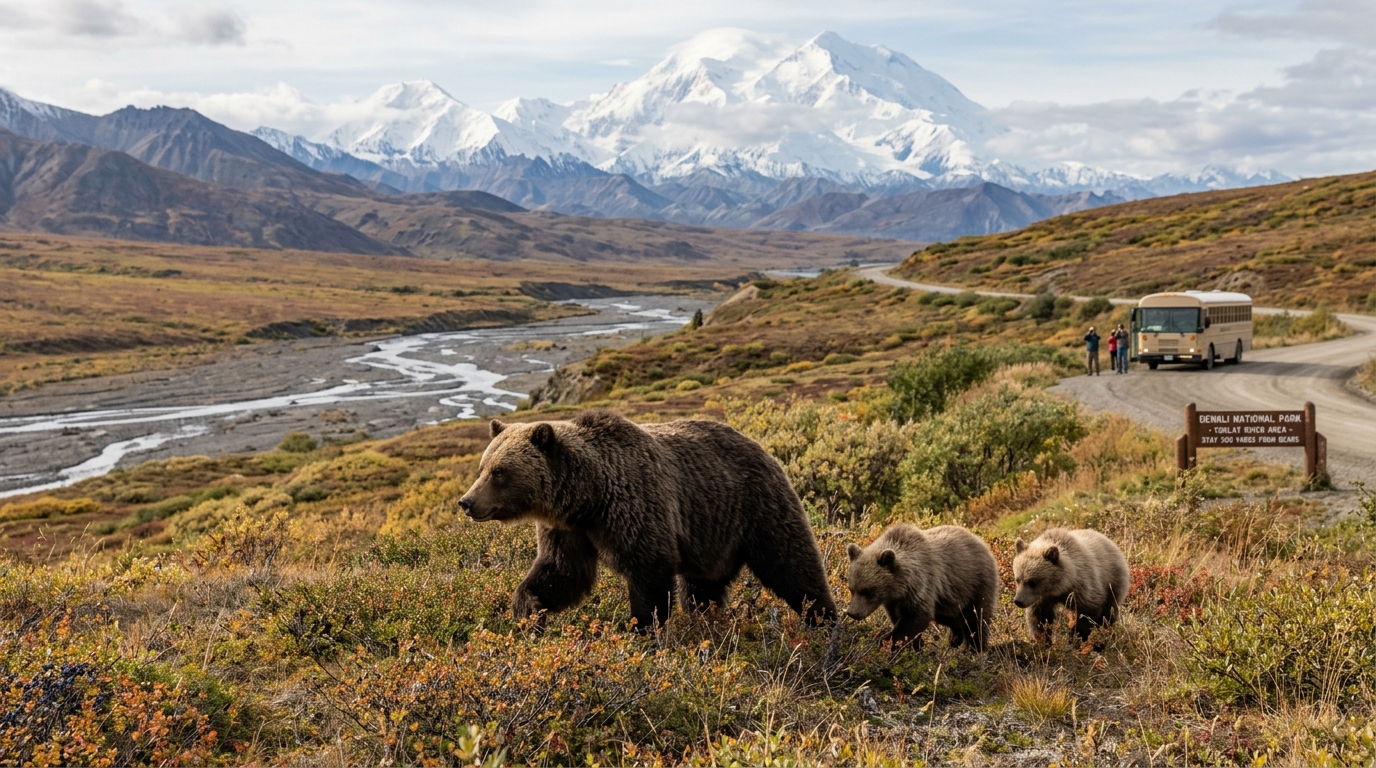
Denali National Park bears live across a massive landscape of over six million acres that features only a single gravel access road stretching deep into the interior. This unique layout means that visitors rarely hike deep into the backcountry to find wildlife, instead relying on park shuttle buses and tour buses to traverse the rugged terrain. Because private vehicle travel is strictly restricted past the Savage River checkpoint during the summer season, the park road serves as the primary corridor for viewing Denali National Park bears safely from a distance. Managing expectations is important because these animals roam freely across enormous territories, which means that catching a glimpse of them is entirely a matter of timing and wild chance rather than a scheduled guarantee.
For travelers planning a broader journey through Alaska’s rugged terrain, understanding regional logistics makes a big difference in what to expect. If you are comparing different wildlife viewing destinations in the state, it helps to review seasonal peak times and remote access options using guides like the best time to see bears at Katmai National Park to see how coastal ecosystems differ from inland tundra.
Distinguishing Grizzly Bears from Black Bears
Denali National Park bears comprise two distinct species that occupy entirely separate habitats and display very different physical characteristics. Grizzly bears, which are a subspecies of the brown bear, are easily recognized by the prominent muscular hump over their shoulders, a slightly dished facial profile, and long claws adapted for digging up roots on the open alpine tundra. Grizzly bears typically favor wide river bars, high mountain slopes, and sweeping valleys where they can forage for berries, ground squirrels, and fresh vegetation. Black bears are generally smaller, lack the distinctive shoulder hump, feature a straighter facial profile, and prefer the lower-elevation forested areas where they can readily climb trees for safety and food.
Seasonal Habits and Roadside Viewing Realities
Denali National Park bears change their daily routines and elevations as the seasons shift from melting spring snow to deep autumn frost. Spring brings bears down to the lower roadside valleys to feed on the earliest shoots of green grass, while summer pushes them higher up into the hills and berry patches as the tundra warms up. Visitors scanning the landscape from a park bus often spot bears digging for roots along gravel riverbeds or resting on open hillsides during the cooler hours of early morning or late evening. However, dense brush, fog, and rolling hills can easily hide the animals from view, and unexpected road maintenance or rockfalls can occasionally limit how far vehicles can travel along the corridor.
Mandatory National Park Service Safety Guidelines
Denali National Park bears demand strict adherence to official safety rules established by the National Park Service to protect both human visitors and local wildlife populations. According to the National Park Service, anyone camping overnight in the backcountry must store all food, garbage, and scented items in certified, hard-sided bear-resistant containers rather than fabric backpacks or soft coolers. When encountering Denali National Park bears on foot or near trails, the National Park Service advises hikers to stay completely calm, never run away, make themselves look larger by raising their arms, and speak in a firm, low voice. Federal regulations require visitors to maintain a minimum distance of three hundred yards from any bear, and much greater separation if the animal is accompanied by dependent cubs or shows signs of defensive agitation.
Practical Challenges of Spotting Wildlife in the Park
Denali National Park bears can prove remarkably difficult to spot due to unpredictable weather patterns, thick fog banks, and vast stretches of unmonitored wilderness. Heavy rain and low-hanging cloud cover frequently obscure the distant mountain slopes and high passes, leaving bus passengers staring into a wall of gray mist with zero visibility. Furthermore, because the park limits daily traffic on the single road to protect the ecosystem, securing a seat on a shuttle bus requires advance planning and flexibility. Visitors who expect guaranteed close-up views often find that the sheer scale of the landscape turns bear viewing into an exercise in patience rather than a predictable sightseeing tour.
Frequently Asked Questions About Bears in Denali
Are there two distinct bear species in the park?
Yes, Denali National Park is home to both grizzly bears and black bears, which inhabit different elevations and ecological zones.
Where are sightings most common for visitors?
Most sightings happen along the park’s single access road, where passengers on shuttle buses scan open tundra and river bars.
What is the required viewing distance for safety?
The National Park Service mandates that visitors stay at least three hundred yards away from any bear.
How should backcountry campers store their food?
Campers must store all food and scented items inside certified hard-sided bear-resistant containers.
Are bear sightings guaranteed on a bus tour?
No, wildlife sightings are never guaranteed because the animals roam freely across millions of acres of wild terrain.
What steps should I take during a close encounter?
Stand your ground, do not run, speak calmly, and prepare EPA-approved bear spray if the animal approaches.
Disclaimer: Wildlife behavior in the wilderness is entirely unpredictable, and park regulations are subject to change. Always verify current conditions and safety rules directly from the official National Park Service website before starting your trip.

I’m Muhammad Ubaid, founder of YBR Magazine. I research and write detailed guides on America’s National Parks — covering entry fees, permits, best times to visit, and planning tips — using official NPS sources and up-to-date information.