

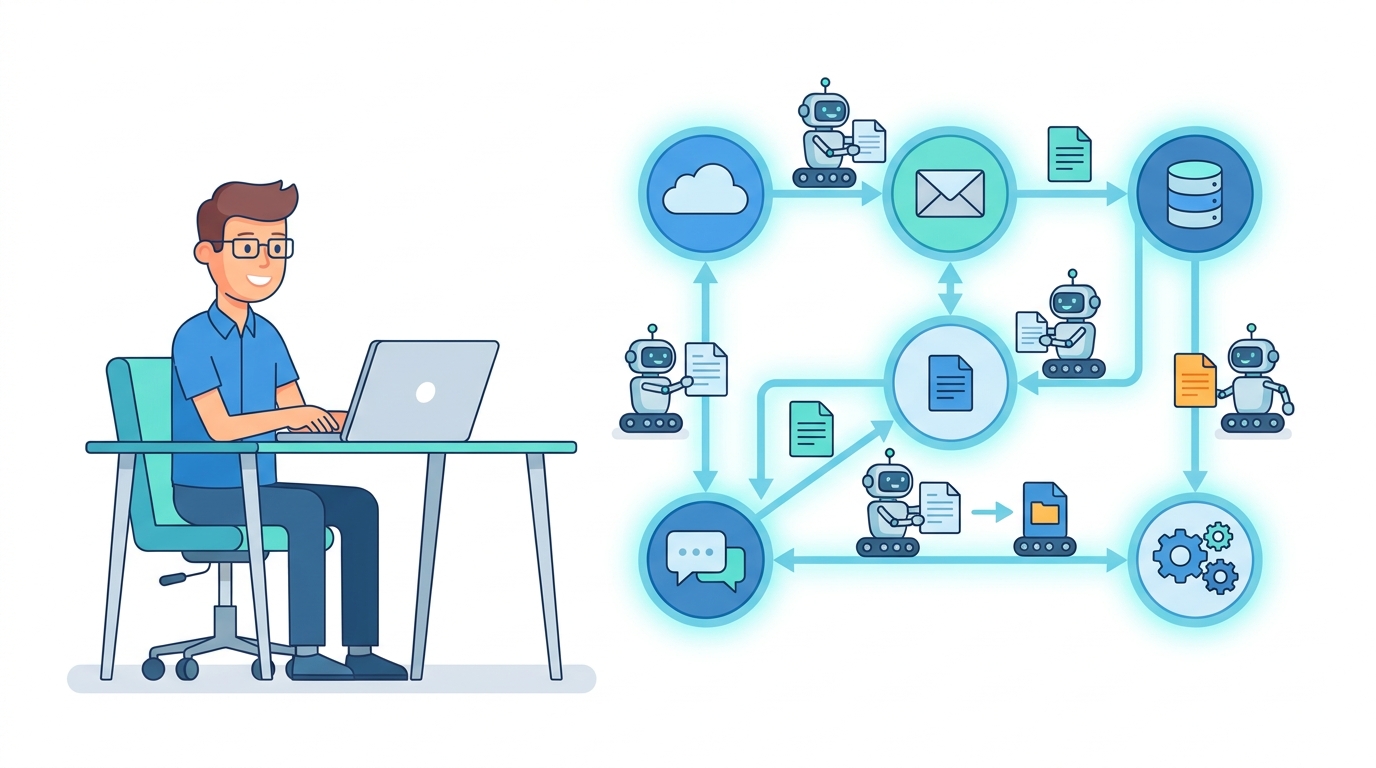
If you have typed “droven.io rpa and business automation” into a search engine, you have probably noticed that the results do not fully agree with each other. Some pages describe Droven.io as if it were a software product with its own dashboard and pricing, while others describe it as a website that explains technology topics. This confusion is the main reason so many people keep searching for the same phrase, and it is also the reason this guide exists. Here you will find a clear explanation of what Droven.io actually is, what robotic process automation (RPA) and business automation mean, how they differ, and how a small or growing company can use this knowledge to make better decisions.
What Is Droven.io?
Droven.io is an editorial website that publishes articles about artificial intelligence, technology, and digital transformation. A look at the site itself shows a blog-style layout built around categories such as Artificial Intelligence, Generative AI, AI Tools and Applications, AI in Business and Marketing, AI Automation Work, AI Business Processes, Digital Transformation, Big Data and Analytics, Cybersecurity and Data Privacy, Tech Reviews, and Future of Work. Its own tagline presents it as a source of trusted AI information, tools, guides, and future technology insights.
This tells us something important for anyone searching for the keyword. Droven.io is a place where you read about automation, not a place where you log in to build bots. It does not present itself as an RPA vendor, and there is no public product page, installer, or software pricing table on the site. If an article tells you that you can download “the Droven.io RPA tool” or buy a “Droven.io automation license,” you should treat that claim with caution, because it does not match what the website itself shows. When you are unsure, the safest habit is to open the website directly and look at what it really offers.
The site also covers a wide mix of subjects beyond automation, from AI video tools to cybersecurity and software development, so it is best seen as a general technology and AI knowledge hub that includes automation topics rather than a specialist automation brand.
Why People Search for “Droven.io RPA and Business Automation”
Most people who use this keyword fall into a few simple groups. Some are business owners who heard the name in a discussion about automation and want to know whether it is a tool they can use. Others are students or beginners who want a plain-language explanation of RPA. A third group consists of operations managers and team leaders who are comparing ideas before they speak with a software vendor or consultant. For all of these readers, the real question is not only “what is Droven.io” but also “what should I understand about RPA and business automation before I spend money on it.”
That second question is where the most useful answers are found, so the rest of this article focuses on the concepts themselves.
What Is Robotic Process Automation (RPA)?
Robotic process automation is a type of software technology that uses “software robots,” often called bots, to copy the repetitive actions a person performs on a computer. A bot can open an application, click through screens, copy data from one place to another, fill in forms, and send messages, all by following a set of rules that someone has defined in advance. Because it works at the screen level, RPA is especially helpful when a company relies on older systems that do not offer a modern way to connect with other software.
RPA works best when a task is repetitive, based on clear rules, and handled in large volumes. Typical examples include entering invoice details into an accounting system, copying customer information between two programs, generating routine reports, and checking whether records match across different files. The main benefit is that a bot can repeat the same steps consistently without getting tired, which reduces the number of simple mistakes that appear when people do monotonous data entry for hours.
At the same time, RPA has limits that are worth knowing. Because a bot follows a fixed path, a small change in a screen layout or a file format can cause it to fail until someone updates it. It also struggles with messy, unstructured information, such as handwritten notes or emails written in many different styles, unless it is combined with other technologies.
What Is Business Automation?
Business automation, also called business process automation, is the wider practice of using technology to run entire processes with less manual effort. Instead of focusing on one repetitive task, it looks at the whole journey of the work: where a request starts, who needs to approve it, which systems store the information, and what should happen once it is finished. RPA can be one part of this picture, but business automation also includes workflow tools, application integrations, automatic notifications, approval chains, and rules that move information from one system to the next.
A simple way to picture the difference is to think of a new customer order. An RPA bot might copy the order details from an email into your inventory program. Business automation, on the other hand, can connect the entire chain, so that the order is recorded, stock is checked, an invoice is created, the warehouse is notified, and the customer receives a confirmation without anyone starting each step by hand. In short, RPA automates a task, while business automation connects the process around that task.
RPA vs. Business Automation vs. Intelligent Automation
These three terms are often used as if they mean the same thing, but each one describes a different level of capability. Understanding the difference helps you avoid buying a tool that is either too simple or far more complex than you need.
| Approach | What it does | Best suited for | Main limitation |
|---|---|---|---|
| RPA | Copies repetitive screen actions using rule-based bots | Back-office tasks in older systems, data entry, report preparation | Breaks easily when screens or formats change |
| Business (workflow) automation | Connects apps and moves work through a full process using triggers and actions | Approvals, notifications, onboarding, order handling | Needs systems that can connect or share data |
| Intelligent (AI-driven) automation | Adds machine learning or language models so the system can read documents, classify requests, and handle exceptions | Work involving emails, invoices, forms, and decisions that are not purely rule-based | Requires careful setup, good data, and human review |
Many modern projects combine all three. A company might use workflow automation to move a request between departments, RPA to enter data into an older program, and an AI component to read an incoming document and decide where it should go. Seen this way, the technologies are not competitors but layers that can work together.
Practical Use Cases Across Common Business Areas

The value of automation becomes easier to understand when you look at where it is normally applied. The examples below are common across industries and do not depend on any single product.
In finance and accounting, teams often automate invoice processing, expense checking, payment reminders, and the matching of bank records with internal ledgers. These tasks involve a lot of repeated data handling, so even a modest improvement can free up hours each week.
In human resources, automation is frequently used for employee onboarding, collecting documents, creating accounts for new staff, sending welcome messages, and handling leave requests. Because these steps follow a similar order every time, they are good candidates for a structured workflow.
In customer service, businesses use automation to route support tickets to the right team, send acknowledgement messages, update customer records, and trigger follow-up questions after a case is closed. When AI is added, the system can also help sort messages by topic or urgency.
In sales and marketing, common examples include capturing leads from web forms into a customer database, sending follow-up emails at planned intervals, updating deal stages, and producing regular performance summaries.
In operations and supply chain work, companies automate inventory alerts, order status updates, supplier communication, and the creation of delivery documents. Droven.io itself publishes articles on related themes, such as AI automation in business operations and AI in business processes, which makes it a convenient place to read more about how these ideas are discussed in practice.
Key Benefits of Automating Business Processes
When automation is chosen carefully, the advantages are practical rather than flashy. Time is saved because repetitive work no longer needs to be done by hand, and employees can spend more of their day on tasks that require judgment, creativity, or personal contact with customers. Accuracy usually improves because a rule-based system applies the same steps every time, which reduces typing errors and missed details. Processes also become easier to track, since automated workflows can record what happened, when it happened, and who was involved, and this record is useful during audits or reviews. Finally, a business can handle more work without growing its team at the same speed, which helps with scaling during busy periods.
These benefits are real, but they depend on good planning. Automating a confusing or broken process only makes the confusion happen faster, so it is wise to improve the process first and automate it second.
The Risks and Challenges You Should Plan For
A balanced view of automation includes its difficulties. Projects can fail when the chosen process changes too often, since bots and workflows need regular maintenance to stay reliable. Security is another concern, because automated systems often need access to sensitive data and login credentials, so access should be limited and carefully monitored. Companies also need to think about how employees will react, because people may worry that automation will replace their jobs, and open communication about retraining and new responsibilities makes adoption much smoother. Finally, costs can grow beyond the first estimate if licensing, support, training, and updates are not included in the budget from the beginning.
How to Start With RPA and Business Automation Step by Step
A sensible beginning is small and well measured. First, list the tasks in your team that are repetitive, rule-based, and time-consuming, and ask the people who do them how long each task really takes. Second, choose one process that is simple enough to automate quickly but valuable enough that the result will be noticed. Third, map the process on paper from start to finish, including exceptions and special cases, because these are the points where automation most often fails. Fourth, decide whether the job needs RPA, workflow automation, an AI component, or a mix of them. Fifth, test the solution on a small scale with real data, keep a person in the loop for checking results, and measure the time saved and the errors avoided. Only after this pilot has proved its value should you expand to other processes.
How to Choose the Right Automation Tools
Because Droven.io is a knowledge website and not a software vendor, you will still need to select tools from the wider market. Well-known options fall into a few families. Enterprise RPA platforms such as UiPath, Automation Anywhere, and Microsoft Power Automate are designed for screen-level and back-office automation. Workflow and integration tools such as Zapier, Make, and n8n focus on connecting web applications through triggers and actions, and they are often a friendly starting point for small teams. Each of these has its own pricing, features, and learning curve, and these details change over time, so you should always check the official website of any product before deciding.
When comparing options, it helps to ask a few simple questions. Does the tool connect to the programs your team already uses? Can non-technical staff build and edit workflows, or will you always need a developer? How does the vendor handle security, access control, and data privacy? What support and training are available? And what will the total cost look like after the first year, not only during a free trial? A short trial with a real, low-risk process will usually teach you more than any feature list.
How to Use Droven.io Wisely
Used correctly, Droven.io can be a helpful starting point in the early research stage of an automation project. You can read its articles to learn the vocabulary, understand what AI and automation can realistically do, and get ideas for questions to ask. However, a general information site cannot replace professional advice for your specific situation. Before you commit to a tool or a budget, confirm important details on the official pages of the software providers, speak with qualified implementation partners if the project is large, and test your chosen approach with a small pilot.
Frequently Asked Questions
Is Droven.io a software tool I can log into?
No. Based on its public website, Droven.io is an editorial and information site that publishes articles about AI, technology, and digital transformation, not a platform for building or running bots.
Does Droven.io sell RPA software?
There is no RPA product or software pricing shown on the website. It is best understood as a place to read about automation, not a vendor that sells it.
What is the difference between RPA and business automation?
RPA copies repetitive actions that a person would do on a screen, while business automation connects the full process across systems, including approvals, notifications, and data transfers.
Is RPA the same as AI?
No. Traditional RPA follows fixed rules, whereas AI can learn patterns and work with unstructured information. The two are often combined in what is called intelligent automation.
Can a small business use automation?
Yes. Many workflow tools are designed for small teams and can handle simple tasks such as lead capture, reminders, and basic reporting without a large technical budget.
What should I automate first?
Start with a task that is frequent, rule-based, and easy to measure, such as data entry between two systems or sending standard follow-up messages.
Final Thoughts
The phrase “droven.io rpa and business automation” points to a topic that is much larger than one website. Droven.io is a technology and AI information site that includes automation among its many subjects, while RPA and business automation are practical methods for reducing manual work and connecting the steps of a process. By understanding the difference between a bot that copies a task, a workflow that connects a process, and an AI layer that handles messy information, you can plan your own automation journey with more confidence. Begin with one small and clearly defined process, measure the results honestly, and grow step by step.
Disclaimer: This article is provided for general information and educational purposes only. It does not constitute professional, technical, financial, or legal advice. Droven.io is described here based on its publicly available website, and details about any website, software product, or pricing may change over time. Product names mentioned are used only as examples of common tool categories, and we are not affiliated with or endorsed by any of them. Please verify current information with official sources and consult a qualified professional before making business or investment decisions.
Explore More
AT-A-GLANCE Black n’ Red Soft Cover Business Notebook: Features, Size, Pros and Cons

I’m Muhammad Ubaid, founder of YBR Magazine. I research and write detailed guides on America’s National Parks — covering entry fees, permits, best times to visit, and planning tips — using official NPS sources and up-to-date information.

