


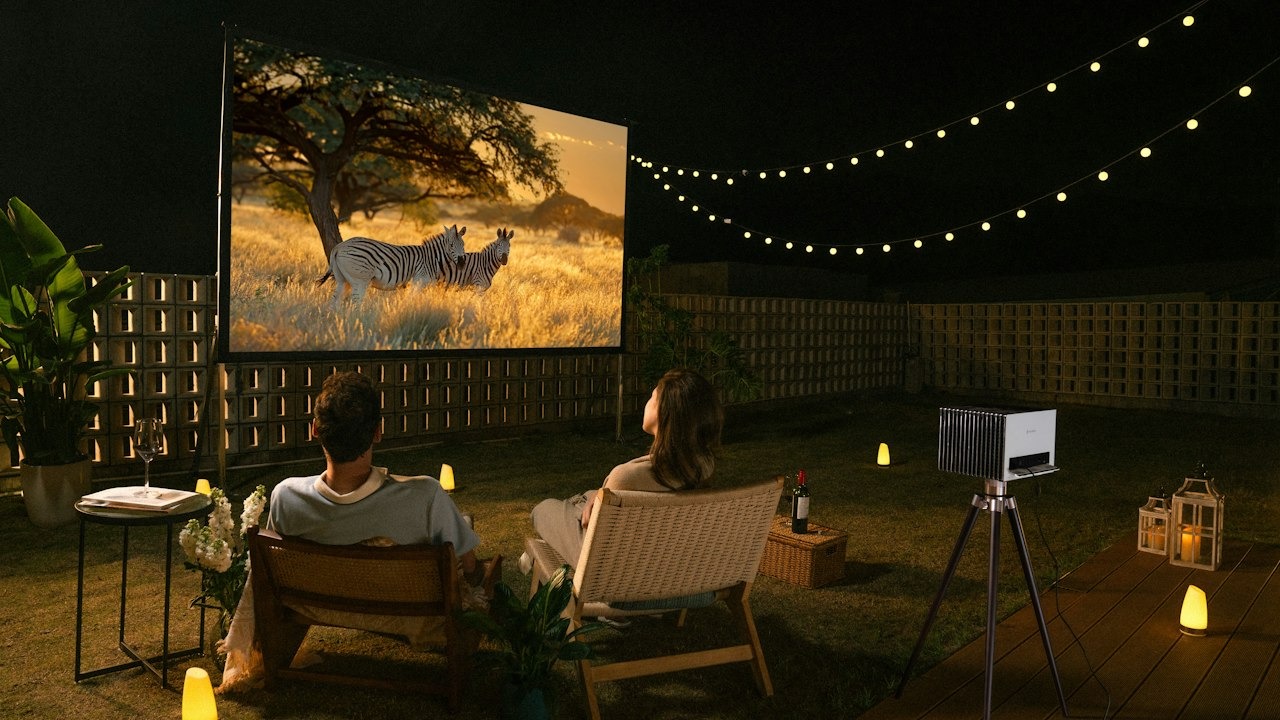
The best moments from a trip often live in a mixture of short videos, blurry photographs, and stories nobody thought to record. Weeks later, those memories may be buried in a phone gallery. A small outdoor screening can give them an audience and turn the return home into its own gathering. The trick is to keep the evening personal rather than forcing friends to sit through every minute of vacation footage.
Build a story rather than a slideshow archive
Start by choosing a beginning, a handful of memorable stops, and one satisfying ending. Short clips of local sounds or an unexpected roadside moment often communicate more than dozens of nearly identical landscape photographs. Keep the total presentation modest so guests remain interested. Ask travel companions which images they are comfortable sharing before showing private moments to a larger group.
Before buying equipment, test the proposed screen size with tape or a temporary sheet. Sit in each normal viewing position, including the far edge of the gathering area. Small captions and subtitles should remain readable without a strained posture. The most dramatic picture size is not always the most comfortable. A modest adjustment to seating or image height can make the evening more enjoyable for everyone.
Organize media before the evening
Collect videos from the group, verify their formats, and create an offline copy of the final sequence where possible. Long loading delays and unexpected notifications can spoil the mood. Check audio levels because clips recorded on different phones may vary dramatically. A simple sequence with clear pauses for anecdotes works better than an elaborate edit that is difficult to play.
Check the entire throw geometry using the exact projector instructions. Long-throw devices need a suitable distance to form the intended image; the mount must remain stable and the beam free from obstacles. Move through the space as people will during the event. If everyone is likely to cross the projection path to reach food or a doorway, revise the layout rather than hoping they remember to duck.
Make the image large but comfortable
A 4K long throw projector may be suitable for displaying detailed landscapes and group photographs when the yard or patio provides enough throw distance. Measure the distance and view the image from every seat. Not every source photograph is 4K, so do not expect resolution alone to restore missing detail. A well-focused, steady image is more important than enlarging an already soft photograph.
Screen surfaces are not interchangeable. A portable fabric screen may offer convenient transport, while a tensioned or fixed surface can provide a flatter picture. Directional ambient-light-rejecting materials must be matched with the correct projection geometry. Check where the light will come from and where viewers will sit. Screens that perform well indoors may require different mounting precautions outdoors.
Use a screen meant for the setting
An outdoor projector screen should be stable, appropriately sized, and suitable for safe setup. A smooth surface helps with legibility when showing maps or captions. Secure a frame as instructed and keep the route to the seats unobstructed. Check how the screen will be stored when the event ends and whether wind or dew might require bringing the evening indoors.
Plan for sound that can be understood rather than simply heard. Dialogue becomes difficult when speakers point away from the crowd or a room has too many reflective surfaces. Outdoors, sound disperses and neighbors may hear it differently than viewers do. Walk to the edges of the listening area and test the soundtrack at a considerate volume before deciding that the arrangement is complete.
Choose timing and sound with neighbors in mind
Plan to begin when dusk is sufficiently advanced for the projected picture to remain visible. Place speakers close enough to the audience that conversation and ambient travel sounds can be heard without raising the volume across the property. If the presentation includes copyrighted commercial music, check appropriate usage rather than assuming it can be publicly played without permission.
Daylight and direct lighting can erase the darker parts of a projected image. Test the setup at the time the event is intended to begin, not only when it is fully dark. Curtains help indoors; outdoor events usually need to wait until the sky is sufficiently dim for the chosen equipment. A higher brightness claim does not eliminate the need to consider light falling on the screen.
Keep the travel theme light
Offer a snack inspired by a memorable stop or print a small map of the journey. Avoid turning the evening into a staged travel exhibition. The best conversations often begin when someone notices a detail in an image and asks what happened next. Leave time for people who did not travel to share their own similar experiences.
Keep the logistics uncomplicated. Locate a safe power supply, cover or route cables away from feet, and decide where the remote will be kept. Test streaming access, playback rights, Wi-Fi, and backup connections before guests arrive. A system that works beautifully during a ten-minute technical rehearsal is far less likely to turn into an unwanted interruption in the middle of a gathering.
End with a shared record
After the screening, send participants a link to an appropriately private album or a short recap they have agreed to receive. Preserve original files separately from the edited presentation. Take a photo of the gathering only with permission. This gives the trip a second life without letting the projected show become another task to maintain.
Think about the weather and surface beneath each piece of equipment. A projector should not be left exposed to rain, dew, or unsteady furniture; a screen needs secure anchoring against breeze. Even indoor arrangements benefit from thoughtful ventilation. Prepare a sensible alternative if conditions change. Guests will forgive a change of plans much more readily than an unsafe electrical setup.
A simple plan that works
A travel-memory screening works because it turns a private gallery into a shared story. Edit with restraint, test the media, give everyone a clear view, and keep the outdoor setup simple and safe. The evening is an invitation to remember, not a demand that guests admire every photograph.
READ ALSO: What Backpack Should You Bring to America’s National Parks?


