

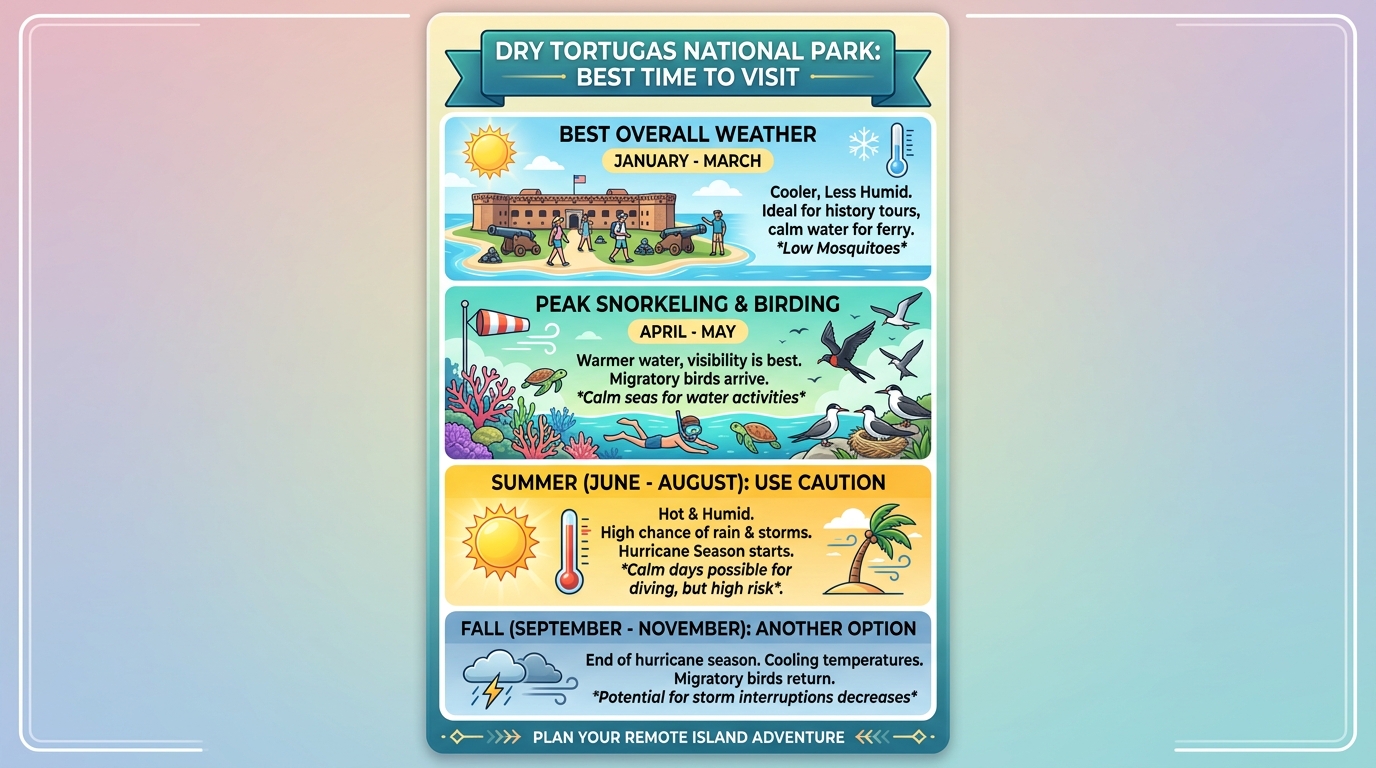
Planning a journey to a remote ocean outpost requires careful timing because shifting sea conditions dictate every single part of the trip. Deciding on the Dry Tortugas National Park best time to visit depends heavily on unpredictable weather patterns, wind speeds, and the limited daily availability of public transit. Dry Tortugas National Park sits roughly seventy miles west of Key West, Florida, making it one of the most isolated protected areas in the country. Because visitors cannot simply drive to the destination at any hour, understanding the local marine climate is vital for ensuring a safe and successful getaway.
Evaluating Spring Weather and Clearer Waters
Springtime provides some of the most reliable weather windows for travelers looking to experience the park without severe heat or intense tropical storms.
Between March and May, passing cold fronts become much less frequent across the Florida Straits, allowing ocean waters to settle into calmer patterns. Daytime temperatures hover comfortably in the mid-seventies to low eighties, which makes walking along the historic masonry walls of Fort Jefferson very pleasant. Snorkeling conditions also improve noticeably during these months because lower wind speeds keep the shallow coral reefs clear of stirred-up sand. However, because spring offers such favorable conditions for outdoor exploration, authorized tour operators and ferry services experience extremely high demand, requiring visitors to secure their reservations months ahead of time.
Weighing Summer Humidity and Tropical Storm Risks
Summer brings intense heat, high humidity, and active tropical weather patterns that require careful safety awareness from every traveler.
July and August feature very warm water temperatures and calm surface conditions on good days, making swimming and snorkeling quite enjoyable for visitors who can tolerate the tropical sun. Afternoon thunderstorms, however, pop up with little warning across the open Gulf of Mexico, occasionally bringing sudden lightning and heavy downpours. The Atlantic hurricane season also runs through these summer and early autumn months, introducing the constant possibility of tropical depressions that force temporary park closures and mandatory evacuations for campers. Travelers planning a summer excursion must monitor marine forecasts closely and pack ample sun protection to handle the fully exposed island environment.
Navigating Winter Winds and Ferry Cancellation Realities
Winter months bring cooler air temperatures, but they also introduce strong seasonal winds and rough seas that frequently disrupt travel plans.
From December through February, frequent cold fronts sweep down the Florida peninsula, generating choppy ocean swells across the seventy miles of open water separating Key West from the park. These rough marine conditions often force the official Yankee Freedom ferry to cancel scheduled trips for passenger safety. Visitors who plan a winter getaway must remain flexible and build extra days into their itineraries to account for potential cancellations. While daytime temperatures feel mild and comfortable for exploring the historic fort without heavy crowds, the unpredictable nature of winter weather remains a significant practical downside for rigid vacation schedules.
Securing Permits and Managing Daily Transit Limits
Securing a spot on authorized transportation requires booking far in advance because daily passenger limits are strictly enforced by the National Park Service.
The Yankee Freedom ferry and authorized seaplane operators carry all civilian travelers to and from Dry Tortugas National Park, and seats sell out rapidly during peak travel windows. Because passenger capacity is limited to protect fragile coral reefs, spontaneous trips are nearly impossible during popular holiday periods and calm weather months. Travelers must also pay the required park entrance fee, which is managed according to National Park Service guidelines, either independently or as part of their authorized tour package. Checking official park websites ensures that visitors understand current ticket prices, parking instructions in Key West, and strict check-in times before departure.
Choosing Between Day-Trip Windows and Overnight Camping
The ideal season shifts dramatically depending on whether a visitor plans a quick afternoon tour or a rustic camping trip requiring entirely self-contained gear.
Day-trippers arrive via the morning ferry, spend roughly four hours touring Fort Jefferson and swimming near the coral reefs, and return to Key West by evening. Campers, on the other hand, must bring all their own fresh drinking water, food, and camping gear onto the ferry, packing out every single piece of trash they generate. Winter camping offers cooler sleeping temperatures inside tents, but strong winds can make pitching shelter difficult on the open parade grounds. Summer camping requires high tolerance for heat and mosquitoes, making spring and late autumn the most comfortable seasons for spending a quiet night under the stars.
For travelers interested in exploring other remote natural landscapes across the country, reviewing guides like our overview on ideal seasons to explore high-elevation Nevada can offer helpful trip-planning insights.
Frequently Asked Questions
When is the best time of year to visit Dry Tortugas National Park?
Spring and late autumn generally offer the best combination of comfortable air temperatures and calmer ocean conditions for travel.
Can the ferry to Dry Tortugas National Park be cancelled due to weather?
Yes, strong winter winds and rough seas frequently cause the official ferry to cancel trips, so travelers must always have a backup plan.
How far in advance should I book tickets for Dry Tortugas National Park?
Visitors typically need to book tickets several months in advance because daily passenger limits fill up very quickly.
Do I need to bring my own fresh water to the park?
Day visitors do not need to bring water, but overnight campers must pack all their own drinking water because there is no reliable fresh water source on the island.
Are entrance fees required for Dry Tortugas National Park?
Yes, visitors must pay an entrance fee, which is set according to National Park Service guidelines and is often included in authorized ferry or seaplane ticket prices.
How long do day-trippers get to spend on the island?
Day visitors arriving on the ferry usually have about four hours to explore Fort Jefferson, snorkel, and walk around the island before the return journey.

I’m Muhammad Ubaid, founder of YBR Magazine. I research and write detailed guides on America’s National Parks — covering entry fees, permits, best times to visit, and planning tips — using official NPS sources and up-to-date information.