

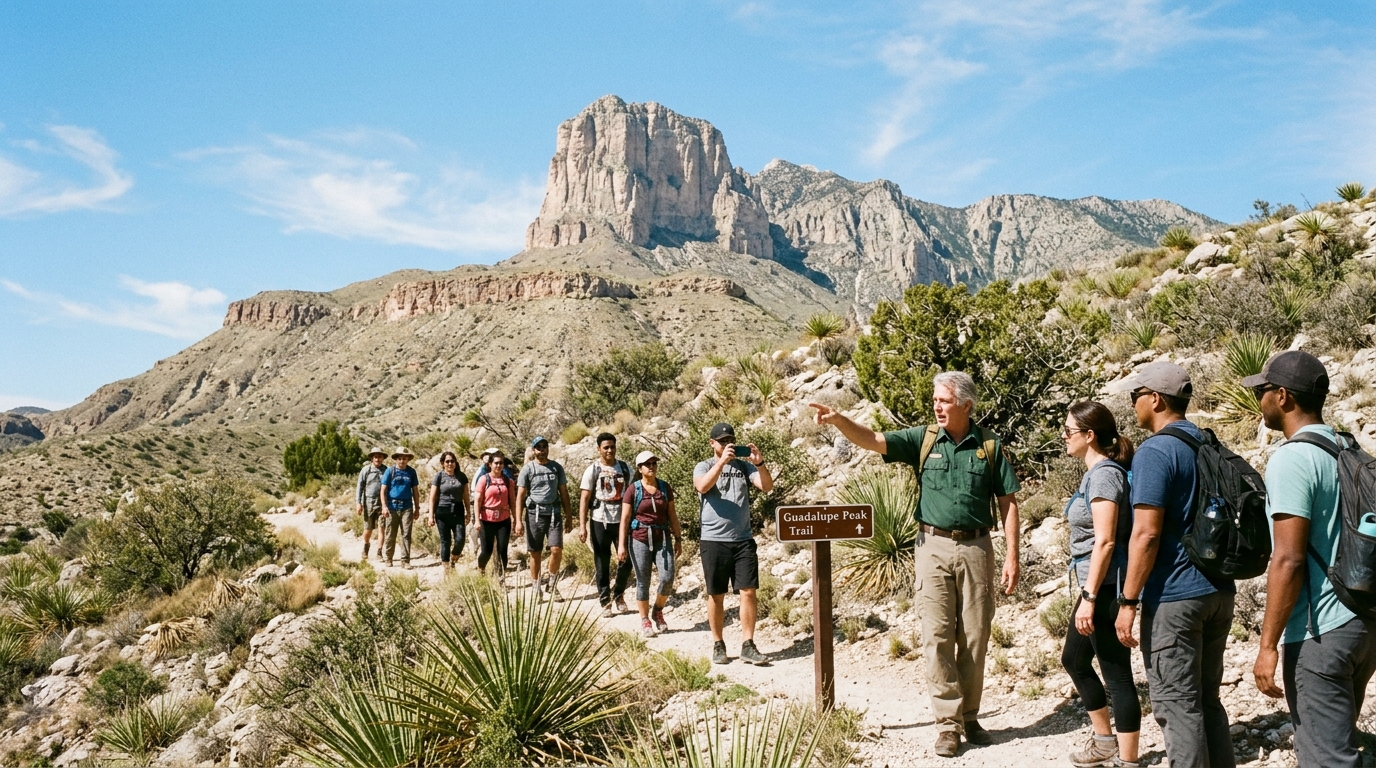
When travelers begin planning a trip to the rugged terrain of West Texas, they often look online for organized commercial excursions and guided packages. However, anyone researching Guadalupe Mountains National Park tours quickly discovers that this wild destination operates very differently from crowded tourist hubs like Yellowstone or the Grand Canyon. There are no daily tour buses, hop-on shuttles, or large commercial tour operators running regular sightseeing trips inside the boundaries of Guadalupe Mountains National Park. Instead, the landscape is wide open and untamed, meaning most visitors explore entirely on their own or rely on specific self-guided strategies.
The Reality of Guadalupe Mountains National Park Tours
Traditional commercial tour options for Guadalupe Mountains National Park are extremely limited because of the remote location and lack of paved scenic drives.
Unlike national parks with extensive internal road networks, Guadalupe Mountains National Park features just a few visitor access points and narrow park boundaries. Commercial tour buses cannot navigate the backcountry dirt service roads, and large crowds do not find rows of souvenir shops or guided group kiosks here. Travelers who want structured guidance must look closely at what is actually available rather than expecting an all-inclusive bus tour. According to the National Park Service, visitors should arrive prepared for self-reliant recreation because the park’s primary appeal lies in its backcountry wilderness, deep canyons, and high mountain peaks. Anyone hoping to see the area with expert insight will need to check the official park schedule for ranger events or consider hiring an independent private guide based out of nearby cities like Carlsbad or El Paso.
Free Ranger-Led Programs and Activities
Park ranger programs serve as the closest official alternative to traditional guided excursions during certain seasons.
While the schedule changes based on staff availability and time of year, park rangers sometimes host talks, historical walks around Frijole Ranch, or evening programs at the Pine Springs Visitor Center. These free programs give visitors a chance to learn about the area’s complex geological history, ancient fossil reefs, and early ranching families directly from park staff. According to the National Park Service, visitors should stop by a visitor center right after arriving or check the official park website beforehand to see which programs are running during their specific travel dates. These ranger-led talks fill up quickly during busy weekends, so arriving early is always a smart strategy for anyone wanting to join.
Exploring on Your Own with Self-Guided Routes
Independent self-guided exploration forms the core of almost every visit to Guadalupe Mountains National Park.
Without standard tour companies setting the schedule, travelers must map out their own daily itineraries based on personal fitness and interests. The park offers miles of scenic hiking trails that lead to high points like Guadalupe Peak, dramatic geologic formations like El Capitan, and quiet canyons like Devil’s Hall. Driving to trailheads requires a reliable vehicle, and carrying a physical trail map is essential because mobile phone service is notoriously unreliable throughout the park. For more ideas on how to spend your time exploring the region, take a look at our detailed guide on Guadalupe Mountains National Park Things to Do to help build your daily itinerary.

Practical Limitations and Safety Warnings to Keep in Mind
Visiting a remote mountain park comes with serious environmental challenges that every traveler must respect.
High winds are one of the most common and dangerous hazards in the area, often reaching speeds that can knock hikers off balance or damage tents at campgrounds. Additionally, there is very little natural surface water available along the trails, meaning everyone must pack in all the drinking water they will need for the day. According to the National Park Service, hikers should carry at least one gallon of water per person per day, especially during the hot summer months. Temperatures can also shift dramatically from warm afternoon sunshine to freezing mountain winds after sunset, so packing extra layers of clothing is non-negotiable for a safe trip.
Frequently Asked Questions About Guadalupe Mountains National Park Tours
Here are clear answers to the questions travelers ask most often when planning their trips to this remote region.
Are there bus tours that visit Guadalupe Mountains National Park?
No major commercial bus tour companies operate regular daily sightseeing trips inside Guadalupe Mountains National Park.
Can I hire a private guide for hiking the trails?
Independent third-party outdoor guides can sometimes be hired from nearby towns, but they must have proper authorization to operate within federal park boundaries.
Are ranger programs free to attend?
Yes, any interpretive talks or guided walks offered by park rangers are completely free for visitors once you enter the park.
Do I need reservations for Guadalupe Mountains National Park tours?
Because formal commercial tours do not exist here, you do not need a tour reservation, though you do need to pay standard park entrance fees.
How do I pay my entrance fee?
According to the National Park Service, entrance fees can be paid using automated fee machines at visitor centers or online through official recreation booking platforms.
Is cell service available for self-guided navigation?
Cell phone coverage is very weak or entirely absent across most of the park, so offline maps and printed trail guides are mandatory.
Disclaimer: Park rules, ranger schedules, and entrance fees can change over time. Always verify current conditions directly from official sources before starting your trip.

I’m Muhammad Ubaid, founder of YBR Magazine. I research and write detailed guides on America’s National Parks — covering entry fees, permits, best times to visit, and planning tips — using official NPS sources and up-to-date information.