

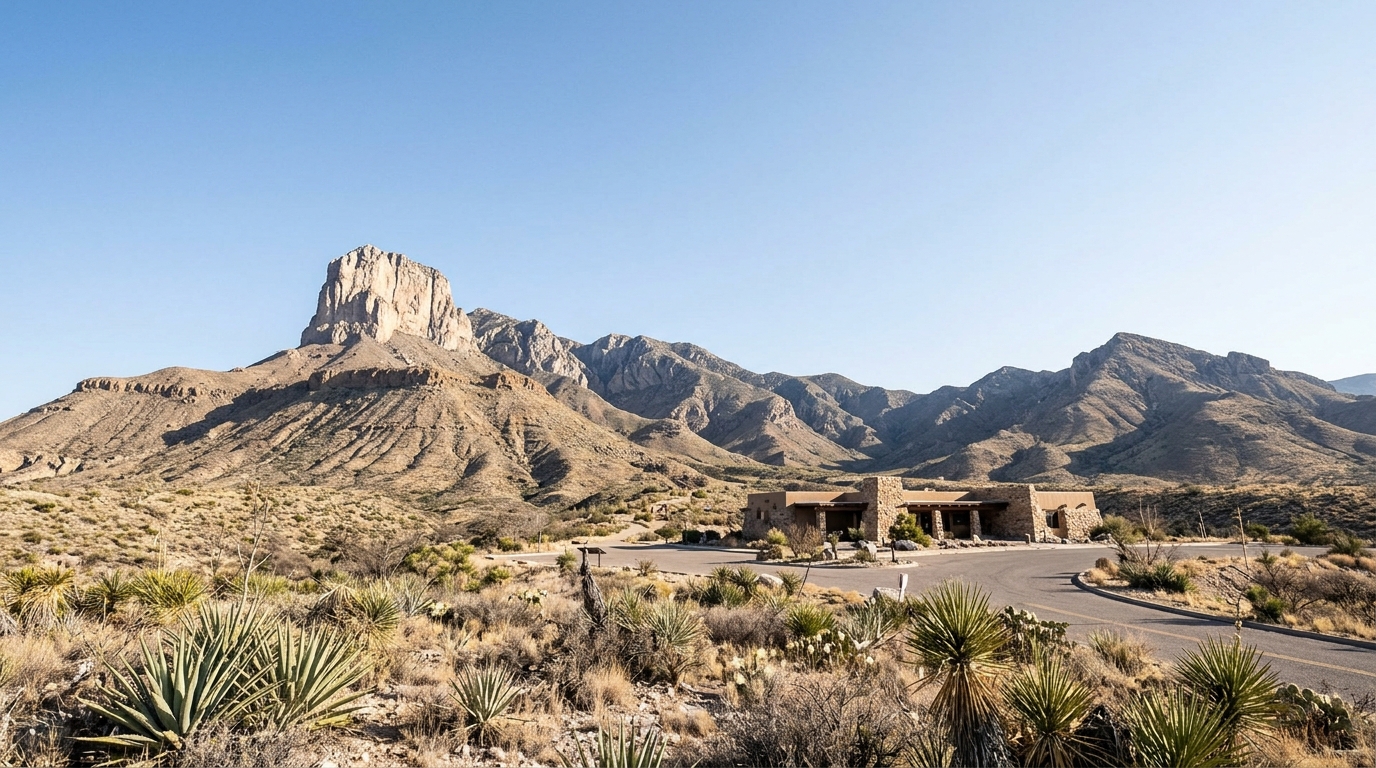
Planning a trip to West Texas requires a shift in expectations because Guadalupe Mountains National Park is vastly different from popular parks like Yosemite or Yellowstone. It is remote, rugged, and lacks heavy tourist infrastructure like paved scenic drives or many developed food options. A well-designed Guadalupe Mountains National Park itinerary must address the physical reality of desert hiking, high winds, limited water sources, and the fact that the main highlights require significant physical effort on foot. It is not a park you can easily see from a car window, and visitors must be prepared for steep trails, shifting weather, and driving long distances between trailheads and basic services.
Geographic Realities Across Pine Springs and Dog Canyon Sectors
Guadalupe Mountains National Park is split into separate areas that do not connect by internal roads, meaning visitors must plan their driving routes carefully.
The park geography is divided into distinct zones such as Pine Springs, Dog Canyon, and the distant Salt Basin Dunes, and none of these sectors are linked by direct paved routes through the mountains. Travelers must drive completely outside the park boundaries on public highways just to move from the southern trailheads to the isolated northern canyon. For more insights on regional trip planning, readers can explore this guide to exploring West Texas park highlights. Failing to account for these long driving loops between trailheads can easily ruin a tight travel schedule.
Two-Day Weekend Plan for Guadalupe Peak and Salt Basin Dunes
This section breaks down a realistic weekend plan to tackle major peaks while managing desert heat and changing weather.
Day one should focus entirely on the strenuous climb up Guadalupe Peak, where hikers gain over three thousand feet of elevation across more than four miles of steep terrain. Starting before sunrise is crucial to avoid intense dehydration under the scorching West Texas sun on the exposed mountain slopes. Day two shifts dramatically away from the high country toward the western edge of the park to explore the striking, gypsum-based Salt Basin Dunes. Balancing these high-exertion mountain climbs with lower-intensity desert walks keeps leg muscles functional and protects against exhaustion.
Strict Water Management and Essential Hiking Gear Rules
Visitors must understand that water sources inside the park are extremely limited, according to the National Park Service.
Natural springs along the upper trails are completely unreliable for drinking, meaning hikers must carry every drop of water they consume during their daily treks. The National Park Service strongly recommends packing at least one gallon of water per person each day for strenuous mountain routes. Sturdy hiking boots with thick tread are also mandatory to handle the sharp limestone rocks and loose gravel found all along the rugged park trails.
Navigating Fierce Windstorms and Sudden Weather Shifts
Strong winds can make hiking or camping dangerous in certain seasons, requiring flexible plans and constant checks on official forecasts.
The high mountain passes and open basins are notorious for violent windstorms, particularly during the late autumn, winter, and spring months. Gusts can easily exceed hurricane force at higher elevations, making tent camping a risky endeavor and pushing hikers off balance near cliff edges. Checking daily weather briefings from the National Park Service helps travelers pivot to sheltered canyon trails when dangerous wind warnings are active.

Basecamp Logistics and Supply Depots Outside Park Borders
Because services inside the park boundaries are minimal, travelers need to know where to find lodging, groceries, and fuel nearby.
Pine Springs Campground and Dog Canyon Campground offer basic spaces for tents and RVs, but they do not provide electrical hookups, showers, or camp stores. Travelers needing commercial hotels, hot meals, or full grocery stores must look toward Carlsbad, New Mexico, or Van Horn, Texas, both of which sit a considerable drive away. Filling up fuel tanks and stocking up on provisions before reaching the remote park boundaries prevents frustrating delays during a tight trip.
Frequently Asked Questions About Visiting Guadalupe Mountains National Park
This section answers common questions about fees, pets, best months to visit, and trail safety using clear details.
What is the entrance fee for Guadalupe Mountains National Park?
According to the National Park Service, an individual entrance fee is charged per person for adults aged sixteen and older, while valid interagency annual passes are also accepted.
Are dogs allowed on the hiking trails?
Pets are heavily restricted and are only allowed on permitted walking paths near the visitor centers and campgrounds, but they are prohibited on dirt hiking trails to protect local wildlife.
What are the best months of the year to visit?
Spring and autumn offer the most comfortable daytime temperatures for strenuous hiking, while summers can bring intense desert heat.
Can I buy food or drinking water inside the park?
The park does not operate restaurants or grocery stores, and drinking water is available only for filling containers, so visitors must bring all necessary food and water supplies.
How long does it take to hike to Guadalupe Peak?
Most hikers take between six and eight hours to complete the round-trip trek to the highest summit in Texas.
Is backcountry camping allowed in the park?
Backcountry camping is permitted in designated wilderness sites, but a valid permit and advance reservation are required through recreation.gov.
Disclaimer: Park rules, fees, and weather conditions can change unexpectedly. Always check the official National Park Service website before starting any Guadalupe Mountains National Park itinerary.

I’m Muhammad Ubaid, founder of YBR Magazine. I research and write detailed guides on America’s National Parks — covering entry fees, permits, best times to visit, and planning tips — using official NPS sources and up-to-date information.