

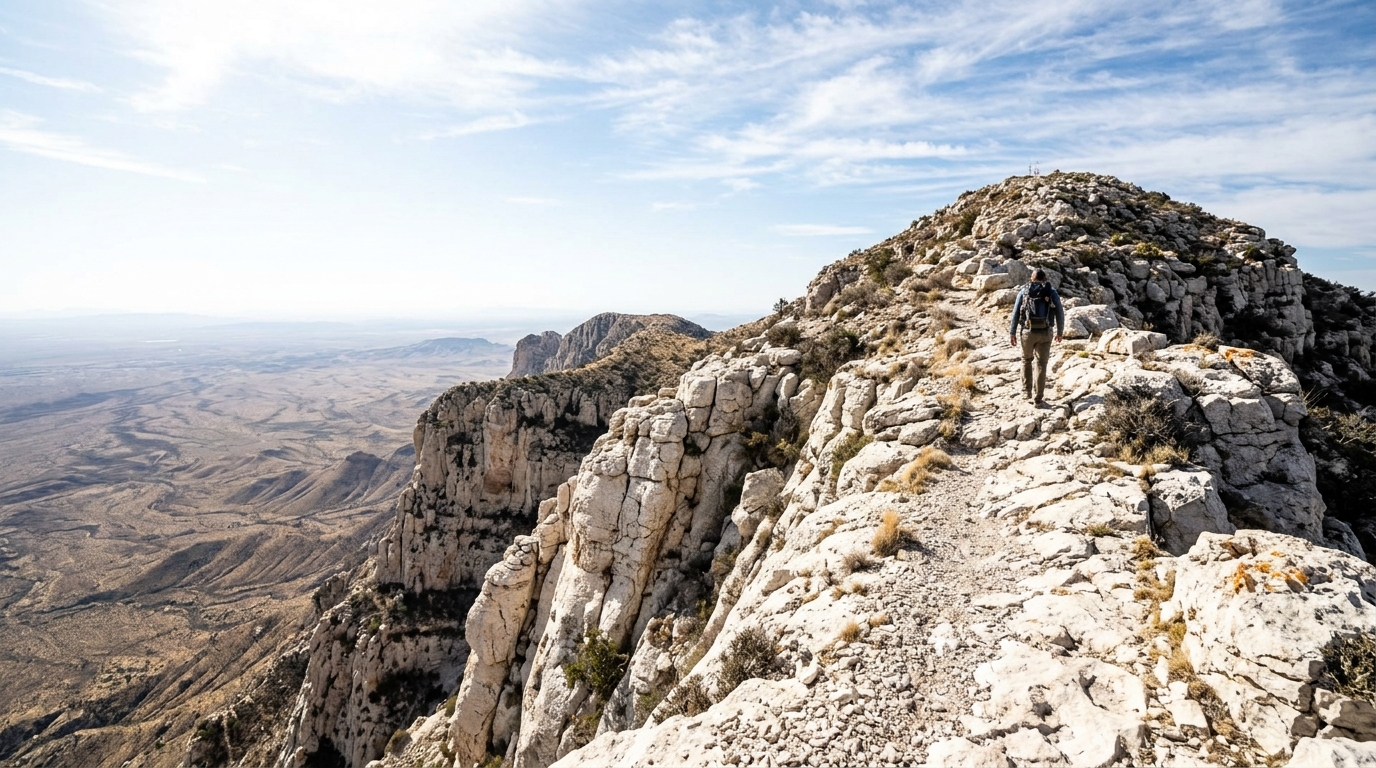
Planning a trip to West Texas means looking closely at Guadalupe Mountains National Park things to do before you arrive, because this destination is entirely different from typical drive-through national parks. Guadalupe Mountains National Park lacks paved scenic drives, geysers, or easy roadside viewpoints, focusing instead on rugged backcountry terrain, massive elevation changes, and powerful winds. Visitors searching for things to do at Guadalupe Mountains National Park must prepare for a physically demanding experience that requires self-reliance, plenty of water, and careful planning. Without proper preparation, even a short afternoon walk can quickly turn exhausting due to the intense sun, dry desert air, and sudden weather shifts that define the Chihuahuan Desert ecosystem.
Climbing Guadalupe Peak for the Highest View in Texas
Climbing Guadalupe Peak gives visitors the ultimate challenge of reaching the highest point in the entire state of Texas at 8,751 feet. This strenuous hike spans about 8.4 miles round-trip and features an intense elevation gain of nearly 3,000 feet up a steep, rocky mountain trail. Hikers should start early in the morning to avoid the heat and severe afternoon winds, carrying a minimum of four liters of water per person. According to the National Park Service, this iconic trail requires solid physical fitness and proper footwear, as loose limestone rocks create frequent slipping hazards along the steep switchbacks. Reaching the summit rewards successful hikers with panoramic views stretching across miles of dramatic desert landscape and distant mountain ranges, making the physical exertion worthwhile for experienced outdoor enthusiasts.
Exploring the Historic Frijole Ranch and Culture
Exploring the historic Frijole Ranch provides a much gentler, accessible cultural activity that tells the story of early settlers and ranching life in the Chihuahuan Desert. The Frijole Ranch Cultural Museum sits just a short drive past the Pine Springs Visitor Center and features exhibits detailing the farming and ranching history of the Guadalupe Mountains. Visitors can walk the nearby Smith Spring loop trail, a pleasant 2.3-mile path that leads to a hidden desert oasis shaded by large trees. This area offers a welcome break from grueling mountain climbs while still showcasing the unique natural springs that once sustained early homesteaders and local wildlife alike.
Hiking the Dramatic Salt Basin Dunes
Hiking the dramatic Salt Basin Dunes on the western side of the park reveals a completely different, otherworldly desert ecosystem far away from the main mountain range. These gleaming white gypsum dunes rise starkly against the dark backdrop of the Guadalupe Mountains, creating a striking landscape that feels reminiscent of White Sands National Park. Visitors should note that the Salt Basin Dunes trailhead sits at the end of a long, unpaved gravel road and requires a separate drive around the northern edge of the park from Pine Springs. Travelers looking for another unique desert landscape nearby can also explore our guide to desert flatlands and salt formations for more ideas on arid adventures.

Essential Safety Tips, Weather Warnings, and Park Rules
Reviewing essential safety tips, weather warnings, and park rules according to the National Park Service helps protect visitors from the extreme and unpredictable environmental hazards found here. High winds are a constant threat in the Guadalupe Mountains, frequently reaching hurricane-force speeds that can easily blow over camper vans, high-profile vehicles, and tents. Furthermore, surface water is virtually nonexistent on the trails, meaning hikers must pack in all the water they will need for their entire excursion. Campfires are strictly prohibited across all park areas due to the high risk of devastating wildfires fueled by dry brush and fierce winds.
Frequently Asked Questions About Visiting Guadalupe Mountains National Park
What are the entrance fees for Guadalupe Mountains National Park?
According to the National Park Service, the standard entrance fee is seven dollars per person aged 16 and older, which remains valid for seven consecutive days.
Are dogs allowed on the trails at Guadalupe Mountains National Park?
Pets are heavily restricted and are only permitted on the Pinery Trail near the visitor center and along roads, but they are banned from all dirt hiking trails to protect local wildlife.
When is the best time of year to visit Guadalupe Mountains National Park?
Spring and autumn offer the most comfortable daytime temperatures for hiking, while winters bring chilly nights and summers experience intense daytime heat.
Is there food or fuel available inside Guadalupe Mountains National Park?
The park does not have any restaurants, stores, or gas stations, so visitors must bring all necessary food and fill up their vehicle gas tanks in nearby towns like Van Horn or Carlsbad.
Do I need reservations to camp at Guadalupe Mountains National Park?
Campsites at Pine Springs and Dog Canyon require advance reservations through recreation.gov before you arrive, as drive-up sites are not guaranteed.
How long does it take to hike to Guadalupe Peak?
Most hikers take between six to eight hours to complete the grueling 8.4-mile round-trip journey to the summit and back down.
Disclaimer: Park rules, operating hours, and weather conditions can change quickly. Always verify current details and trail status directly from official park sources before starting your trip.

I’m Muhammad Ubaid, founder of YBR Magazine. I research and write detailed guides on America’s National Parks — covering entry fees, permits, best times to visit, and planning tips — using official NPS sources and up-to-date information.