


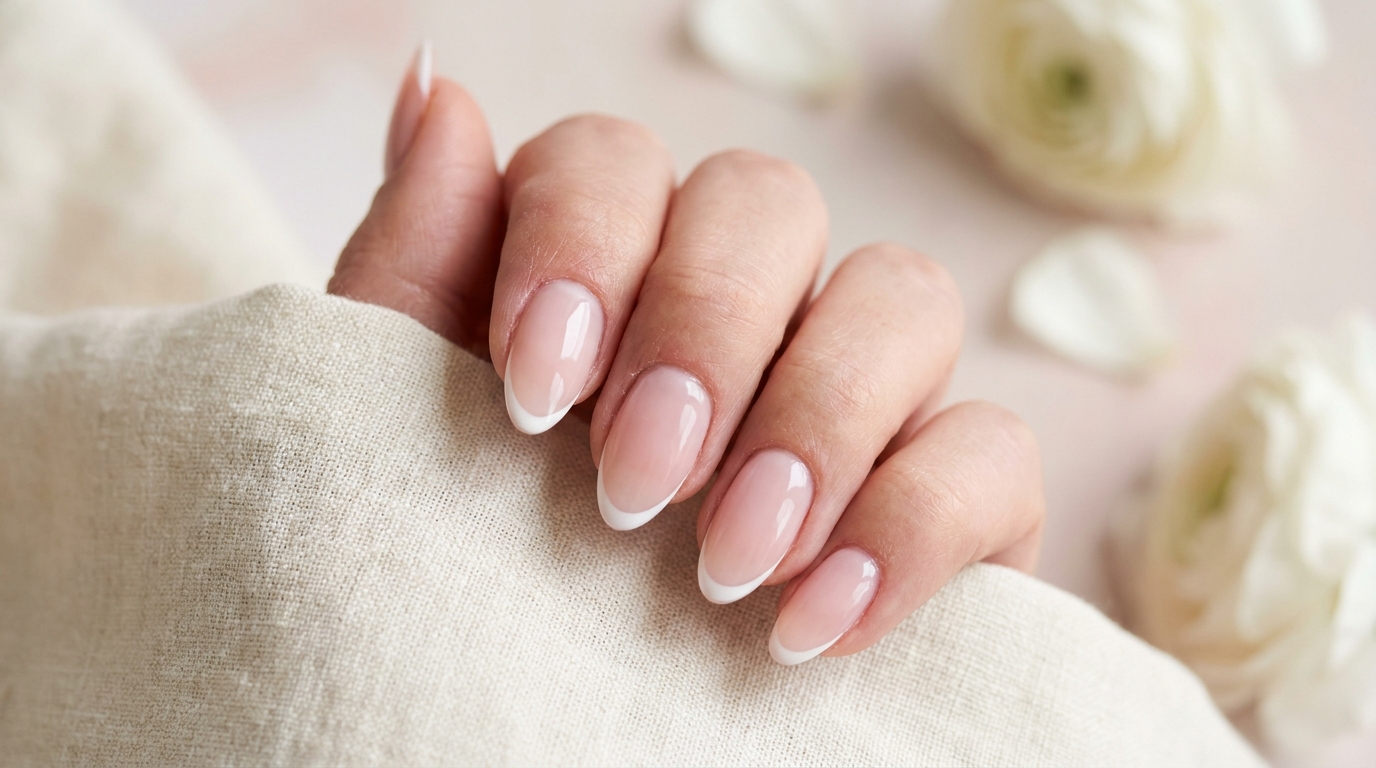
Pink and white nails are one of the few manicure looks that never fully leave the salon menu, and the reason is simple: a soft pink base with a clean white edge suits almost every hand, outfit, and occasion. The name, however, is used in two different ways. Some people use it for a polish design, while nail technicians use it for a specific artificial nail technique, and that gap in meaning causes a lot of confusion when you book an appointment or compare prices online.
This guide explains the difference between the terms, walks through the most popular styles, and covers shape, skin tone, the salon process, realistic costs, and aftercare. Many pages that rank for this topic are short, repeat one another, or give prices without any context, so wherever the facts are not firmly established, this article says so.
Quick Facts at a Glance
| Topic | What to know |
|---|---|
| What it is | A pink nail bed with a white tip, done with polish, gel, acrylic, or press-ons |
| Technician meaning | An artificial nail set built with pink and white acrylic powders or gel builders |
| Typical wear time | About 6 to 8 weeks for acrylic, with fills every 2 to 3 weeks |
| Price | Varies by salon, city, and technician; no official standard price exists |
| Best for | Everyday wear, weddings, office settings, and anyone who likes a clean, natural look |
| Main drawback | Needs regular fills, and the white tip can stain or yellow over time |
What Pink and White Nails Actually Mean
In everyday language, the phrase describes any manicure that combines a pink shade with white, which can include tips, gradients, florals, or full white and pink color blocking. Among nail professionals, though, the term usually points to a full set of artificial nails in which one product is used for the nail bed and another for the tip. According to explanations from nail education sources and salon brands, a natural pink powder is used over the nail bed while a white powder forms the tip, and the natural nail is lightly filed beforehand so the product grips well.
The look is closely tied to the French manicure, which was popularized in the United States in the 1970s. Commonly cited accounts credit nail-polish founder Jeff Pink with introducing it after a fashion-week job in Paris, though the exact history is told differently in different places and is not fully documented. What is clear is that the modern version has moved well beyond the stark white line of earlier decades and now includes softer tips, pastel shades, and blended finishes.
Pink and White vs. French Manicure vs. Ombre
Because these three terms overlap, many clients ask for one and receive another. The table below separates them by technique and finish, which is the most reliable way to explain your request to a technician.
| Style | How it is made | Look and finish |
|---|---|---|
| French manicure | Polish or gel painted on natural nails or an overlay | Sheer pink or nude base with a defined white tip line |
| Pink and white (technician term) | Acrylic or gel builder in two colors, sculpted onto the nail | Crisp, built-in smile line that lasts through the set |
| Ombre or “baby boomer” | Two colors blended with a sponge, brush, or airbrush | Soft fade from pink into white with no hard edge |
| French fade | Ombre applied only near the tip | Blurred tip that grows out less noticeably |
One practical point is worth remembering. A painted French manicure can chip within days, while a built pink and white set holds its color inside the product itself, which is why the artificial version tends to last longer and needs fills instead of full repainting. The ombre version grows out more gently because there is no sharp line to reveal a gap at the cuticle.

Popular Pink and White Nail Styles
Classic Smile Line
The traditional look pairs a sheer pink base with a thin, curved white tip. Nail artists often advise keeping the white band narrow, since a thick band can look heavy and dated, especially on square shapes.
Soft Ombre Fade
A gradient that melts from milky pink at the cuticle to white at the tip gives hands a polished but relaxed finish. Technicians who work with acrylic usually build this effect using two beads of product that are blended while still workable, whereas gel artists often use a dedicated fade brush.
Reverse French
Here the color sits at the cuticle instead of the tip. A white or pale pink crescent at the base, combined with a deeper pink body, creates a modern and slightly playful look that suits shorter nails.
Modern Finishes and Accents
Current trends add texture to the same color pairing. Examples include velvet or iridescent overlays, matte pink with glossy white tips, tiny hand-painted flowers, pearl details, and small bows. These details are easy to add or remove at a refill appointment, which makes them a low-risk way to refresh a set without changing the base.
Choosing the Right Shape, Length, and Pink Shade for Pink and White Nails
Nail shape changes how the color combination reads. Rounded, oval, and almond shapes echo the natural curve of the cuticle and make the pink look more organic, while very square tips can feel stiff unless the white line is kept extremely thin. Short nails look best with a gradient or a narrow tip, and longer sets give you more room for a bold white edge or detailed art.
Skin tone matters just as much as shape. Nail artists commonly suggest peachy or coral-leaning pinks for warm undertones and cooler, rosy or bluish pinks for cool undertones, with neutral undertones being the most flexible. The white shade also deserves attention, since a stark, bright white can look harsh on some hands while a softer milky white blends more gently.
How a Salon Builds the Set
A technician starts by cleaning the cuticle area and lightly buffing the natural nail so the product bonds well. If extra length is wanted, a tip or sculpting form is attached first. The white product is then placed at the free edge to create the smile line, after which the pink product is applied over the nail bed and blended toward the tip. The set is finally filed, shaped, and finished with either a glossy or matte top coat.
Hard gel builder offers a similar result to acrylic with a slightly different feel and odor profile, and some clients find it more comfortable to wear. Whichever product is used, the quality of the smile line depends heavily on the technician’s skill, which is a major reason prices and results vary so widely between salons.

Cost, Time, and Wear
There is no official price list for this service, and the figures found online come from salon blogs and consumer sites that often disagree. One consumer price guide estimates that colored sets such as pink and white cost roughly $50 to $80 for a full set, while another salon-focused source describes the pink and white upgrade as adding about 20% to 30% to the base rate. Treat these as rough ranges rather than facts, because location, nail length, add-on art, and the experience of the technician all change the final bill.
A full set of pink and white nails made with acrylic generally lasts about six to eight weeks, according to beauty retailer guidance, but it needs a fill every two to three weeks as the nails grow. Fills are priced separately and are commonly quoted somewhere between $15 and $50, again depending on the salon. Wear time also depends on your lifestyle, since frequent handwashing, cleaning, and heavy typing can cause lifting sooner than expected.
Getting Pink and White Nails at Home
If a full salon set is not practical, there are three simpler routes. Press-on nails in pink and white are the fastest option and can be reused if removed carefully. Gel or regular polish can recreate a French tip on natural nails, although it will not last as long as a built set. A third approach uses a nail-art brush or tip guides for a hand-painted fade, which works best when the pink is sheer enough to blend and the white is opaque enough to show.
Home results are usually less durable than professional ones, so touching up chips quickly and applying a fresh top coat every few days will help the manicure stay neat for longer.
Caring for Pink and White Nails and Removing Them Safely
Daily care is straightforward. Cuticle oil keeps the skin around the nail soft, gloves protect the set during cleaning, and using your fingertips as tools for opening cans or scraping surfaces is the fastest way to crack a tip. Watch for a white or cloudy gap near the cuticle or sides, because lifting allows water to get under the product and should be fixed at a fill appointment rather than ignored.
Removal is best handled by a technician, who will file down the top layer and soak the nails in an acetone-based product for around ten minutes, as described by consumer price guides. Peeling or prying acrylic off is the most common cause of thin, damaged natural nails, so it is worth avoiding even when a set is clearly overdue for removal.

Frequently Asked Questions
Are these nails still fashionable?
Yes, although the style has softened. Salons and press-on brands now emphasize fades, milky shades, and subtle finishes more than the thick, stark tips that defined earlier versions.
Can pink and white be done with gel instead of acrylic?
It can. Builder gel is used in the same two-color method, and some people prefer it for its lighter feel, though the cost and durability depend on the product and the technician.
Do these nails damage natural nails?
The set itself is not automatically harmful, but heavy filing, poor application, and prying the product off can thin and weaken the nail plate. Choosing a trained technician and having the set removed properly lowers that risk.
Why does a pink and white set cost more than a plain set?
The two-color method takes more time and uses extra product, and creating an even smile line takes skill. That added labor is what usually drives the higher price.
Can I paint over acrylic pink and white tips?
You can, but the white tips may show through if the polish is sheer, so an opaque shade or a base layer works better.
Are they appropriate for work or formal events?
They are among the safest choices for both, since the color pairing looks neat and natural. Keeping the length moderate and the finish glossy or soft matte makes the look even more understated.
Conclusion
Pink and white nails remain popular because they balance polish with simplicity, and the many variations now available let you choose anything from a crisp built smile line to a soft blended fade. Knowing whether you want a painted French look, an ombre blend, or a full technician-built set will help you describe the result you want and compare salon prices more fairly.
Disclaimer: This article is for general information only and is not professional medical or salon advice. Prices, product details, and wear times vary by region and technician. If you notice pain, swelling, discoloration, or signs of infection around your nails, or if you have an allergy to nail products, speak with a qualified healthcare professional and a licensed nail technician.
EXPLORE MORE: Where to Buy Authentic Ibraq Perfumes in the UK: A Complete Guide

I’m Muhammad Ubaid, founder of YBR Magazine. I research and write detailed guides on America’s National Parks — covering entry fees, permits, best times to visit, and planning tips — using official NPS sources and up-to-date information.

