

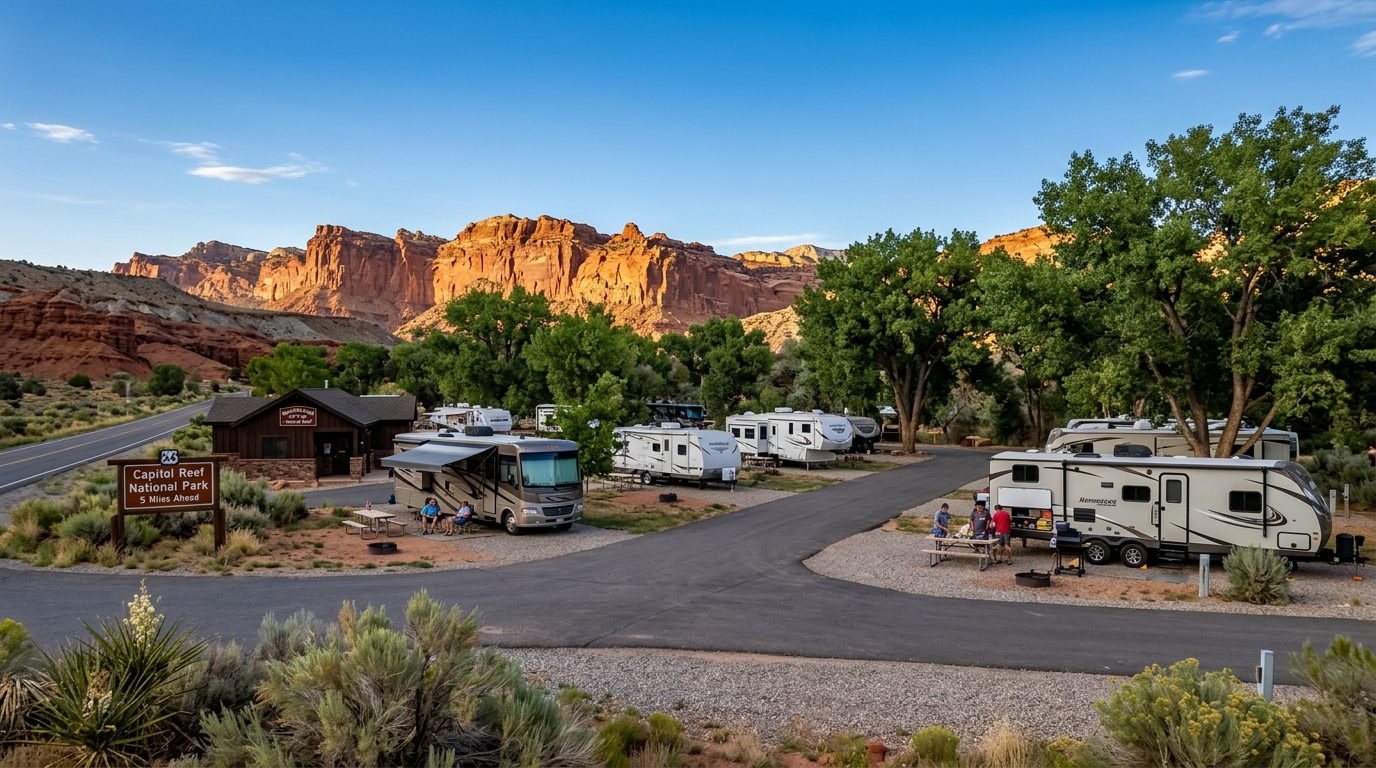
Finding the right place to park your motorhome in south-central Utah takes extra care because Capitol Reef National Park sits far away from major interstate highways and big cities. This isolated red rock region features rugged landscapes along the Waterpocket Fold, meaning you cannot rely on finding last-minute supplies or large resort amenities right outside park boundaries. The immediate gateway town of Torrey serves as the main hub for travelers, but its small size limits the number of large commercial campgrounds available. Choosing where to set up camp means balancing the daily convenience of staying close to the visitor center against the need for full utility hookups and reliable vehicle space. For additional ideas on organizing your red rock journey, check out our guide on Capitol Reef National Park Itinerary planning.
Torrey Village Gateway Campgrounds and Daily Drive Times
Torrey village gateway campgrounds position travelers just minutes from the main park entrance along Highway 24 for effortless daily drives.
Staying right in Torrey puts you within striking distance of the historic Fruita orchards and the scenic drive trailheads without requiring long highway commutes every morning. Private campgrounds in this corridor typically feature full hookups with water, electricity, and sewer, alongside coin-operated laundry facilities and small camp stores. However, these spaces fill up rapidly during the busy spring and autumn tourist rushes, and older private grounds often feature tight gravel turns that challenge large Class A motorhomes. If those closest spots are full, looking slightly further down the highway into rural Garfield or Wayne County opens up quieter sites with fewer crowd pressures.
Waterpocket Fold Off-Grid RV Spots and Public Lands
Waterpocket Fold off-grid RV spots and public lands give self-contained travelers budget-friendly alternatives when commercial hookup sites are fully booked.
The National Park Service runs the popular Fruita Campground inside the park boundaries, which accommodates motorhomes up to thirty-eight feet long but lacks utility hookups and waste dump stations. Surrounding public lands managed by federal agencies offer widespread dispersed camping for trailers equipped with onboard water tanks and solar power. These public lands and primitive spots do not provide potable water, trash bins, or electricity, meaning you must pack out all waste and manage your fresh water carefully. Campers utilizing public lands must also obey current local fire restrictions and stay within designated pullouts to protect fragile desert soils.
High Desert Climate Realities and RV Rig Limitations
High desert climate realities and tight RV space constraints demand careful preparation to protect your vehicle from extreme weather swings.
Summer daytime temperatures across the high desert regularly exceed ninety-five degrees Fahrenheit, placing a heavy electrical strain on air conditioning units and onboard generators. Spring and autumn nights frequently drop below freezing, requiring sufficient propane reserves to keep your internal water pipes from freezing solid. Many older private grounds and public loops feature low-hanging cottonwood branches and uneven gravel pads that make leveling large rigs tricky. Furthermore, because cell service is practically nonexistent at most campsites, you must plan your daily hiking routes and grocery runs before leaving your rig each morning.

Official Park Regulations, Campground Fees, and Pet Policies
Reviewing official park regulations, campground fees, and pet policies directly from management ensures your camping trip goes smoothly without unexpected parking violations.
According to the National Park Service, standard park entrance fees apply to all motorhomes entering Capitol Reef National Park, and overnight camping inside park boundaries requires advance reservations through Recreation.gov. Private commercial campgrounds set their own cancellation policies and nightly rates, which fluctuate significantly between peak red rock seasons and quiet winter months. Pets are permitted in campgrounds and along paved or unpaved roadways, but the National Park Service strictly prohibits domestic animals on all dirt hiking trails to protect local wildlife. Always verify current operating hours, campfire rules, and nightly fees directly from official park websites and campground management before finalizing your travel dates.
Frequently Asked Questions
Are there full hookup RV parks near Capitol Reef National Park?
Yes, several private campgrounds in Torrey offer full hookups with water, electricity, and sewer, though public campgrounds inside the national park do not.
Can large Class A motorhomes fit into campgrounds near Capitol Reef?
Many private parks accommodate large rigs, but tight turns and limited pad lengths mean you should always verify maximum vehicle dimensions with the campground beforehand.
Do I need reservations for RV parks near Capitol Reef National Park?
Booking several months in advance is strongly recommended because private and public campsites near the park fill up very quickly during spring and fall.
Is cell service available at RV parks near Capitol Reef National Park?
Cell coverage is very limited or completely nonexistent in Torrey and throughout most of the national park, so offline navigation is essential.
Are pets allowed at campgrounds and trails in Capitol Reef?
According to the National Park Service, pets are allowed in campgrounds and along roadways, but they are strictly prohibited on all park hiking trails.
What is the best time of year to visit RV parks near Capitol Reef National Park?
Spring and fall offer the most comfortable daytime weather for outdoor exploration, while summer brings intense heat and winter brings freezing overnight temperatures.
How far are private RV parks from the Capitol Reef visitor center?
Most private campgrounds located in Torrey are situated just two to five miles west of the main park entrance and visitor center.
Disclaimer: Campground amenities, nightly fees, and park operating rules can change over time. Always verify current details directly from official park websites and campground management before finalizing your travel plans.
I’m Muhammad Ubaid, founder of YBR Magazine. I research and write detailed guides on America’s National Parks — covering entry fees, permits, best times to visit, and planning tips — using official NPS sources and up-to-date information.