


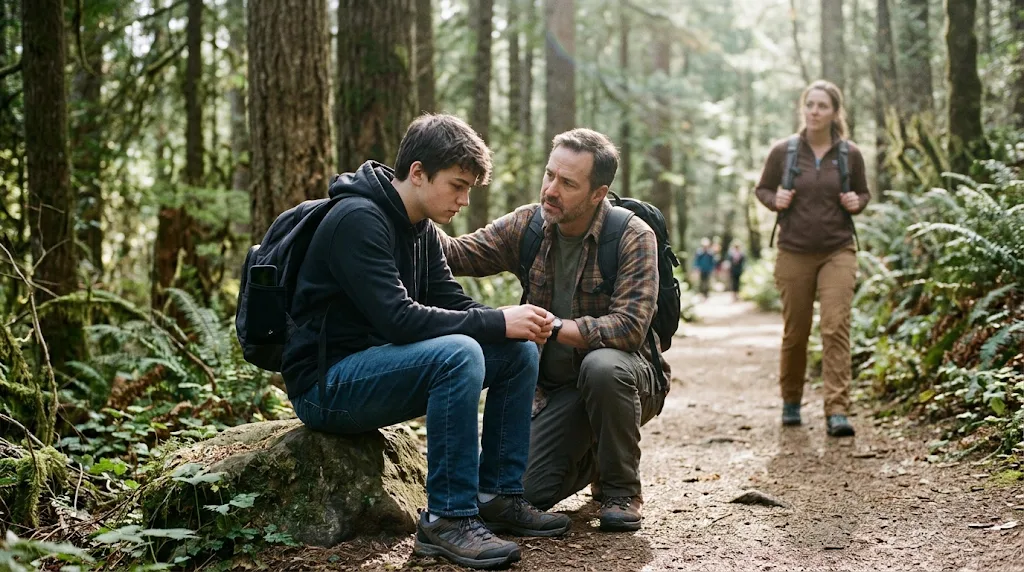
There’s a particular kind of quiet that settles over a teenager about twenty minutes into a hike. The phone, which buzzed nonstop in the car, has lost signal or been tucked into a backpack. The complaints about being dragged outside have faded. Somewhere between the trailhead and the overlook, shoulders drop and conversation starts to flow in a way it rarely does at the dinner table.
Parents who have seen that shift often wonder whether more time outdoors could help a teen who seems anxious, irritable, or withdrawn. The answer is that it can help, sometimes quite a bit. But fresh air has limits, and knowing where they lie is just as important as knowing the benefits.
What the Research Suggests
A growing body of research has explored how time in natural settings affects mood and stress. Studies have linked exposure to green spaces, parks, and natural environments with lower stress levels, improved mood, and better attention. One well-known idea, called attention restoration theory, proposes that natural settings give the brain a break from the constant, effortful focus demanded by screens, school, and busy environments.
Physical activity, which often comes with outdoor time, has its own benefits. Regular exercise is associated with reduced symptoms of anxiety and depression and improved sleep. Daylight exposure, especially in the morning, helps regulate the body’s internal clock, which can support healthier sleep patterns.
These findings are encouraging, but they describe support, not cure. Outdoor time can be a helpful part of a teen’s mental health toolkit without replacing professional care when it’s needed.
Why the Outdoors Can Help Teens in Particular
Adolescence comes with intense pressures: academic expectations, social dynamics, identity questions, and a near-constant stream of online comparison. Time outdoors can offer relief from several of those pressures at once.
Moving through a natural space engages the body, which can ease restlessness and tension. Stepping away from screens interrupts the cycle of scrolling, notifications, and social media comparison. Activities like hiking, paddling, climbing, or biking can build a sense of competence and accomplishment that doesn’t depend on grades or likes. Shared outdoor experiences often make conversation easier, especially for teens who resist face-to-face talks.
For many teens, being outside also brings a sense of perspective. Problems that feel enormous in a bedroom can feel a bit more manageable under an open sky.
Making It Realistic
Outdoor time doesn’t need to involve epic backpacking trips or expensive gear. A daily walk, time at a local park, an afternoon at the beach, shooting hoops at a nearby court, or gardening in the backyard can all count. Consistency tends to matter more than intensity.
Teens are more likely to engage when they have some say. Letting them choose the activity, inviting a friend along, or connecting outdoor time to an interest like photography, fishing, or skateboarding can make it feel less like a chore. Families can also model the habit, putting their own phones away and spending time outside together.
Setting reasonable screen boundaries, such as device-free meals or outdoor time before evening screen use, can create space for these habits without turning them into battles.
Where Outdoor Time Falls Short
For teens experiencing ordinary stress or occasional low moods, more time outside may be enough to help them feel better. For teens dealing with clinical depression, anxiety disorders, trauma, eating disorders, substance use, or other mental health conditions, outdoor activity is unlikely to resolve the problem on its own.
These conditions involve complex changes in thinking, emotions, and brain function. They often require evidence-based therapy, sometimes medication, and coordinated support from professionals. Relying on nature alone can delay that care, allowing symptoms to deepen.
Outdoor time works best as a complement to treatment, not a substitute.
Signs a Teen Needs More Than Fresh Air
Parents can watch for signs that a teen’s struggles go beyond what lifestyle changes can address. These include persistent sadness or irritability lasting two weeks or more, withdrawal from friends and activities they used to enjoy, and major changes in sleep, appetite, or energy. Falling grades, frequent physical complaints without a clear cause, panic attacks, or intense worry that interferes with daily life are also important signals.
Signs of substance use, self-harm, or talk of hopelessness deserve immediate attention. So does a teen who seems unable to enjoy anything, even activities like outdoor time that once lifted their mood.
Pairing Outdoor Habits With Therapy
Many therapists encourage teens to build healthy activities, including time outside and exercise, into their routines as part of treatment. Approaches like cognitive behavioral therapy help teens identify unhelpful thought patterns and develop coping skills. Behavioral activation, often used for depression, encourages engaging in meaningful or enjoyable activities even when motivation is low, and outdoor activities can fit naturally into that work.
Families looking for teen mental health therapy in Redondo Beach, for instance, might find that being close to the coast offers easy ways to pair weekly sessions with beach walks, surfing, or time along the bike path. Whatever the setting, the key is finding a therapist experienced with adolescents who can tailor treatment to the teen’s specific needs and involve the family when appropriate.
When a Higher Level of Care Is Needed
Sometimes outpatient therapy isn’t enough. Teens with severe symptoms, safety concerns, substance use that’s escalating, or a pattern of not improving with weekly sessions may need a more structured setting.
Options include intensive outpatient programs, partial hospitalization, and residential treatment. Residential programs provide round-the-clock support, structured therapy, and a stable environment away from daily stressors. Many incorporate outdoor activities, recreation, and physical exercise into their programming. Families exploring residential treatment for teen boys in Florida or similar programs elsewhere can ask about licensing, accreditation, clinical staffing, family therapy, academic support, and how outdoor or experiential activities are used within a broader treatment plan.
Some programs focus specifically on wilderness or adventure-based therapy. Families should look carefully at these options too, confirming state licensing, clinical oversight by qualified mental health professionals, safety practices, and clear communication policies. A program’s setting should support evidence-based treatment, not replace it.
When It’s Urgent
If a teen talks about wanting to die, harming themselves, or feeling hopeless, take it seriously. Call or text 988 to reach the Suicide and Crisis Lifeline, or call 911 if there’s immediate danger. Staying with the teen and removing access to means of harm can help keep them safe until professional help arrives.
Finding the Right Balance
Time outdoors can be a powerful support for teen mental health. It offers movement, light, connection, and a break from the pressures of screens and constant comparison. For many teens, a regular walk or weekend adventure can make a real difference in mood and stress.
At the same time, fresh air has its limits. When a teen’s struggles persist or deepen, professional help matters. The best approach often combines both: building healthy outdoor habits while making sure teens have access to the therapy and care they need to truly feel better.


