
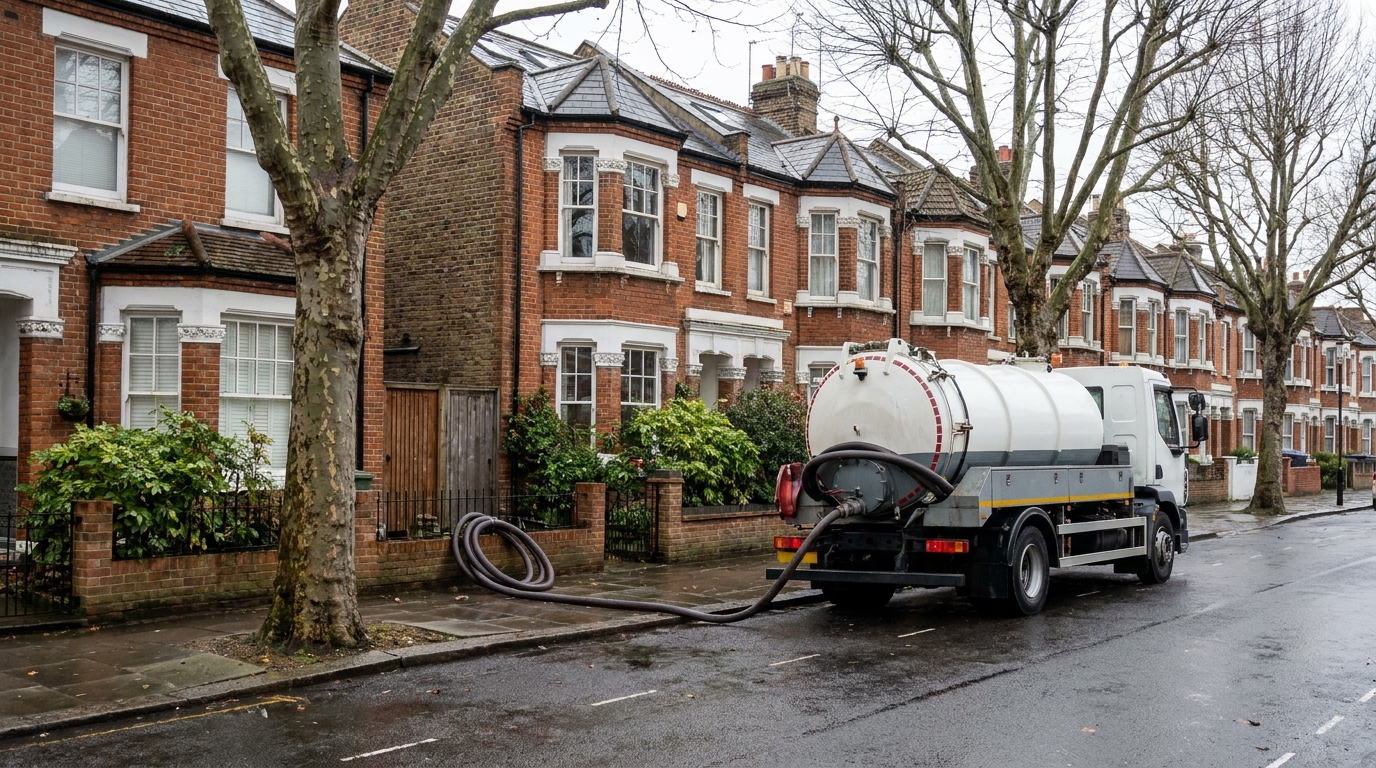
Searches for septic tank emptying Upper Walthamstow often come from people who have noticed a drainage problem, bought an older property, or simply want to know whether the service exists in this part of East London. The honest starting point is that Upper Walthamstow, which sits in the E17 postcode within the London Borough of Waltham Forest, is a densely built suburb where homes are usually connected to public sewers rather than private tanks. This guide explains how to check what your property actually has, what the rules say if you do own a tank, what the work may cost, and how to avoid paying for a service you may not need.
Quick Facts
| Topic | Short answer |
|---|---|
| Area | Upper Walthamstow, E17, London Borough of Waltham Forest |
| Usual drainage set-up | Mains sewers, with Thames Water responsible for the public network |
| How common private tanks are here | Not publicly confirmed; no official count was found |
| Who may remove tank sludge | A registered waste carrier |
| Rules for tanks in England | General binding rules from the Environment Agency, in force since January 2015 |
| Emptying interval | Sources vary, from roughly once a year to every few years |
| Cost guide | One national cost guide puts the average near £200; local E17 prices are not publicly confirmed |
Do Homes in Upper Walthamstow Really Use Septic Tanks?

Most homes in a London suburb like this one drain into a public sewer, so a buried septic tank is unusual and would more likely be found at a converted building, a large plot, or a property with a long private drain. No public statement or dataset that we could find says how many properties in the area use a septic tank or cesspit, so any claim that the service is in high demand locally should be treated with caution. When you look at the pages that rank for local versions of this search, many are directory or national company pages that simply list Upper Walthamstow among the areas they cover. One directory page that lists the area under a septic tank category, for example, shows customer reviews about taps, gardening and general repairs, which tells you very little about real tank work in E17.
The simplest way to settle the question for your own address is to check your drains. A property on mains drainage normally has inspection chambers or manholes that lead toward the road, while a tank is usually a buried chamber with one or two access covers and a drain leading in from the house. You can also ask Thames Water for a sewer map or asset search, or check the survey from your purchase, because both will show whether a public sewer serves the property. Local councils in the Thames Water area also explain that drains connected to septic tanks or cesspits remain the responsibility of the people who own or use them, which is why knowing what you have matters.
Septic Tank, Cesspit or Mains Sewer: Knowing the Difference
These three set-ups are often confused, and the difference decides who you call. A septic tank holds solid waste while the liquid is released after partial settlement, either into the ground or, under strict conditions, to a watercourse, whereas a cesspit is a sealed tank that stores everything until it is collected. According to Environment Agency guidance, cesspits are not covered by the general binding rules but must be emptied when full and must never be allowed to overflow or leak.
If you are on mains drainage, a blockage or smell is a different kind of job. The public sewer is the water company’s responsibility, while the private pipe inside your boundary is normally yours, and council guidance across Thames Water areas advises contacting the water company first for sewer problems and a private drain cleaner for tank or private drain issues. A call to a tanker firm in that situation would be money spent in the wrong place.
The Rules Behind Septic Tank Emptying Upper Walthamstow
Anyone who does own a tank in England is the “operator” and must either meet the Environment Agency’s general binding rules or hold a permit. These rules replaced the earlier approach in January 2015 and, among other things, stop septic tanks from discharging straight to surface water such as streams, ditches and canals. They also require the system to be installed to the manufacturer’s specification, maintained by a competent person, and have its sludge removed by a registered waste carrier, according to a summary published by a drainage specialist and consistent with the Environment Agency’s own leaflets.
This is why emptying a tank yourself is not a sensible option. Sewage sludge counts as waste, and carrying it away without registration is a pollution and legal risk as well as a health hazard. If a tank discharges close to a drain, watercourse or neighbouring property, the consequences of getting it wrong in a tightly built area like E17 are also more serious than in open countryside.
How Often Does a Tank Need Emptying?
There is no single correct answer, and the sources disagree in ways worth understanding. One pre-purchase survey provider says septic tanks are usually emptied about once a year, while a university lecture on the subject says it is rare for a system to need emptying more than once a year and that careful management can stretch the gap to three to five years. Both can be true, because the real interval depends on the tank size, the number of people in the household, how much water goes through the system, and how much fat and grease is washed down the drain.
The most reliable guide for your own tank is the manufacturer’s or installer’s instructions, combined with what a qualified engineer finds during an inspection. If the tank is a modern sewage treatment plant instead of a traditional septic tank, it needs servicing as well as sludge removal, and the schedule is different again.
Warning Signs That a Tank Is Getting Full
A persistent smell around the garden, particularly in warm weather, is the clue that most tanker firms point to first, and damp or unusually green ground over the buried tank is another. Slow-draining sinks, gurgling pipes, toilets that flush sluggishly or wastewater backing up into the house can also mean the tank or its outlet is struggling. If you notice these signs and think you need septic tank emptying Upper Walthamstow, confirm first that the problem is really a tank and not a blocked private drain, because the fix and the contractor are different.
What a Typical Emptying Visit Involves
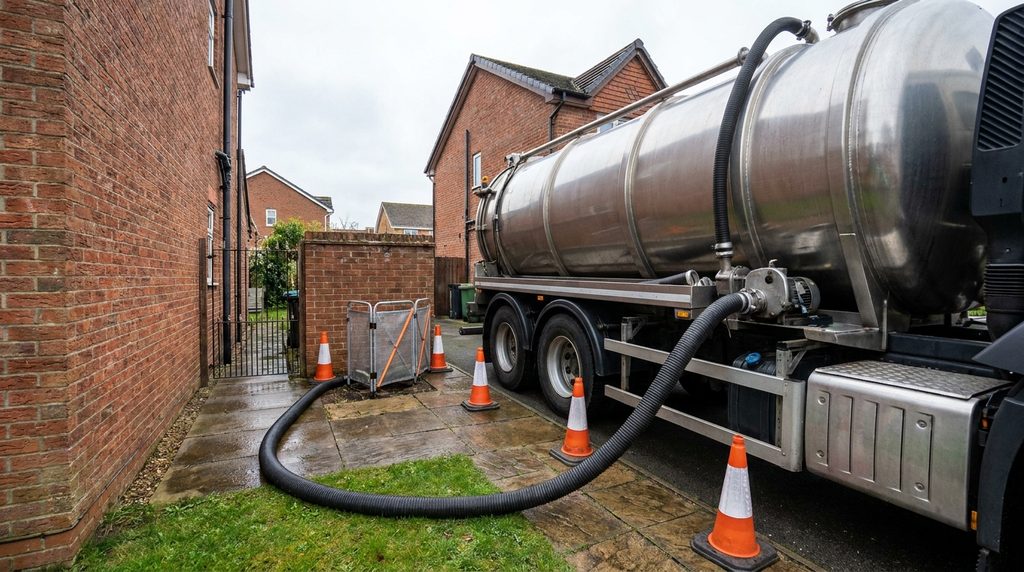
A tanker driver will locate and open the access covers, pump out the contents, and look at the condition of the chambers and any baffles or outlet pipes. Large tankers are used for this work, with one national supplier describing vehicles in the 26 to 32 tonne range, so the crew needs to know the layout of the site beforehand. In narrow residential streets or properties with limited rear access, that matters because a long hose run or a tight turning space can change the price or make the job impossible without a smaller vehicle.
How Much Does It Cost?
Price quotes for septic tank emptying Upper Walthamstow are not published in any reliable local source that we could find, so any exact London figure you see online should be treated as an estimate. One UK cost guide gives an average of around £200 for emptying and cleaning a septic tank, but that number is a national average and will move with tank size, access, distance from the depot, how full the tank is and whether the work is urgent. Several pages that appear in search results quote dollar prices from other countries or are generic text that has been reused across many towns, so they are not a useful guide for an E17 address.
The safest approach is to ask for a written quote that states the tank capacity assumed, whether disposal is included, and whether there are extra charges for long hose distances or out-of-hours visits.
Choosing a Licensed Provider
A company advertising septic tank emptying Upper Walthamstow should be able to show that it is registered with the Environment Agency as a waste carrier, and some larger firms state that they hold upper-tier registration and belong to trade bodies such as the National Association of Drainage Contractors. Ask for the registration number and check it against the public register rather than relying on a logo, and treat vague claims of nationwide coverage with no named local depot as a reason to ask more questions. The Environment Agency’s leaflets also point owners to accredited engineers through British Water when a system needs more than simple emptying.
FAQs
Can I empty my own septic tank to save money?
No. The sludge has to be removed by a registered waste carrier, and handling raw sewage without equipment or training is dangerous.
Who do I contact if I think I am on a cesspit rather than a septic tank?
A drainage company can open the covers and tell you, and the Environment Agency can advise on how the rules apply. A cesspit has no outlet to a drainage field, which is the quickest visual clue.
What records should I keep after each visit?
Keep the invoice, the carrier’s registration details, the waste transfer paperwork and any servicing notes in one place. The Environment Agency advises owners to keep maintenance and emptying records so they know when the next service is due and can show a buyer what has been done.
Do I have to tell a buyer if I sell a property with a tank?
Yes. Environment Agency guidance says the seller must inform the buyer in writing that the property has a septic tank or small sewage treatment plant.
Who can I report a suspected sewage pollution incident to?
The Environment Agency runs a 24-hour incident hotline on 0800 80 70 60, and its general enquiries line is 03708 506 506 during office hours on weekdays.
What if my smell or blockage turns out to be a mains sewer problem?
Contact Thames Water for the public sewer, and use a drain specialist for the private pipe within your boundary.
Final Thoughts
For most households, septic tank emptying Upper Walthamstow is likely to be a question of confirming what kind of drainage you have before booking anything, since public sewers are the norm in this part of London. If you do own a tank or cesspit, use a registered waste carrier, keep your paperwork, and follow the manufacturer’s guidance on how often to empty it rather than a one-size-fits-all rule from a website.
Disclaimer: This article is for general information only and is not professional drainage, legal or environmental advice. Rules, prices and local arrangements can change, so check current guidance with the Environment Agency, Thames Water and the London Borough of Waltham Forest, and ask a qualified, registered contractor to assess your own property.
Explore More
Ivy Hill Kingston White Tile: Size, Price, Finish and Installation Guide

I’m Muhammad Ubaid, founder of YBR Magazine. I research and write detailed guides on America’s National Parks — covering entry fees, permits, best times to visit, and planning tips — using official NPS sources and up-to-date information.