

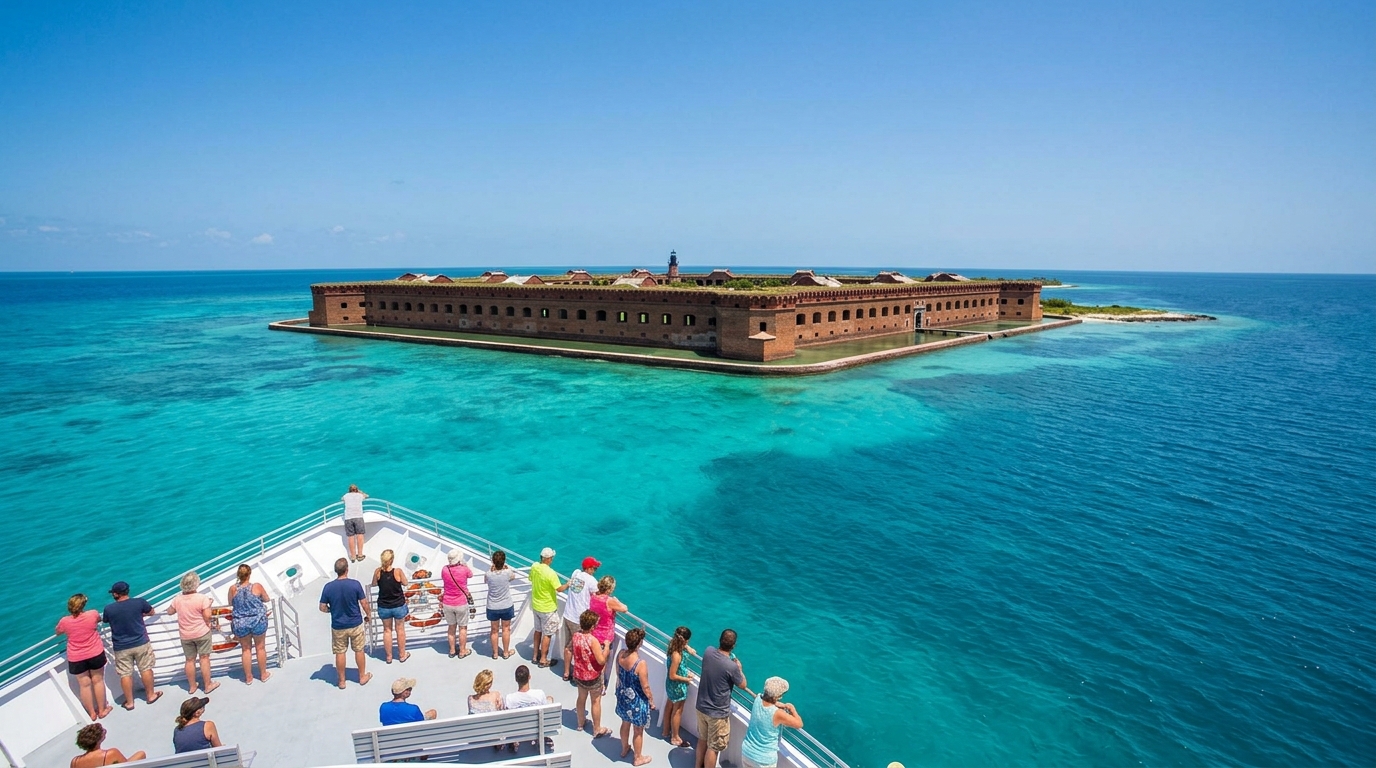
Planning a journey to a remote ocean outpost demands intense preparation because Dry Tortugas National Park rests roughly 70 miles west of Key West in the open Gulf of Mexico. Visitors cannot drive to Dry Tortugas National Park in a standard automobile, meaning every single traveler must solve complex transportation puzzles months before departure. Figuring out what to do at Dry Tortugas National Park requires accepting severe logistical limitations, an absolute lack of on-site amenities, and a fragile marine environment that forgives no carelessness.
Most standard travel brochures paint a picture of effortless tropical relaxation while ignoring the rugged realities of isolated island travel. Visitors must carry every ounce of drinking water and all daily provisions because the island has no stores, restaurants, or freshwater pumps. Understanding these raw conditions ensures travelers avoid dangerous mistakes while exploring historic military ruins and remote coral reefs safely.
Transportation Realities for Reaching Seventy Miles of Open Ocean
Reaching Dry Tortugas National Park safely requires securing a seat on the Yankee Freedom ferry or booking a charter seaplane well in advance.
The ferry journey takes roughly two and a half hours each way across open ocean waters where violent swells often trigger severe seasickness among passengers. Seaplanes provide a dramatically faster alternative with sweeping aerial views of the barrier reefs, though they command much higher ticket prices. According to the National Park Service, daily visitor numbers remain tightly capped to protect fragile nesting habitats and historic masonry. Travelers who fail to lock in their transit tickets months ahead will find themselves stranded on the Florida mainland.
Walking Inside the Massive Masonry Walls of Fort Jefferson
Touring Fort Jefferson immerses visitors in a colossal nineteenth-century coastal fortification constructed from more than sixteen million handmade red bricks.
Fort Jefferson serves as the undisputed architectural anchor of the park and stands as the largest brick masonry structure in the Western Hemisphere. Visitors can walk the entire perimeter of the massive outer wall, peer into dark vaulted casemates, and examine rusty cannons left over from its military era. Climbing the winding staircases to the upper tier yields breathtaking panoramas of the surrounding turquoise shoals and neighboring keys. According to the National Park Service, visitors must strictly avoid unstable masonry and heed all posted closure signs throughout the historic complex.
Snorkeling Along the Submerged Foundations and Moat Walls
Snorkeling the shallow waters surrounding Garden Key reveals vibrant coral heads and thriving marine ecosystems just feet from dry land.
The submerged foundations of the historic moat wall attract colorful tropical fish, nurse sharks, and sea turtles searching for shelter in the shallows. Powerful tidal currents frequently sweep around the outer corners of the fortress, creating genuine safety hazards for inexperienced swimmers. Visitors must pack their own underwater gear because rental kiosks do not exist anywhere on the remote island. For deeper insights into daily excursion planning, readers can consult our comprehensive look at island day trips to master the local transit routine.
Tracking Seasonal Seabird Populations on Protected Cays
Watching seasonal bird migrations turns Dry Tortugas National Park into a premier destination for ornithologists and wildlife photographers from around the world.
Bush Key and the adjacent protected sandbars host massive nesting colonies of sooty terns and brown noddies during peak spring and summer months. Park rangers enforce strict off-limits rules on neighboring keys to prevent human visitors from trampling sensitive nests or startling brooding seabirds. Sea turtles also crawl ashore under the cover of darkness during summer nesting seasons, demanding absolute quiet and complete darkness from anyone wandering the beaches.
Setting Up Camp at the Isolated Garden Key Campground
Camping overnight at the primitive Garden Key campground offers a rare opportunity to experience absolute silence after the daytime ferry departs.
Overnight campsites operate on a strict reservation system tied to ferry passenger allowances or private boat permits, offering basic picnic tables and charcoal grills. Campers must pack in every single item of food, camping gear, and drinking water, and they must carry all generated trash back off the island. According to the National Park Service, open campfires are banned entirely, and overnight guests must remain completely self-reliant in case weather delays the ferry return.
For additional travel perspectives, many adventurers also research a guide on wilderness activities in Wrangell St Elias to understand how different massive national parks handle remote backcountry logistics.
Essential Packing Lists and Strict Island Preservation Rules
Following strict conservation regulations and packing comprehensive emergency gear protects both the fragile park ecosystem and individual safety.
Because the park features zero waste receptacles on Garden Key, every visitor must obey a zero-tolerance pack-it-in, pack-it-out trash policy. Restroom facilities sit conveniently near the main visitor dock, but proper waste disposal protocols matter immensely for all overnight guests. The reference table below details the essential provisions every traveler must bring along.
| Essential Provision | Practical Requirement |
|---|---|
| Drinking Water | Zero sources on island; bring ample personal supply. |
| Food and Sustenance | No vendors available; pack all meals and snacks. |
| Waste Management | Pack-it-in, pack-it-out rule strictly enforced for trash. |
| Transit Permits | Required months in advance for ferry or seaplane. |
Frequently Asked Questions
Can I buy food or water at Dry Tortugas National Park?
No, there are zero stores, restaurants, or freshwater filling stations on Garden Key, meaning you must pack everything you need.
How far ahead should I reserve ferry transportation?
You must book your ferry tickets several months in advance because seats sell out rapidly throughout the year.
Is overnight camping permitted on the island?
Yes, overnight camping is allowed at the primitive Garden Key campground for visitors holding confirmed ferry or private boat reservations.
What gear is mandatory for a day excursion?
Pack plenty of drinking water, calorie-dense food, high-SPF sunscreen, snorkel gear, and wind-resistant clothing layers.
Are public restrooms available for daily visitors?
Yes, functional public restrooms are located near the main visitor dock on Garden Key.
Can I explore Fort Jefferson without a guide?
Yes, visitors can explore the historic brick fortress at their own pace while respecting all restricted safety barriers.
Disclaimer: Park regulations, ferry timetables, and permit policies change frequently. Always verify current operating procedures directly from official sources like the National Park Service prior to departure.

I’m Muhammad Ubaid, founder of YBR Magazine. I research and write detailed guides on America’s National Parks — covering entry fees, permits, best times to visit, and planning tips — using official NPS sources and up-to-date information.