

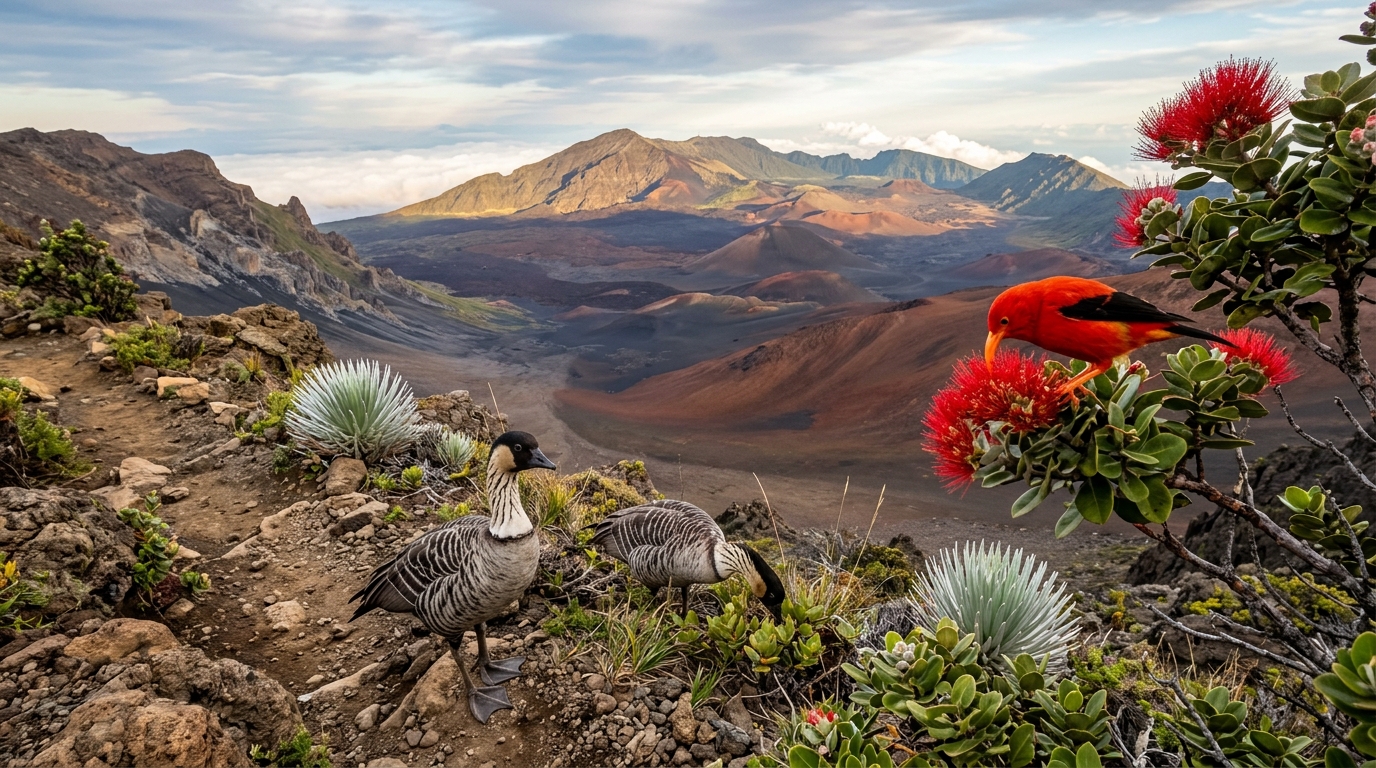
When people think of Hawaii, they often picture warm sandy beaches and swaying palm trees under the bright sun. However, Haleakala National Park on the island of Maui offers a completely different side of the islands that surprises many travelers. The landscape ranges from a freezing, barren volcanic summit down to a lush, wet coastal valley filled with tropical plant life. This dramatic shift in elevation and climate creates distinct homes for rare animals and fragile plants that exist nowhere else in the natural world. Understanding the wildlife in Haleakala National Park helps visitors appreciate these unique creatures while keeping them safe and undisturbed in their natural habitats.
How Elevation Shapes Animal Habitats Across Two Distinct Zones
How elevation shapes animal habitats across two distinct zones defines every aspect of biological survival in the park. Haleakala National Park spans two completely different environments: the high-altitude volcanic summit and the lush, wet Kipahulu coastal valley. These two zones share almost no overlapping weather patterns, soil types, or plant communities, which forces animal species to adapt to very specific conditions. Visitors traveling from the warm ocean shore up to the ten-thousand-foot peak will pass through multiple distinct climate zones in just a short drive. This extreme geography isolates native species completely, allowing rare birds and plants to evolve specialized traits over thousands of years of separation from the rest of the planet.
High-Altitude Volcanic Survival for Summit Species
High-altitude volcanic survival for summit species requires adapting to harsh environmental conditions like freezing temperatures, high winds, and intense ultraviolet radiation. The most famous resident found in these high-altitude areas is the Nene, which is also commonly known as the Hawaiian goose. The National Park Service notes that the Nene famously came back from the brink of extinction through careful captive breeding programs and ongoing habitat protection. Visitors might also spot the Haleakala silversword, a remarkable plant that looks like a metallic cushion and lives for decades in the cinder desert before blooming once and dying. High above the crater rim, native forest birds like the Akohekohe flit quietly through specialized shrublands, feeding on nectar from native ohia blossoms and other high-elevation plants. Travelers planning a visit to these heights should also prepare for chilly temperatures and consider reading about Haleakala National Park stargazing for tips on managing the nighttime cold at the summit.
Coastal Rainforest and Stream Habitats in the Kipahulu District
Coastal rainforest and stream habitats in the Kipahulu district support a thriving population of animals adapted to a warm, wet environment completely separate from the dry summit. Fed by heavy tropical rainfall throughout the year, this coastal valley features rushing streams, cascading waterfalls, and dense jungle canopies. Native stream life in Kipahulu includes unique freshwater gobies, known locally as ‘o‘opu, which have adapted to climb steep waterfalls using modified suction discs on their bellies. Forest birds such as the Apapane and the Iiwi add bright flashes of red to the green tree canopy as they feed on nectar from native flowering trees. Visitors exploring this lower section of Haleakala National Park experience heavy humidity and muddy trails, which demand proper footwear, waterproof gear, and careful attention to slippery river rocks.

Essential Conservation Rules and Visitor Viewing Guidelines
Essential conservation rules and visitor viewing guidelines protect endangered species from human disturbance and introduced predators. According to the National Park Service, feeding or approaching native wildlife like the Nene is strictly prohibited because human food harms their health and makes them lose their natural fear of people and cars. Visitors must stay strictly on designated trails to avoid crushing delicate native plants and ground-nesting birds that cannot easily recover from habitat damage. Domestic pets are not allowed on most park trails to prevent the spread of diseases to native animals and to keep predators away from vulnerable bird populations. Travelers looking to deepen their understanding of local fauna can also review broader guidelines on seeing and protecting native wildlife across protected lands. Being mindful of these conservation rules ensures that fragile island ecosystems remain intact and healthy for future generations of visitors and wildlife alike.
Common Questions About Wildlife in Haleakala National Park
Common questions about wildlife in Haleakala National Park help travelers plan safe and responsible visits to both districts of the mountain.
What is the most famous animal in Haleakala National Park?
The Nene, or Hawaiian goose, is the most famous animal in the park and serves as the official state bird of Hawaii.
Can I feed the Nene geese if I see them near the parking lot?
No, feeding Nene geese is illegal and harmful to their health because human food disrupts their natural diet and creates dangerous habits.
Where can I see native birds in the park?
Native birds can be spotted in the Kipahulu rainforest district and along the higher elevation shrublands near the volcanic summit.
Are there dangerous wild animals on the mountain?
There are no native land mammals or venomous snakes in the park, though introduced predators like mongooses and feral cats do exist in lower areas.
Why are the animals in Haleakala so unique?
The extreme isolation of the Hawaiian Islands means many species evolved in complete separation from the rest of the world over millions of years.
What should I do if I encounter a Nene on the road?
Drivers should slow down, give the birds plenty of space, and never chase or crowd them for photographs or close inspection.
Are pets allowed on trails to view wildlife?
No, pets are generally prohibited on park trails to protect native species from introduced diseases and to prevent disturbance to ground-nesting birds.
Disclaimer: Park regulations, weather conditions, and animal protection rules can change over time. Always verify current guidelines directly through official National Park Service resources before starting your trip.

I’m Muhammad Ubaid, founder of YBR Magazine. I research and write detailed guides on America’s National Parks — covering entry fees, permits, best times to visit, and planning tips — using official NPS sources and up-to-date information.