

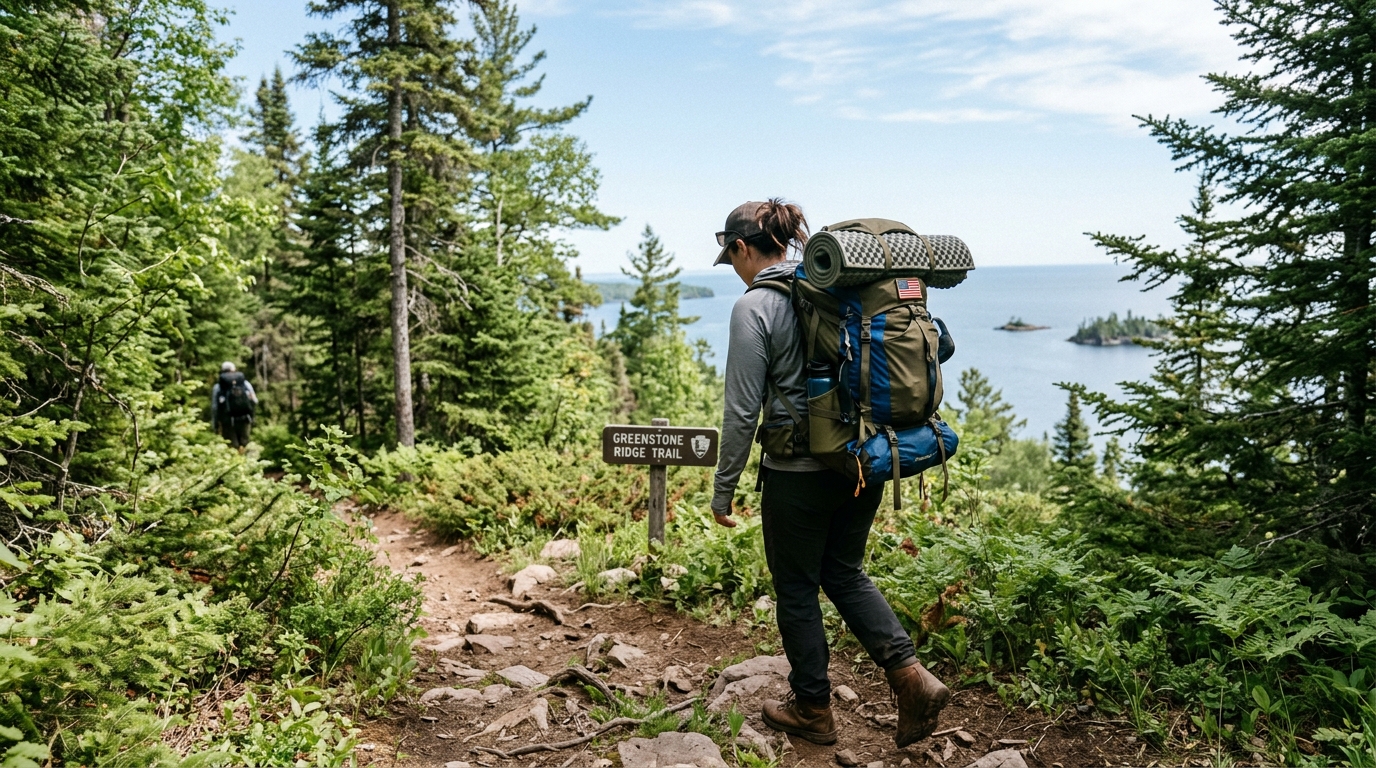
Isle Royale National Park backpacking stands apart from almost every other wilderness trip in the United States because the park is a remote island cluster sitting far out in Lake Superior. Backpackers cannot simply drive to a trailhead, and ferry schedules or seaplane availability strictly dictate when visitors can arrive and leave. The island also features rugged terrain, unpredictable cold weather, dense boreal forests, and a famous population of wolves and moose that shape the ecosystem. Furthermore, backpackers must deal with unique logistical challenges like water purification due to the high risk of tapeworms in lake and stream water, plus the requirement to pack out all trash and food scraps since campfires are heavily restricted. Isle Royale National Park backpacking offers unmatched isolation, but it requires careful preparation before you set foot on the dock.
Lake Superior Ferry Crossings and Mainland Departure Ports
Securing transport on a ferry or seaplane months ahead of time remains the single most critical step for anyone attempting Isle Royale National Park backpacking.
Mainland departure ports sit in northern Michigan and northeastern Minnesota, requiring travelers to coordinate long driving routes before boarding. Because Lake Superior weather changes quickly, high winds can delay boat crossings and disrupt strict vacation schedules. According to the National Park Service, visitors must pay applicable entrance fees or present an approved pass upon arrival at the island docks. Missing a scheduled ferry departure can leave hikers stranded on the mainland for days, making punctuality at the port a vital rule.
Greenstone Ridge Trails and Coastal Boreal Muds
Conquering the interior Greenstone Ridge or the damp shoreline paths demands careful attention to pack weight and footwear choice.
The Greenstone Ridge runs down the spine of the island, offering rocky ridges that test ankle strength and provide sweeping views of the surrounding lake. In contrast, coastal paths wind through low-lying bogs, exposed tree roots, and stubborn mud patches that slow down daily mileage goals. Balancing a heavy backpack against these natural obstacles requires realistic daily distance targets. For visitors who like documenting their outdoor milestones and keeping track of gear lists, a handy log for tracking US park adventures helps keep every excursion organized.
Lake and Stream Parasites Requiring Rigorous Filtration
Natural water sources carry parasites like tapeworms, making proper filtration a critical health and safety requirement according to the National Park Service.
Every single drop of water gathered from island streams and lakes must undergo rigorous purification before consumption. Backpackers should rely on certified backcountry filters or boiling methods to eliminate dangerous waterborne pathogens that can ruin a wilderness trip. Relying on untreated water invites severe gastrointestinal illness miles away from medical help. Bringing chemical backup tablets ensures hikers stay hydrated even if mechanical pumps clog or freeze in cold weather.
Three-Sided Wooden Shelters and Wilderness Campsites
Backpackers must understand how island campsites work, including shelter availability and permit rules enforced by the National Park Service.
Campsites feature three-sided wooden shelters, tent pads, and basic vault toilets scattered along the trail network. Shelters operate strictly on a first-come, first-served basis, forcing every backpacker to carry a dependable tent in case all shelters are occupied. Overnight stays require adherence to specific backcountry camping limits to prevent overcrowding and protect the delicate island flora.
Moose Populations, Red Foxes, and Campfire Bans
Wolves, moose, and foxes share the trail, and strict food storage and campfire rules protect both the wildlife and the hikers.
Moose frequently feed in marshy areas near trails, while red foxes often test camp boundaries looking for unsecured food scraps. Hikers must secure all food items in animal-resistant containers or suspend them properly to keep local wildlife wild and safe. Open campfires are heavily restricted across the backcountry to prevent accidental wildfires, meaning campers must rely entirely on portable camp stoves for cooking.
Frequently Asked Questions About Isle Royale National Park Backpacking
What is the best time of year for Isle Royale National Park backpacking?
The park welcomes visitors from mid-April through October, with July and August bringing warm temperatures alongside heavy insect activity. Autumn months offer crisp air and fewer bugs, though ferry operators begin scaling back services before winter arrives.
Do I need an advance permit for Isle Royale National Park backpacking?
Individual backpackers do not need to reserve a wilderness permit ahead of time, but you must pay required park user fees upon arrival as outlined by the National Park Service.
Are campfires permitted during Isle Royale National Park backpacking trips?
Campfires are heavily restricted and only allowed within designated metal fire rings at specific campgrounds when local fire danger remains low, according to the National Park Service.
Can I drink natural water without treatment during Isle Royale National Park backpacking?
No, all surface water contains high risks of parasites like tapeworms and must be filtered or boiled thoroughly before drinking.
How do I transport gear for Isle Royale National Park backpacking?
All equipment must travel aboard authorized passenger ferries or seaplanes operating from departure points in Michigan and Minnesota.
Are pets allowed on Isle Royale National Park backpacking trails?
Dogs and other domestic pets are strictly banned from the park to safeguard native wildlife and prevent disease transmission.
Disclaimer: Park regulations, ferry schedules, and fee structures change periodically. Always verify current operational details directly from official sources like the National Park Service before finalizing your travel plans.

I’m Muhammad Ubaid, founder of YBR Magazine. I research and write detailed guides on America’s National Parks — covering entry fees, permits, best times to visit, and planning tips — using official NPS sources and up-to-date information.