

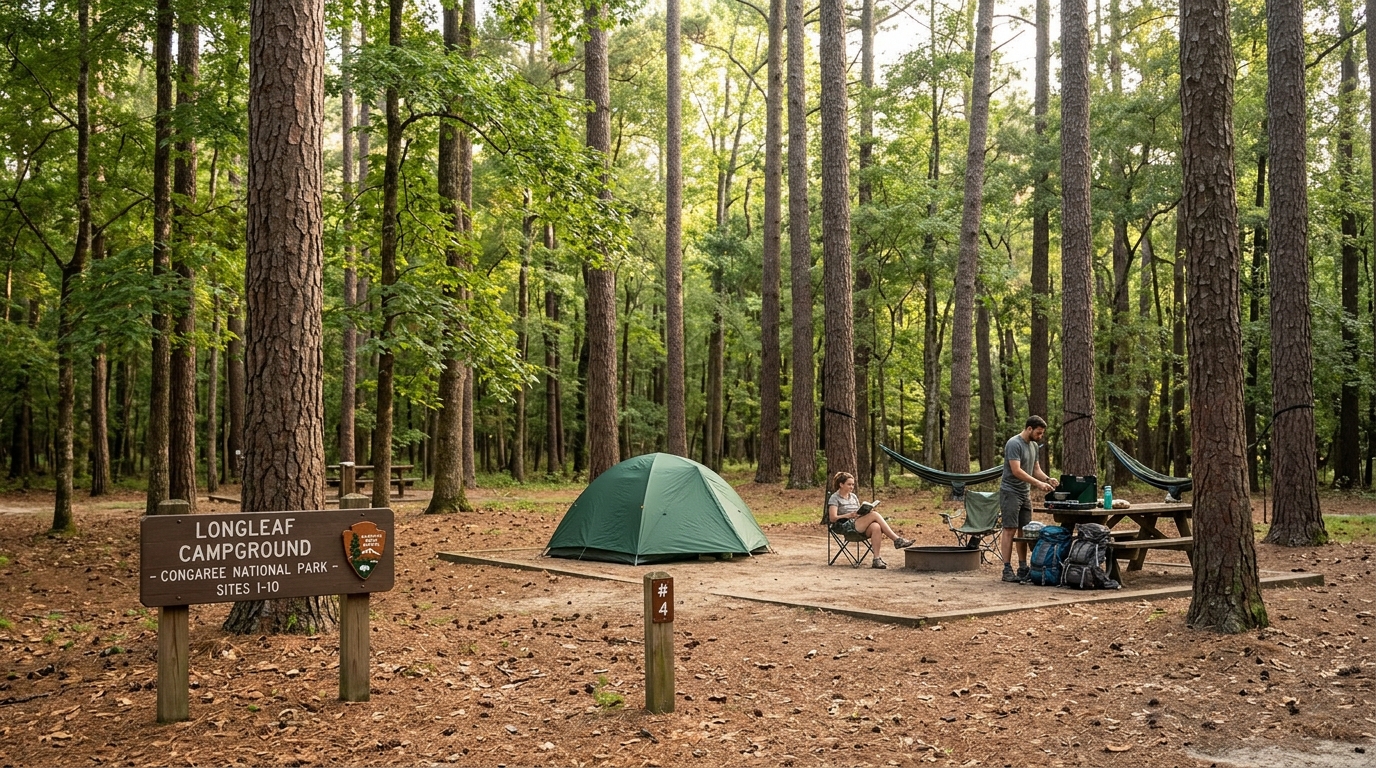
Planning a trip to South Carolina’s protected river basin brings up many questions about where to stay among the giant trees. Visitors exploring Longleaf Campground Congaree National Park find themselves right at the edge of a dynamic southern floodplain forest. Unlike typical mountain campgrounds with dry, rocky soil, this front-country site sits in a low-lying region shaped by seasonal river flooding and thick vegetation. Campers researching Longleaf Campground Congaree National Park want to know how the ground conditions change with the weather, what equipment fits on the gravel pads, and how to manage the famous local insect populations throughout different seasons of the year.
Navigating the Low-Lying Floodplain Environment
Navigating the low-lying floodplain environment around Longleaf Campground Congaree National Park requires understanding how water and weather shape the ground beneath your tent. The campground rests in a flat river basin where heavy rainstorms can quickly saturate the earth and cause temporary standing water near walking paths. Because the surrounding forest acts as a natural sponge for the Congaree River, visitors should expect damp soil and high humidity during much of the year. Preparing for these specific moisture levels means bringing waterproof footwear and checking weather forecasts before setting up camp.
Vehicle Restrictions and Tent Pad Setup Realities
Vehicle restrictions and tent pad setup realities at Longleaf Campground Congaree National Park catch many unprepared visitors off guard because the space is strictly limited to tents and pop-up campers. The parking spurs and gravel clearings are engineered for standard passenger vehicles and small pull-behind pop-up units, meaning large motorhomes and standard travel trailers are entirely prohibited. Campers must pitch their tents directly on the designated wooden or gravel pads rather than on the surrounding earth to protect fragile tree root systems. Following these strict spatial guidelines helps preserve the delicate forest floor while ensuring every visitor has a clear spot to rest.
Coping With Heavy Insect Populations and Summer Humidity
Coping with heavy insect populations and summer humidity stands out as the most vital practical challenge for anyone staying at Longleaf Campground Congaree National Park. The warm, damp forest environment creates an ideal breeding ground for mosquitoes, ticks, and other biting insects, particularly during the late spring and summer months. Campers must pack heavy-duty insect repellent, lightweight long-sleeve shirts, and secure mesh tent screens to remain comfortable during evening hours. Ignoring these natural hazards can quickly turn a peaceful wilderness getaway into an uncomfortable outdoor experience.
Accessing Giant Hardwoods and Boardwalk Trails Directly
Accessing giant hardwoods and boardwalk trails directly from Longleaf Campground Congaree National Park allows visitors to step out of their tents and immediately enter the park’s famous old-growth canopy. A short walk connects the camping loops to the main visitor center and the elevated boardwalk network that keeps hikers safely above the muddy floodplain floor. This close proximity means campers can easily explore towering loblolly pines and record-breaking bald cypress trees without spending hours driving to trailheads. For outdoor enthusiasts looking to monitor their travels across protected American landscapes, keeping track of these regional visits pairs well with using a handy log for tracking US park adventures.
Booking Guidelines and Seasonal Reservation Realities
Securing a spot requires understanding reservation rules and fees mandated by the National Park Service through Recreation.gov. Advance bookings are typically required for all sites, and walk-in cash payments are not accepted at the campground itself. Campers must pay close attention to arrival windows and site-specific rules to avoid forfeiting their reservations during peak autumn and spring visitation weekends. Knowing these administrative details ahead of time ensures a smooth check-in process upon arrival.
Frequently Asked Questions
Can I bring a large travel trailer to Longleaf Campground Congaree National Park?
No, standard travel trailers and large motorhomes are not permitted because the campground is built exclusively for tent camping and small pop-up campers.
How do seasonal floods affect Longleaf Campground Congaree National Park?
Rising river levels can temporarily flood parts of the park, making it important to check official updates from the National Park Service regarding ground conditions before arriving.
Are there electrical hookups at Longleaf Campground Congaree National Park?
No, the campsites do not feature electricity, water hookups, or sewer connections, offering a completely rustic camping experience.
What is the best way to handle mosquitoes at Longleaf Campground Congaree National Park?
Visitors should pack strong insect repellent containing DEET or picaridin and wear long-sleeved clothing to minimize bites during humid months.
Do I need an advance permit for Longleaf Campground Congaree National Park?
Yes, all overnight stays require an advance reservation booked digitally through Recreation.gov, as walk-in cash payments are not accepted.
How far is Longleaf Campground Congaree National Park from the main boardwalk?
The campground sits within walking distance or a very short drive from the visitor center area where the elevated boardwalk trails begin.
Disclaimer: Camping regulations, site availability, and operational fees can change over time. Always verify current conditions directly through official sources like the National Park Service before planning your visit.

I’m Muhammad Ubaid, founder of YBR Magazine. I research and write detailed guides on America’s National Parks — covering entry fees, permits, best times to visit, and planning tips — using official NPS sources and up-to-date information.