

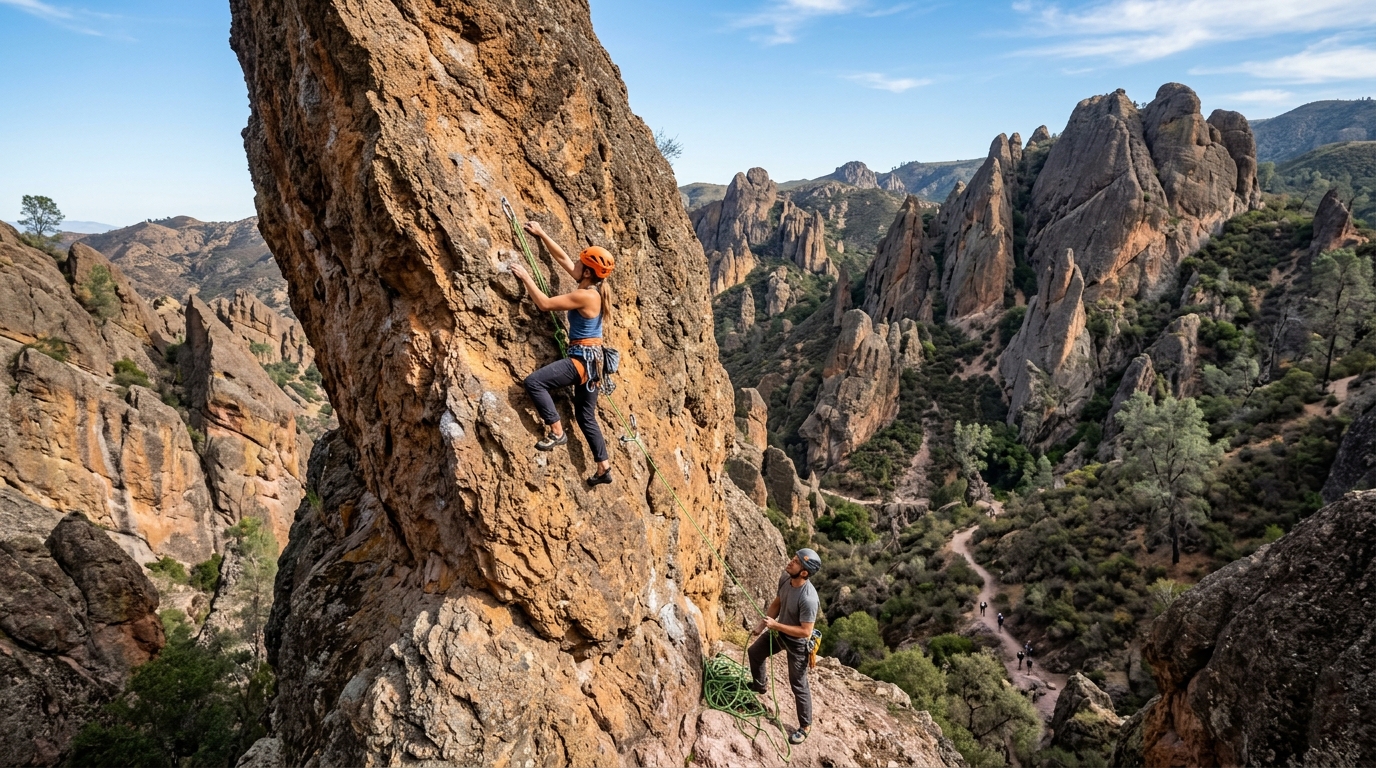
Pinnacles National Park climbing offers a unique outdoor adventure that stands apart from traditional granite destinations like Yosemite. Pinnacles National Park is famous for its distinct rock formations, which are the eroded remnants of an ancient volcano. Because the rock consists of crumbly volcanic breccia rather than solid granite, climbers face special challenges such as loose rock, widely spaced bolts, and steep-faced routes. Furthermore, Pinnacles National Park climbing is deeply affected by wildlife protection rules, specifically seasonal closures for nesting raptors. Visitors cannot simply show up and climb any route they want at any time of year. This mix of fragile volcanic rock and strict conservation rules creates a specialized niche that requires careful planning, proper gear choices, and a strong awareness of park guidelines.
Volcanic Breccia Realities and Crag Safety Protocols
Volcanic breccia real-world rock stability demands that every climber test individual holds before trusting body weight.
Because Pinnacles National Park climbing involves cemented fragments that can shear off unexpectedly, leaders must stay alert for loose pebbles and unstable flakes. Protection bolts installed decades ago can also feature wide gaps, requiring mental fortitude on run-out sections. Wearing a climbing helmet is non-negotiable for both climbers and belayers stationed beneath these crumbling vertical faces. Partner communication remains the best defense against rockfall incidents during busy weekend sessions.
Protecting Nesting Raptors Through Seasonal Access Closures
Seasonal raptor management rules dictate when and where visitors can legally climb across major park formations.
According to the National Park Service, mandatory wildlife closures protect sensitive breeding pairs of prairie falcons and golden eagles from early January through July. Entire climbing walls experience strict temporary bans to ensure undisturbed nesting habitats. Climbers must consult the official National Park Service website before packing gear to verify current route restrictions. Violating these conservation boundaries results in significant federal fines and harms vulnerable bird populations.
Navigating Specific Rock Formations and Approach Hikes
Rugged approach trails lead visitors from parking lots to distinct climbing sectors like the Balconies and High Peaks.
Pinnacles National Park climbing requires stamina just to reach the crags, as steep dirt paths wind uphill under direct sunlight. The Balconies sector delivers weathered volcanic faces with relatively short walking approaches from the west side. Meanwhile, the High Peaks region challenges visitors with exposed vertical routes high above the canyon floor. Climbers must carry sufficient water supplies in heavy packs because natural water sources remain scarce near the vertical walls.
Logistical Planning, Weather Limits, and Park Entry Fees
Trip preparation involves accounting for extreme desert-like heat swings and standard federal recreation fees.
According to the National Park Service, visitors entering the park must pay a standard vehicle entrance fee or present an annual America the Beautiful pass. Summer daytime temperatures routinely exceed one hundred degrees Fahrenheit, forcing climbers to focus their efforts on cooler winter months. For travelers looking to explore other rugged American landscapes beyond California, exploring options like Alaska wilderness activities and giant park tours offers a completely different kind of wild exploration.
Frequently Asked Questions
What is the best time of year for Pinnacles National Park climbing?
The best time for climbing is during the fall, winter, and spring months when cooler weather keeps the volcanic rock comfortable. Summer temperatures get dangerously hot, making daytime climbing unsafe.
Are helmets necessary for Pinnacles National Park climbing?
Yes, wearing a helmet is strongly recommended for everyone at the crag because the volcanic breccia rock often contains loose stones that can dislodge unexpectedly.
Why are certain climbing routes closed in spring?
According to the National Park Service, seasonal closures protect nesting prairie falcons and golden eagles during their breeding season from January through July.
Do I need sport climbing gear or traditional gear?
Most popular routes at Pinnacles National Park are bolted sport climbs, but a standard sport rack with quickdraws and personal anchor systems is essential.
How long is the hike to the climbing crags?
Approach hikes vary from ten minutes to over an hour depending on which formation you visit, requiring sturdy hiking boots and a comfortable pack.
Are there entrance fees for Pinnacles National Park?
According to the National Park Service, an entrance fee is required for all private vehicles entering the park unless you hold a valid interagency federal recreation pass.
Disclaimer: Park rules, seasonal raptor closures, and entrance fees can change over time. Always verify current conditions directly with the National Park Service before planning your climbing trip.

I’m Muhammad Ubaid, founder of YBR Magazine. I research and write detailed guides on America’s National Parks — covering entry fees, permits, best times to visit, and planning tips — using official NPS sources and up-to-date information.