

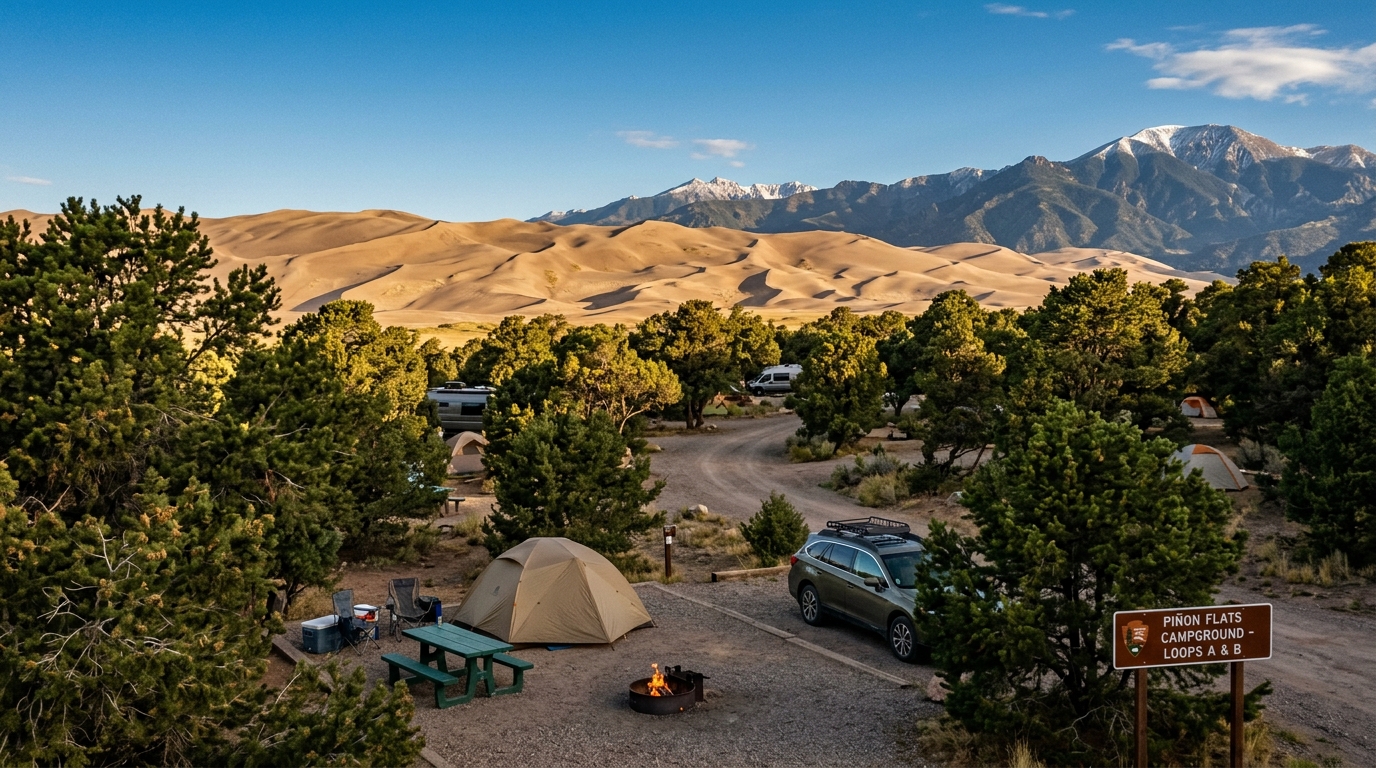
Getting to Know Piñon Flats Campground Great Sand Dunes National Park
Piñon Flats Campground Great Sand Dunes National Park serves as the primary basecamp for exploring the towering sand piles that define southern Colorado. Piñon Flats Campground sits right beneath massive, shifting sand dunes in a high-elevation desert environment where the air is thin and the sun beats down relentlessly by midday. Visitors face extreme temperature swings from hot afternoon sun to freezing desert nights, alongside intense winds that sweep across the valley floor. Piñon Flats Campground stands as the only main developed campground inside Great Sand Dunes National Park and Preserve. Because of this unique position, securing a campsite during peak summer seasons requires careful planning and advance booking through official channels.
For travelers looking into alternative accommodations beyond the park boundaries when every loop is fully booked, exploring nearby valley lodging choices and remote regional stays can provide extra comfort when park sites are completely full. Understanding the unique geographic setting of this high desert valley helps travelers prepare for the rugged conditions that define the entire San Luis Valley region.
Understanding the Layout, Loops, and Campsite Types
Piñon Flats Campground is divided into separate loops that offer different experiences for tent campers and RV owners. Piñon Flats Campground features specific loop layouts, tent-only sites, and RV accommodations that require careful planning due to vehicle length limits and a complete lack of utility hookups. Campers must check vehicle size restrictions before booking any site to ensure their setup fits safely without blocking narrow park roads.
Each loop provides a distinct setting among native pinyon pine trees and scrub oak. Some loops sit much closer to the main walking paths that lead straight out toward the towering sand dunes. Visitors should review site descriptions carefully on official reservation platforms to match their camping gear with the correct loop size. Choosing the right loop depends heavily on whether travelers arrive in a large motorhome, a camper van, or a traditional tent setup.
Securing Your Spot and Reservations
Booking a site at Piñon Flats Campground Great Sand Dunes National Park requires planning ahead through official reservation channels. According to the National Park Service, campsites must be reserved in advance through Recreation.gov during the busy summer and spring operating windows. Showing up without a reservation often leads to disappointment because spots fill up months ahead of time.
Campers must pay close attention to strict check-in times, cancellation policies, and vehicle limits enforced by park rangers. Following these official rules ensures a smooth arrival and prevents unexpected fines or loss of campsite privileges during the trip. Planning the exact booking window months before the desired travel dates remains the single most important step for a successful stay.
Weather Realities, Wind, and High-Altitude Downsides
Camping at Piñon Flats Campground Great Sand Dunes National Park brings strong winds, blowing sand, and freezing night temperatures. Piñon Flats Campground rests at an elevation of nearly 8,200 feet, which catches many unacclimatized visitors completely by surprise. Afternoon winds frequently pick up across the open sand basin, sending fine sand particles flying into tents and cooking gear.
Nighttime temperatures drop rapidly even during the warmest summer months, often falling below freezing. Campers need sturdy tent stakes designed for sandy soil, heavy-duty shelter guidelines, and plenty of warm layers to stay comfortable after sunset. Proper gear preparation prevents major discomfort when mountain weather turns harsh and unpredictable.
Campground Amenities, Water, and Practical Rules
Piñon Flats Campground provides basic facilities like restrooms and drinking water, but lacks RV hookups and electrical connections. Piñon Flats Campground offers flush toilets and drinking water spigots during the main operating season, though these services are shut off in the winter months. Campfires are permitted only within designated fire grates, and strict fire bans may apply during exceptionally dry summer periods according to the National Park Service.
Visitors should pack out all trash, secure food properly to prevent wildlife interactions, and respect quiet hours enforced throughout the loops. Knowing these practical limitations helps everyone enjoy a peaceful stay without unexpected supply shortages or policy violations.
Frequently Asked Questions
Is Piñon Flats Campground open year-round?
Piñon Flats Campground operates seasonally, with certain loops open during spring, summer, and autumn, while winter operations are typically limited or closed depending on weather conditions.
Are there RV hookups at Piñon Flats Campground?
No, Piñon Flats Campground does not offer electrical, water, or sewer hookups for RVs, though potable water and dump stations are available nearby.
How far in advance should I book a campsite?
Campsites at Piñon Flats Campground should be booked several months in advance through Recreation.gov due to high demand during peak seasons.
Are campfires allowed at Piñon Flats Campground?
Campfires are allowed only in the provided metal fire grates, unless temporary fire bans are put in place by the National Park Service due to dry weather.
What elevation is Piñon Flats Campground located at?
Piñon Flats Campground sits at an elevation of approximately 8,200 feet above sea level, which can cause mild altitude sickness for unacclimatized visitors.
Can I bring pets to Piñon Flats Campground?
Pets are welcome at Piñon Flats Campground, but they must be kept on a leash no longer than six feet at all times and never left unattended.
Disclaimer: Campground rules, operating seasons, and reservation procedures can change. Always verify current details directly through official sources like the National Park Service and Recreation.gov before your trip.

I’m Muhammad Ubaid, founder of YBR Magazine. I research and write detailed guides on America’s National Parks — covering entry fees, permits, best times to visit, and planning tips — using official NPS sources and up-to-date information.