

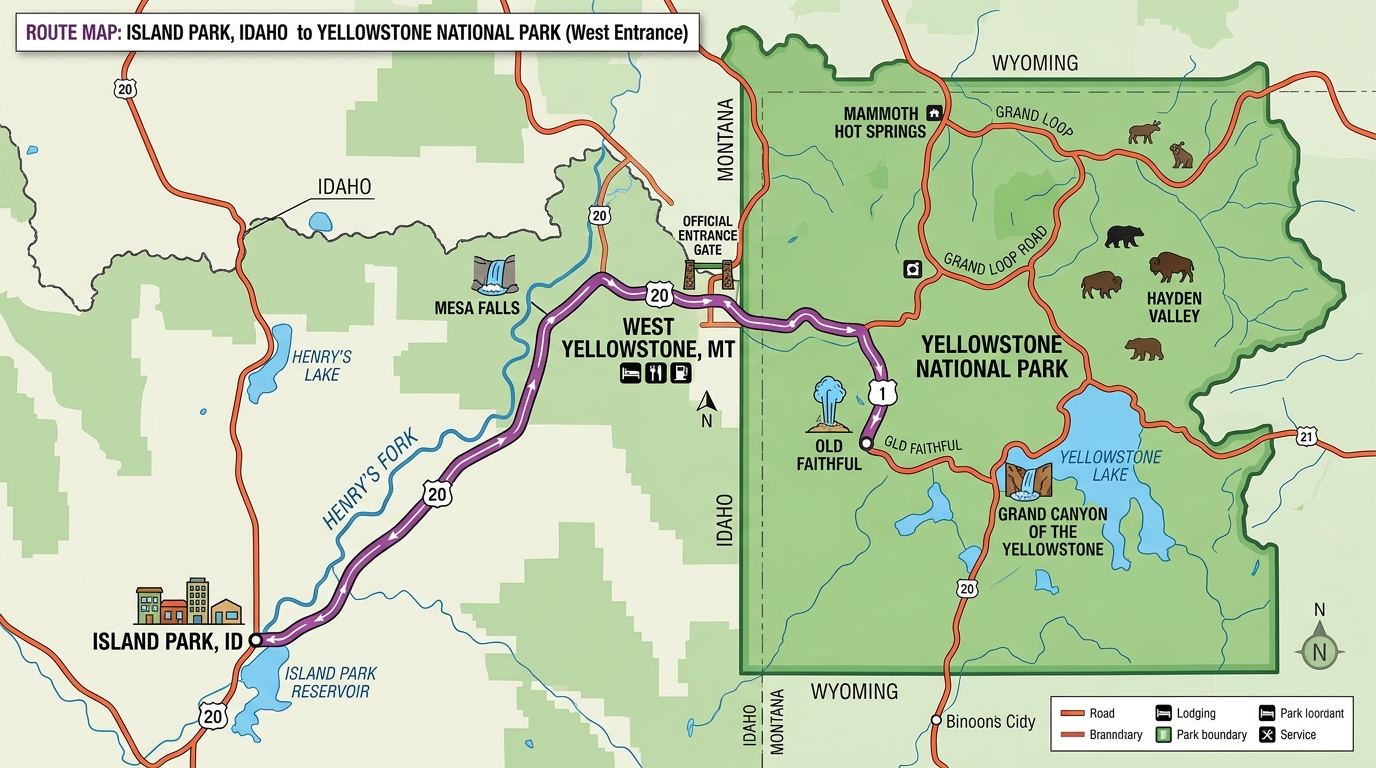
Traveling from Island Park, Idaho, to Yellowstone National Park gives visitors a front-row seat to some of the most scenic landscape in the American West. Island Park sits inside a long volcanic caldera valley, offering visitors a quiet mountain retreat before they make the short journey up toward the national park boundary. Navigating the route requires understanding how US Highway 20 connects the various pockets of Island Park directly to the busy West Entrance of Yellowstone National Park. Knowing what to expect along the highway, at the park gate, and throughout changing seasons ensures a much smoother trip for drivers and families alike.
Navigating US Highway 20 Northward Through the Volcanic Caldera
Driving from Island Park, Idaho, to Yellowstone National Park along US Highway 20 spans roughly twenty to thirty miles and typically takes about thirty to forty minutes.
US Highway 20 acts as the main artery through the entire length of Island Park, which is famously known for having one of the longest main streets in the country. Drivers begin their trip surrounded by tall pine trees, rivers, and local cabins before the road climbs slightly and crosses the Montana border directly into the town of West Yellowstone. From there, the highway leads straight to the West Entrance gate of Yellowstone National Park. The road surface is completely paved and wide enough to comfortably handle standard sedans, large pickup trucks, and oversized recreational vehicles.
Managing Gate Queues and Vehicle Fees at the West Entrance
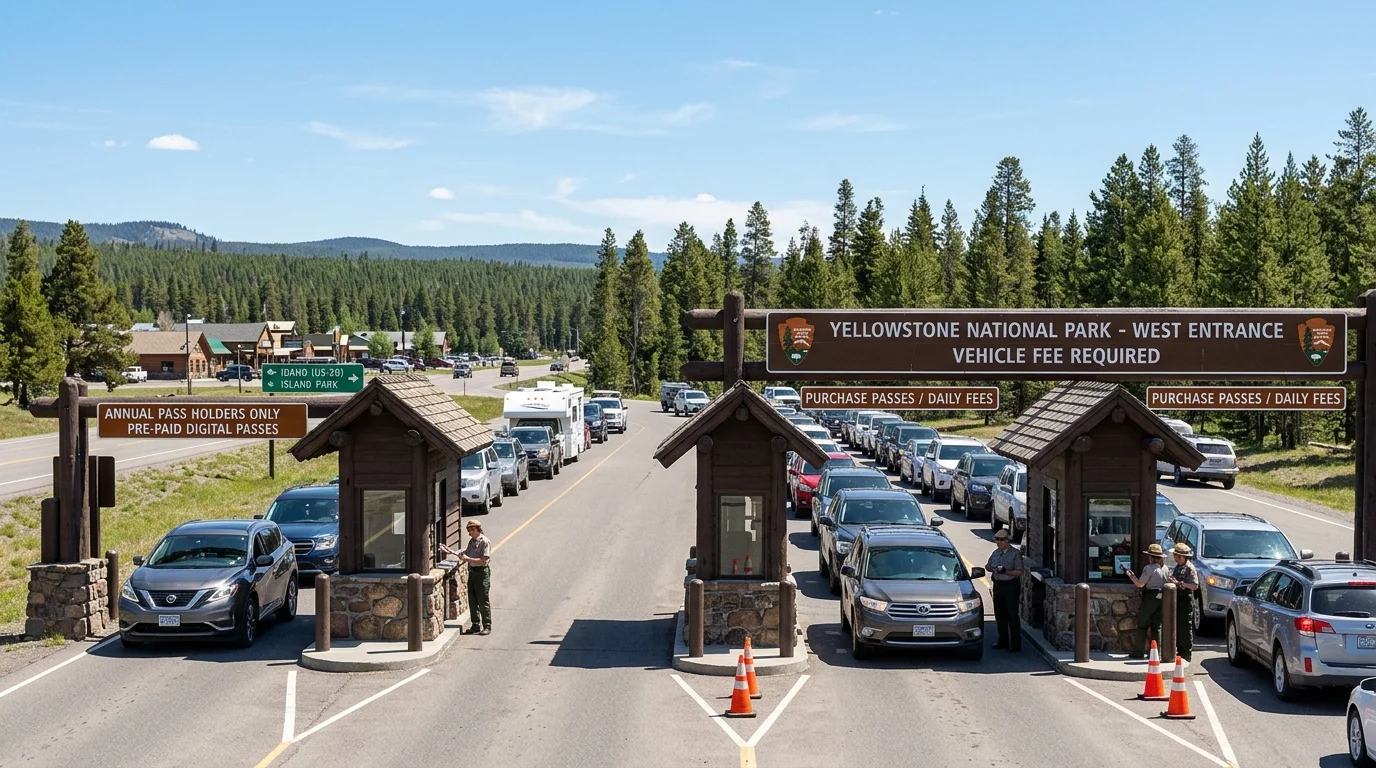
Approaching the West Entrance of Yellowstone National Park requires navigating a popular park gate where vehicle entry fees apply and summer queues can form quickly.
The West Entrance is one of the heaviest traffic zones in the entire park network during the peak summer vacation months. Drivers frequently encounter long lines of cars waiting to speak with rangers, verify annual park passes, or purchase daily vehicle permits. Purchasing a digital park pass online ahead of time helps bypass some administrative delays at the booth. Rangers station themselves at the entry gates to hand out official park maps, answer visitor questions, and distribute safety alerts regarding thermal features and local wildlife activity.
Understanding Seasonal Road Closures and Winter Access Changes
Roads connecting Island Park and Yellowstone are fully open to regular vehicles from late spring through October, but they close to cars and shift to snowmobiles and snowcoaches during the winter season.
While US Highway 20 remains open to regular automobile traffic year-round to connect Idaho communities with West Yellowstone, the interior routes inside Yellowstone National Park follow strict winter schedules. Park crews close most interior roads to standard cars in early November as heavy snow begins to blanket the region. The park interior remains restricted to tracked snowmobiles and commercial snowcoaches until late spring plowing finishes around late May. Travelers planning trips during May or November should always check local department of transportation alerts and park status pages for sudden weather closures.
Timing Your Morning Departure From Island Park to Beat Bottlenecks
Leaving Island Park early in the morning helps drivers avoid long vehicle lines at the park gate and increases the chances of seeing wildlife along the way.
Traffic heading north from Island Park toward the West Entrance usually spikes between nine in the morning and noon on busy summer days. Visitors who pack up and depart Island Park before seven in the morning frequently glide through the entry gate with little to no waiting. The early morning hours also provide crisp mountain air and quiet roadside conditions, which create the ideal environment for spotting elk, moose, and occasional bears moving through the river valleys near the park boundary. For travelers looking to map out other iconic western road trips, discovering how far Glacier National Park is from Banff offers a great blueprint for cross-border mountain driving. If you happen to be planning autumn getaways further south, you may also enjoy reading about seasonal conditions at Zion in autumn.
| Travel Factor | Summer Season | Winter Season |
|---|---|---|
| Road Status to West Entrance | Fully open to all cars and RVs | Open to West Yellowstone; park interior closed to cars |
| Average Drive Time | 30 to 40 minutes | 30 to 40 minutes to gate (snow travel inside) |
| Gate Wait Times | Can be long during peak morning hours | Very minimal |
Frequently Asked Questions
How far is Island Park, Idaho, from the West Entrance of Yellowstone National Park?
Island Park is about twenty to thirty miles from the West Entrance, and the drive usually takes around thirty to forty minutes.
Do I need to buy a pass to enter Yellowstone National Park?
Yes, visitors need a park pass, which can be purchased at the entrance gate or online ahead of time.
Are roads between Island Park and Yellowstone open all year?
Highway 20 is open year-round, but the roads inside Yellowstone National Park close to regular cars from November until late May.
What is the best time of year to make this drive?
Summer and early fall offer the best weather and fully open park roads for regular vehicle travel.
Will I see wildlife on the drive from Island Park to Yellowstone?
It is common to spot wildlife like moose, elk, and eagles, especially near rivers and early in the morning.
Can I drive an RV from Island Park into Yellowstone?
Yes, RVs are very common on this route, but drivers should allow extra time for parking and traffic.
Disclaimer: Travel conditions, road construction, weather, and park entrance fees can change without warning. Always verify current details from official National Park Service and Idaho transportation sources before planning your trip.

I’m Muhammad Ubaid, founder of YBR Magazine. I research and write detailed guides on America’s National Parks — covering entry fees, permits, best times to visit, and planning tips — using official NPS sources and up-to-date information.