

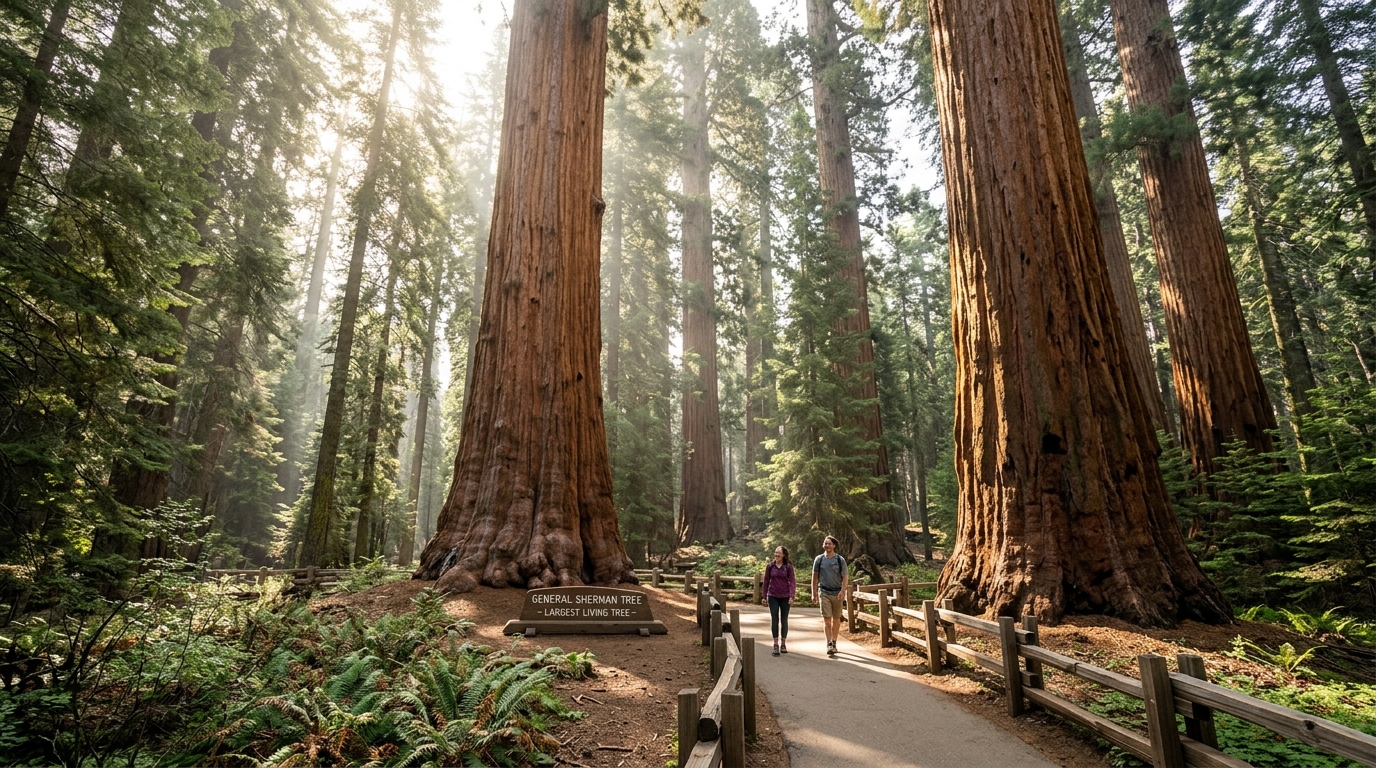
Planning one day in Sequoia National Park demands a sharp focus on geography because the park climbs a staggering wall of the Sierra Nevada mountains. Visitors face steep elevation gains, sharp driving switchbacks, and long distances between the lower foothills and the high mountain forests. Travelers who try to see everything often spend most of their afternoon trapped behind slow-moving traffic on the Generals Highway. Crafting a successful schedule means targeting the dense clusters of giant sequoias and granite viewpoints that sit close together along the main upper plateau.
Clearing the Southern Entrance Gates Before the Morning Traffic Rush
Starting one day in Sequoia National Park before the sun fully clears the horizon is the only reliable way to glide past the entrance station without losing valuable hours.
Sequoia National Park welcomes vehicles through its primary southern entrance near Highway 198, where the road immediately begins a relentless, winding climb past oak woodlands and deep river canyons. If travelers arrive at the entry station after nine o’clock in the morning during peak summer travel periods, long lines of cars routinely back up for miles. Climbing from that lower entrance gate up to the main giant sequoia groves takes roughly forty-five to sixty minutes of continuous driving without traffic delays. Drivers must stay alert for changing mountain conditions and check official park updates for any unexpected roadwork before beginning the ascent.
Walking Among the Ancient Forest Titans in the Giant Forest
Stepping into the Giant Forest early in the morning lets visitors experience the largest living trees on Earth in peaceful silence before the midday tour buses arrive.
The General Sherman Tree stands as the undisputed centerpiece of the forest, holding the title of the largest known single-stem tree on Earth by total volume. Walking down the paved trail toward the massive reddish-orange trunk reveals a towering botanical giant that measures over two hundred feet tall. Sequoia National Park protects thousands of these ancient forest titans, and the surrounding trails offer quiet loops away from the main parking area. Taking an hour to wander beneath the dense canopy allows visitors to appreciate the sheer scale of the grove without feeling rushed by tight schedules.
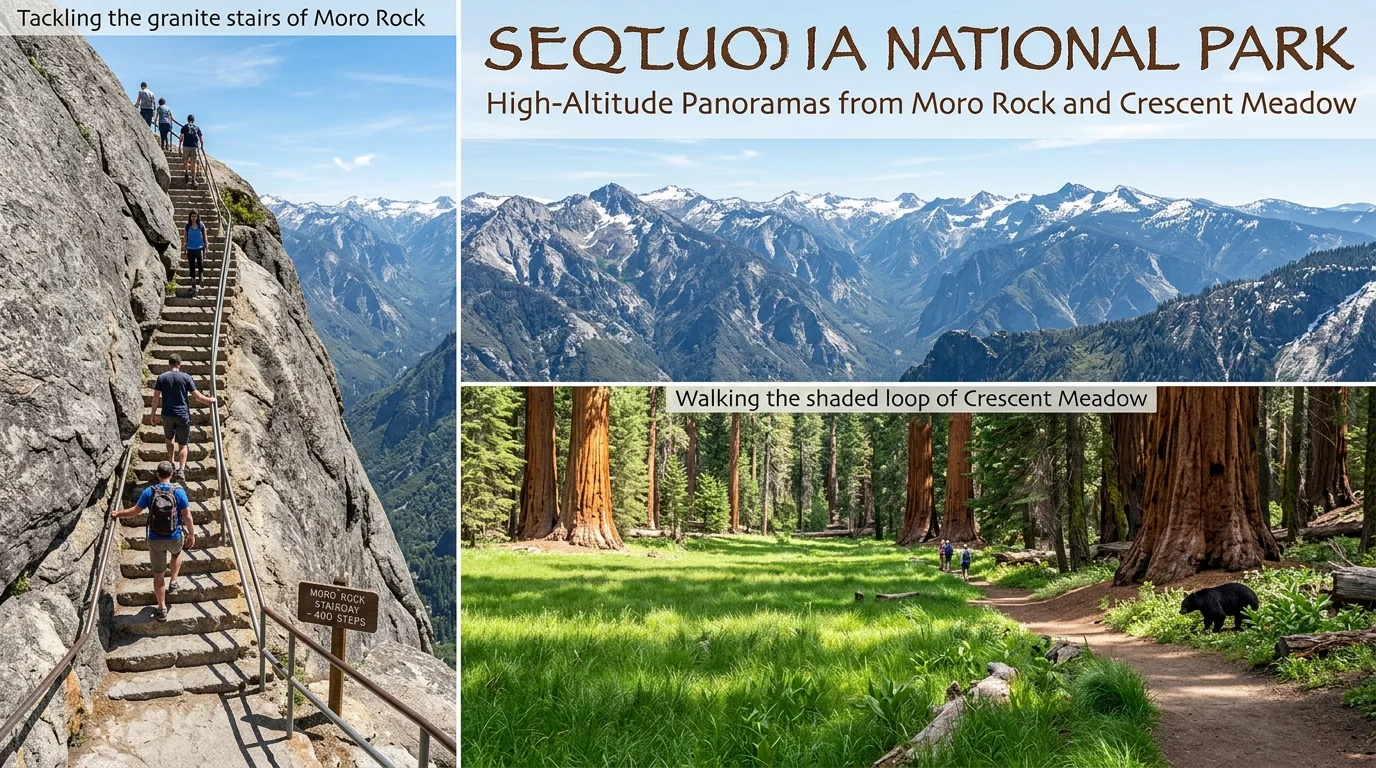
Taking in High-Altitude Panoramas from Moro Rock and Crescent Meadow
Tackling the granite stairs of Moro Rock and walking the shaded loop of Crescent Meadow delivers sweeping alpine panoramas before the afternoon sun reaches its peak.
Moro Rock is a massive granite dome equipped with a historic stone staircase that was painstakingly built into the cliff face by the Civilian Conservation Corps in the nineteen-thirties. Climbing the four hundred steps rewards hikers with dizzying, unobstructed views across the vast wilderness canyons of the Great Western Divide. Just a short drive down the lane, Crescent Meadow provides a quiet shift in scenery with its flat, grassy floor framed by towering sequoia trunks. Wildlife such as black bears frequently wander near the forest edges during daylight hours to feed on native plants and insects.
Navigating the Famous Tunnel Log and the Downward Mountain Descent
Rolling your car through the fallen Tunnel Log and descending the steep western slopes provides a memorable grand finale as evening approaches.
Tunnel Log is a massive fallen giant sequoia tree that spans a quiet park road, featuring a hand-carved archway wide enough for standard passenger vehicles to drive right through. Visitors love stopping to capture a quick photograph of their car parked inside the historic wooden tunnel before starting the long drive down. The descent along the Generals Highway offers dramatic canyon overlooks and a rapid shift in plant life as the cool alpine pines give way to hot chaparral foothills. Exiting the park in the late afternoon helps motorists steer clear of lingering sunset glare and puts them close to nearby dining options.
Managing Parking, Seasonal Shuttles, and Changing Alpine Weather
Keeping a single-day mountain trip running smoothly requires careful attention to parking availability, shuttle bus routes, and unpredictable alpine weather shifts.
Parking spots near heavy visitor zones like the General Sherman Tree fill to capacity by late morning during the busy summer season. Utilizing the park’s free seasonal shuttle buses allows drivers to park once and hop between crowded trailheads without losing their spot. Mountain weather can also turn quickly, occasionally bringing sudden afternoon thunderstorms or temperature swings even during the warmest months of the year. Visitors should always verify current park regulations, entrance fees, and weather alerts directly from official National Park Service sources before setting out. For travelers planning multiple western park adventures, mapping out a Zion National Park 2 day itinerary can offer great strategies for handling similar shuttle systems and peak park crowds. Additionally, if your western travels take you toward northern Wyoming, you can consult a detailed Grand Teton weekly itinerary for more ideas.

Frequently Asked Questions
Can you realistically see Sequoia National Park in one day?
Yes, visitors can cover the main highlights like the General Sherman Tree, Moro Rock, and Tunnel Log in one day if they start very early and stick to a tight schedule.
How long does the drive take from the park entrance to the giant trees?
Driving from the Foothills entrance up to the Giant Forest takes about forty-five to sixty minutes each way when traffic flows normally.
Where is the General Sherman Tree parking lot located?
The main parking area for the General Sherman Tree sits just off the Generals Highway within the Giant Forest area, with a separate accessible lot nearby for qualifying drivers.
Do I need an advance reservation to drive into Sequoia National Park?
Standard vehicle entry does not require a reservation, but travelers should consult official National Park Service websites for any seasonal vehicle restrictions or temporary rules.
Are internal shuttle buses running inside the park?
Yes, free seasonal shuttle buses operate throughout the main forest zones during peak months to help visitors navigate between packed parking areas and popular trailheads.
What time of day is best for climbing Moro Rock?
Morning or late afternoon is the ideal time to climb Moro Rock to avoid intense midday heat and secure a spot in the small parking lot near the trailhead.

I’m Muhammad Ubaid, founder of YBR Magazine. I research and write detailed guides on America’s National Parks — covering entry fees, permits, best times to visit, and planning tips — using official NPS sources and up-to-date information.